
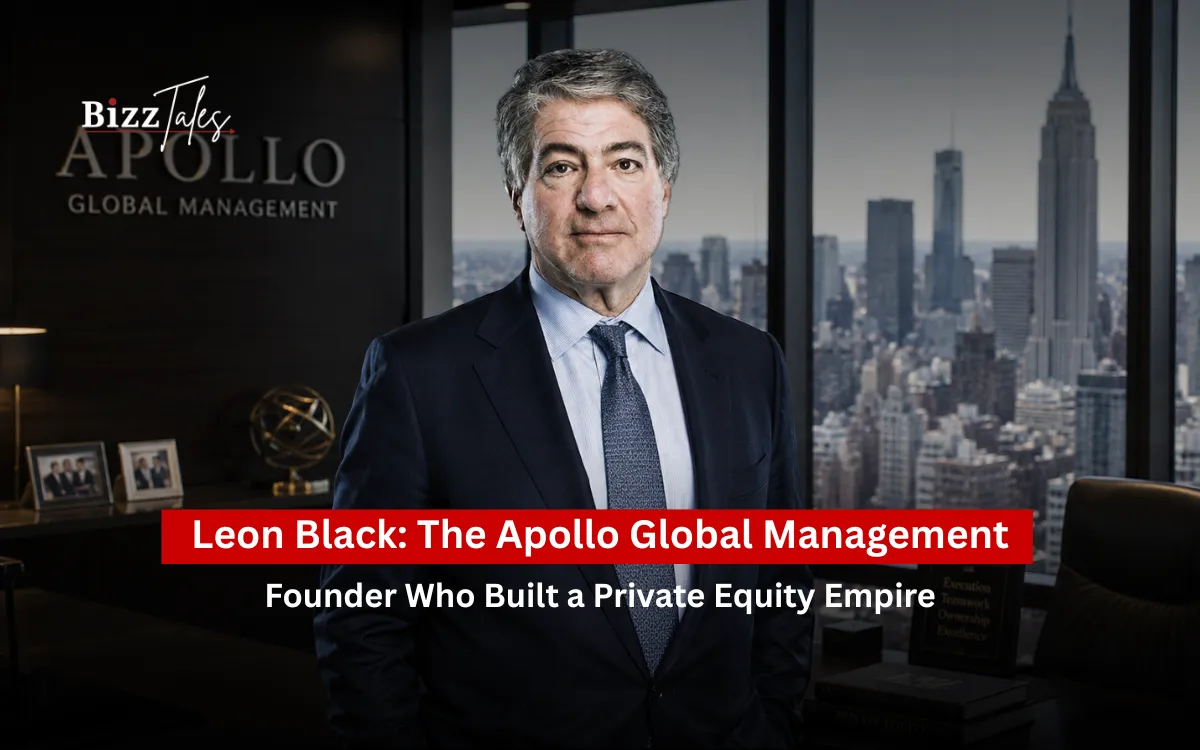
The world of private equity has produced some of the wealthiest and most influential business leaders of the modern era, and few have had a greater impact on the industry than Leon Black. As the co-founder of Apollo Global Management, Black helped transform distressed investing and alternative asset management into one of the most powerful sectors of global finance. Over several decades, he built a reputation as a highly strategic investor capable of identifying opportunities where others saw risk.
From navigating corporate bankruptcies to orchestrating complex leveraged buyouts, Black became known for his ability to generate extraordinary returns through disciplined analysis and bold decision-making. Under his leadership, Apollo grew from a relatively small investment firm into one of the world’s largest alternative asset managers, overseeing hundreds of billions of dollars in assets across private equity, credit, real estate, and insurance platforms.
What makes Leon Black’s story particularly fascinating is his ability to thrive during periods of economic uncertainty. While many investors avoided distressed assets, Black often viewed market crises as opportunities. This approach helped him build one of the most successful investment careers in financial history.
Today, despite stepping away from Apollo’s leadership, Black remains one of the wealthiest financiers in the world. His influence on private equity, distressed investing, and modern asset management continues to shape the financial industry.
Forbes Rankings and Net Worth
| Year | Forbes Ranking | Net Worth |
| 2026 | #151 World’s Billionaires | Approximately $17.8 Billion |
| 2025 | Forbes Global Billionaire | Approximately $15.9 Billion |
| 2024 | Forbes Global Billionaire | Approximately $14.2 Billion |
Leon Black’s wealth primarily comes from his ownership interests in Apollo Global Management, investment holdings, private assets, and decades of successful private equity transactions.
Early Life and Education
Leon David Black was born on July 31, 1951, in New York City, United States. He grew up in a highly educated family that valued academic achievement and intellectual curiosity. His father, Eli Black, was a successful businessman who led United Brands Company, while his mother was a teacher.
Despite growing up in a business-oriented environment, Black’s early life was marked by personal challenges. The sudden death of his father had a profound impact on him and influenced his future determination to succeed independently.
As a student, Black displayed strong analytical abilities and a natural interest in economics, mathematics, and business strategy. His academic performance earned him admission to Dartmouth College, one of the most prestigious institutions in the United States.
At Dartmouth, he studied philosophy and history, developing critical thinking skills that would later prove valuable in evaluating complex business situations. After earning his undergraduate degree, Black pursued an MBA at Harvard Business School, where he gained advanced knowledge of finance, investment analysis, and corporate management.
His education provided both intellectual discipline and access to influential professional networks, laying the foundation for a successful career on Wall Street.
Career Journey
Leon Black began his professional career at Drexel Burnham Lambert, one of the most influential investment banks of the 1980s. The firm became famous for pioneering the high-yield bond market under the leadership of Michael Milken.
At Drexel, Black quickly distinguished himself through his expertise in mergers, acquisitions, leveraged buyouts, and distressed securities. He eventually became head of the firm’s mergers and acquisitions department and one of its most respected executives.
The experience provided Black with deep insights into corporate finance and restructuring. More importantly, it taught him how to identify value in distressed companies and complex financial situations.
When Drexel Burnham Lambert collapsed in 1990 following legal and regulatory issues, many executives struggled to rebuild their careers. Black viewed the crisis differently.
In 1990, he joined forces with fellow Drexel executives Josh Harris and Marc Rowan to establish Apollo Global Management. The firm’s founding strategy focused on acquiring distressed debt and undervalued assets during a period of significant economic uncertainty.
The timing proved advantageous. Numerous companies faced financial difficulties, creating opportunities for investors willing to assume calculated risks.
Over the following decades, Apollo expanded aggressively, moving beyond distressed investing into private equity, credit, insurance, real estate, infrastructure, and alternative assets.
Black’s leadership helped transform Apollo into one of the world’s largest and most successful investment firms.
Business Ventures
Apollo Global Management remains Leon Black’s most important business venture and the primary source of his wealth.
The company initially specialized in distressed debt investments, purchasing assets from struggling companies at significant discounts. This strategy generated strong returns and established Apollo’s reputation within the financial industry.
As the firm grew, it expanded into leveraged buyouts, acquiring businesses across multiple industries. Apollo became known for its ability to improve operations, strengthen financial performance, and create value within portfolio companies.
Credit investing emerged as another major area of growth. Apollo developed extensive capabilities in corporate lending, structured credit, asset-backed securities, and direct lending.
The firm’s insurance-related investments also became increasingly important. Through strategic partnerships and acquisitions, Apollo gained access to long-term capital that supported continued expansion.
Over time, the company evolved into a diversified asset management platform with investments spanning healthcare, manufacturing, technology, media, telecommunications, transportation, and consumer industries.
Today, Apollo is considered one of the largest alternative investment firms globally, managing hundreds of billions of dollars in assets.
Success Story and Major Achievements
Leon Black’s greatest achievement is undoubtedly the creation and growth of Apollo Global Management.
Building a firm from a startup launched during financial uncertainty into a global investment powerhouse represents one of the most impressive accomplishments in modern finance.
Another significant achievement was helping establish distressed investing as a mainstream investment strategy. Black demonstrated that troubled companies and distressed assets could generate exceptional returns when managed effectively.
Throughout his career, he completed numerous high-profile transactions that created substantial value for investors. His ability to navigate complex restructurings and corporate turnarounds became a defining characteristic of Apollo’s success.
Beyond investment management, Black earned recognition as one of the most influential figures on Wall Street. His insights and strategies influenced private equity practices across the industry.
He also became known as one of the world’s leading art collectors, assembling a collection that included works by some of history’s most celebrated artists.
These achievements contributed to his reputation as both a financial innovator and cultural patron.
Challenges, Failures, and Setbacks
Like many successful business leaders, Leon Black faced significant challenges throughout his career.
The collapse of Drexel Burnham Lambert represented an early setback. The firm’s downfall created uncertainty for many executives and forced Black to rebuild his career within a changing financial landscape.
Economic downturns also tested Apollo’s resilience. The dot-com crash, global financial crisis, and various market disruptions required careful risk management and strategic decision-making.
Public scrutiny of private equity firms created additional challenges. Critics often questioned industry practices related to debt levels, corporate restructuring, and workforce reductions.
In recent years, Black encountered substantial controversy related to his professional relationship with Jeffrey Epstein. The resulting scrutiny led to internal reviews, public criticism, and ultimately his decision to step down as Apollo’s chief executive officer in 2021.
While these events affected his public image, Apollo continued operating successfully under new leadership, and Black remained active in investment and philanthropic activities.
His career demonstrates both the opportunities and complexities associated with leadership at the highest levels of finance.
Investments and Assets
The majority of Leon Black’s wealth comes from his ownership interests in Apollo Global Management and related investment holdings.
His portfolio includes private equity investments, credit assets, financial interests, and ownership stakes in numerous businesses.
Black is also internationally recognized for his extensive art collection. Over the years, he acquired masterpieces by artists such as Pablo Picasso, Raphael, Edvard Munch, and Vincent van Gogh. Some of these works have sold for record-breaking prices, making him one of the most prominent art collectors in the world.
In addition to art, his assets include luxury real estate holdings, investment partnerships, and private business interests.
His investment philosophy emphasizes identifying undervalued opportunities, exercising patience, and maintaining discipline during periods of market volatility.
This approach helped him accumulate billions of dollars in wealth over several decades.
Leadership Style and Business Philosophy
Leon Black is known for a leadership style rooted in analytical rigor, strategic thinking, and disciplined risk-taking.
One of his defining characteristics is a willingness to pursue opportunities others avoid. Throughout his career, he consistently focused on distressed assets and complex transactions that many investors considered too risky.
He believes that uncertainty often creates the best investment opportunities. This philosophy became a cornerstone of Apollo’s investment strategy.
Black also emphasizes preparation and detailed analysis. Before making major investment decisions, he is known for conducting extensive research and evaluating multiple scenarios.
Another important aspect of his leadership approach is patience. Rather than pursuing short-term gains, he focuses on long-term value creation and operational improvement.
His management style reflects a combination of intellectual discipline and entrepreneurial ambition.
Personal Life
Leon Black has maintained a relatively private personal life despite his high-profile business career.
He is married to Debra Black, and together they have four children. Family has played an important role throughout his life, particularly following the challenges he experienced during his youth.
Outside finance, Black is deeply involved in philanthropy. His charitable contributions support education, healthcare, medical research, cultural institutions, and social development programs.
He has donated substantial resources to universities, museums, and nonprofit organizations, helping fund initiatives that benefit future generations.
His passion for art collecting has also become a defining aspect of his personal identity.
These interests reflect a broader commitment to preserving culture and supporting intellectual development.
Legacy and Future Outlook
Leon Black’s legacy is firmly established within the private equity industry.
Through Apollo Global Management, he helped redefine alternative investing and demonstrated the value of distressed asset strategies. His influence continues shaping how investment firms evaluate opportunities and manage risk.
The company he co-founded remains one of the largest and most influential financial institutions in the world. Its continued growth ensures that Black’s impact on finance will persist for decades.
Beyond investing, his contributions to art, education, healthcare, and philanthropy have created lasting benefits for numerous institutions and communities.
Future generations of investors will likely study his strategies, leadership decisions, and ability to identify value in complex situations.
His story serves as a powerful example of how resilience, discipline, and strategic thinking can create extraordinary success.
Conclusion
Leon Black’s journey from Wall Street executive to billionaire investor is one of the most compelling stories in modern finance.
By co-founding Apollo Global Management and transforming it into a global investment giant, he played a major role in shaping the private equity industry. His expertise in distressed investing, corporate restructuring, and alternative assets generated extraordinary returns and established his reputation as one of the most successful financiers of his generation.
While his career included challenges and controversies, his influence on finance remains undeniable.
For investors, entrepreneurs, and business leaders, Leon Black’s story offers valuable lessons about opportunity, risk management, perseverance, and long-term value creation.
Today, he remains one of the most significant figures in the history of alternative asset management.
FAQs
1. What is Leon Black’s net worth in 2026?
Leon Black’s estimated net worth in 2026 is approximately $17.8 billion.
2. How did Leon Black become a billionaire?
He became a billionaire by co-founding Apollo Global Management and building it into one of the world’s largest alternative investment firms.
3. What company does Leon Black own?
Leon Black is best known as the co-founder of Apollo Global Management, a leading private equity and asset management company.
4. What is Leon Black’s leadership style?
His leadership style emphasizes disciplined analysis, strategic risk-taking, long-term thinking, and identifying value in distressed opportunities.
5. What is Leon Black’s biggest business achievement?
His biggest achievement is co-founding Apollo Global Management and transforming it into one of the most successful alternative asset management firms in the world.