
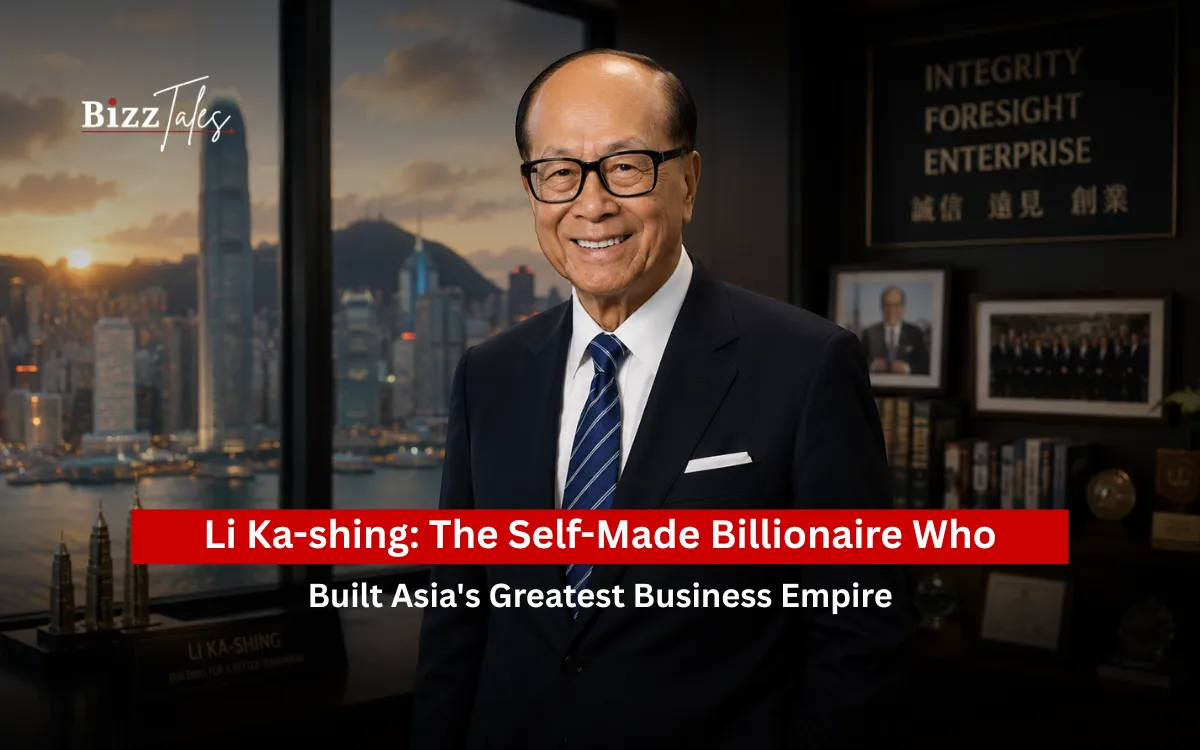
Li Ka-shing is widely regarded as one of the greatest entrepreneurs in Asian business history. Often called “Superman” for his extraordinary business instincts and deal-making abilities, Li built a vast multinational empire spanning real estate, infrastructure, telecommunications, retail, energy, ports, and technology investments.
His story is particularly inspiring because it began in poverty. Unlike many billionaires who inherited wealth or business assets, Li Ka-shing started with almost nothing. Forced to leave school as a teenager to support his family, he worked long hours in a plastics factory before eventually launching his own company. Through discipline, persistence, and remarkable business intelligence, he transformed a small plastics business into one of the largest conglomerates in the world.
For decades, Li Ka-shing has been considered Hong Kong’s most influential businessman and one of the wealthiest individuals in Asia. Even after retiring from active management, his business empire continues to shape industries across multiple continents.
His journey remains one of the most extraordinary examples of self-made success in modern business history.
Forbes Rankings (2026, 2025, 2024)
| Year | Forbes Rank | Estimated Net Worth |
| 2026 | #42 | $47.0 Billion |
| 2025 | Hong Kong’s Richest Person | Approximately $39–40 Billion |
| 2024 | #38 | $37.3 Billion |
Li Ka-shing has consistently ranked among the world’s wealthiest individuals and continues to be recognized as Hong Kong’s richest businessman. His fortune has grown through investments in infrastructure, telecommunications, retail, energy, real estate, and technology ventures.
Early Life
Li Ka-shing was born on July 29, 1928, in Chaozhou, Guangdong Province, China.
His early life was marked by hardship and uncertainty. During the Second Sino-Japanese War, his family fled to Hong Kong as refugees in search of safety and better opportunities.
Life became even more difficult when his father passed away from tuberculosis. At just fifteen years old, Li was forced to leave school and begin working full-time to support his family.
He found employment in a plastics manufacturing company, where he reportedly worked up to sixteen hours a day. While many people would have viewed these circumstances as insurmountable obstacles, Li saw them as motivation to improve his future.
The experience taught him discipline, resilience, and the importance of hard work. These lessons became the foundation of his entrepreneurial success.
Education
Unlike many modern billionaires, Li Ka-shing did not receive a university education.
Financial difficulties forced him to leave formal schooling at a young age. However, his lack of academic credentials never prevented him from becoming one of the world’s most successful businessmen.
Li became a lifelong learner. He spent countless hours reading books on business, economics, management, and philosophy.
His self-education helped him develop a deep understanding of markets, investments, and leadership. Over time, universities around the world awarded him honorary degrees in recognition of his achievements and contributions to society.
His story demonstrates that continuous learning can sometimes be more important than traditional educational pathways.
Career Journey
Li Ka-shing’s entrepreneurial journey began in 1950 when he founded Cheung Kong Industries.
Initially, the company manufactured plastic products, including artificial flowers. Li’s attention to quality and efficiency quickly helped the business grow.
By the 1960s, he began investing in real estate. At a time when many investors feared uncertainty in Hong Kong’s property market, Li saw opportunity.
His strategy of purchasing assets during periods of market weakness proved highly successful.
Over the following decades, Cheung Kong expanded aggressively into real estate development, infrastructure, ports, telecommunications, retail, and utilities.
A defining moment came when he acquired control of Hutchison Whampoa, making history as one of the first Chinese entrepreneurs to acquire a major British-owned company in Hong Kong.
This acquisition dramatically expanded his business empire and established him as one of Asia’s most powerful corporate leaders.
His rise from factory worker to billionaire became legendary throughout the business world.
Business Ventures
Li Ka-shing’s business empire is among the most diversified in history.
His major ventures include:
CK Hutchison Holdings
This multinational conglomerate operates across telecommunications, retail, infrastructure, ports, and energy sectors.
CK Asset Holdings
One of the largest real estate development companies in Asia, with investments spanning residential, commercial, and industrial properties.
Ports and Infrastructure
Li’s companies built extensive port operations around the world, making them key players in global trade and logistics.
Telecommunications
The group has invested heavily in mobile networks and telecommunications services across Europe and Asia.
Retail
Through brands such as Watsons and other retail chains, Li’s businesses serve millions of consumers globally.
Technology Investments
Through Horizons Ventures, Li became an early investor in numerous technology companies, demonstrating his ability to identify future trends before they became mainstream.
Major Successes
One of Li Ka-shing’s greatest achievements is building a business empire from virtually nothing.
His transformation of Cheung Kong from a small plastics company into a multinational conglomerate is considered one of the greatest entrepreneurial success stories of the twentieth century.
Another major success was acquiring Hutchison Whampoa. This move significantly expanded his influence and positioned him as a global business leader.
His investment track record is equally impressive. Li consistently identified opportunities in industries ranging from real estate and infrastructure to technology and healthcare.
He became known for making investments years before they became obvious to other investors.
His ability to anticipate future trends contributed greatly to his long-term success.
Challenges & Struggles
Li Ka-shing’s journey was filled with challenges.
His family’s refugee experience and financial struggles created difficult circumstances during his youth.
Leaving school at fifteen limited his educational opportunities and forced him into the workforce at a young age.
As an entrepreneur, he faced economic downturns, property market crashes, political uncertainty, and global financial crises.
Building a multinational conglomerate also required navigating regulatory environments across multiple countries.
More recently, some of his business decisions have attracted political and geopolitical scrutiny due to the global nature of his investments.
Despite these challenges, Li consistently demonstrated resilience and adaptability.
His ability to remain calm during periods of uncertainty became one of his greatest competitive advantages.
Leadership Style
Li Ka-shing is known for his disciplined, practical, and long-term leadership style.
Unlike many corporate leaders who focus on short-term results, Li consistently prioritized sustainable growth and strategic positioning.
His leadership philosophy emphasizes:
- Long-term thinking
- Financial discipline
- Strategic patience
- Risk management
- Continuous learning
- Adaptability
Employees and business associates often describe him as humble, analytical, and highly prepared.
One of his most famous habits was arriving at work early and maintaining an intense focus on efficiency.
His leadership style helped create a culture of accountability and operational excellence throughout his companies.
Other Businesses & Investments
Beyond his core businesses, Li Ka-shing became one of the world’s most successful investors.
Through Horizons Ventures, he invested in numerous technology startups and innovative companies.
His investments have included sectors such as:
- Artificial Intelligence
- Biotechnology
- Healthcare
- Renewable Energy
- Financial Technology
- Telecommunications
- Consumer Technology
Li became known for identifying disruptive innovations before they gained mainstream recognition.
His investment philosophy combines patience, curiosity, and a willingness to support transformative ideas.
This diversified approach significantly expanded his wealth and influence.
Philanthropy
Philanthropy has been a central part of Li Ka-shing’s legacy.
Through the Li Ka Shing Foundation, he has donated billions of dollars to education, healthcare, medical research, disaster relief, and community development.
His foundation supports universities, hospitals, research institutions, and charitable organizations around the world.
Education remains one of his primary philanthropic priorities. He believes access to knowledge creates opportunities for future generations.
Many observers consider his philanthropic contributions among the most significant in Asia.
Personal Life
Despite his enormous wealth, Li Ka-shing developed a reputation for living relatively modestly.
For years, he became known for wearing simple watches, conservative clothing, and maintaining practical habits.
He is the father of two prominent businessmen:
- Victor Li
- Richard Li
Both have become successful entrepreneurs and business leaders in their own right.
Even after retiring as chairman of his flagship companies in 2018, Li remained involved as a senior advisor and continued influencing strategic decisions.
His personal discipline and humility have become as legendary as his business achievements.
Lessons for Entrepreneurs
Li Ka-shing’s life offers countless lessons for entrepreneurs.
The first lesson is resilience. Despite experiencing poverty and hardship, he refused to let circumstances define his future.
Another lesson is the importance of long-term thinking. Many of his most successful investments required years or even decades to realize their full potential.
Entrepreneurs can also learn the value of continuous education. Although he lacked formal higher education, Li became one of the world’s most knowledgeable business leaders through self-learning.
His story highlights the importance of adaptability. He successfully navigated changing industries, economic cycles, and technological transformations.
Most importantly, Li demonstrates that extraordinary success can be achieved through discipline, patience, and relentless effort.
Conclusion
Li Ka-shing’s journey from a teenage factory worker to one of the world’s richest businessmen is one of the most inspiring entrepreneurial stories ever told.
Through vision, perseverance, and strategic thinking, he built a global empire spanning real estate, telecommunications, infrastructure, retail, and technology.
His achievements extend beyond wealth creation. Through philanthropy, leadership, and innovation, he has positively influenced millions of lives around the world.
For entrepreneurs, investors, and future business leaders, Li Ka-shing remains a powerful example of how determination, discipline, and long-term thinking can create extraordinary success.
FAQs
1. Who is Li Ka-shing?
Li Ka-shing is a Hong Kong billionaire entrepreneur, investor, and philanthropist known for building the CK Hutchison and CK Asset business empire.
2. What is Li Ka-shing’s net worth in 2026?
His estimated net worth in 2026 is approximately $47 billion, making him one of the world’s richest individuals.
3. Why is Li Ka-shing called “Superman”?
He earned the nickname due to his extraordinary business instincts, successful investments, and ability to build one of Asia’s largest conglomerates.
4. What companies does Li Ka-shing own?
His business interests include CK Hutchison Holdings, CK Asset Holdings, telecommunications companies, retail businesses, infrastructure assets, and technology investments.
5. What can entrepreneurs learn from Li Ka-shing?
Entrepreneurs can learn resilience, long-term thinking, disciplined investing, continuous learning, adaptability, and strategic patience from his remarkable journey.