
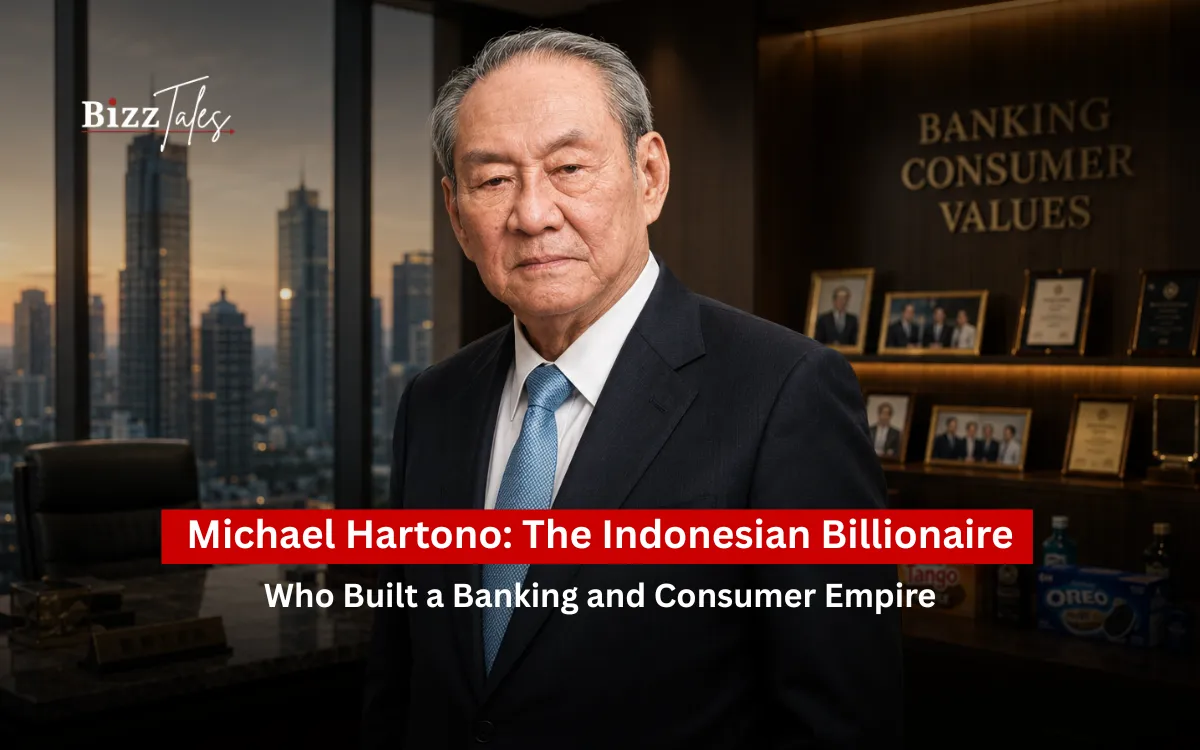
Few business leaders have shaped Indonesia’s corporate landscape as profoundly as Michael Hartono. For decades, Michael Hartono and his brother Robert Budi Hartono stood at the top of Indonesia’s rich list, transforming a family-owned cigarette manufacturer into one of Southeast Asia’s most diversified business empires. Through strategic investments in banking, electronics, telecommunications, e-commerce, real estate, and consumer goods, the Hartono family created a fortune that placed them among the wealthiest individuals in Asia.
Although many people associate the Hartono name with Djarum, one of Indonesia’s largest clove cigarette producers, the majority of the family’s wealth eventually came from their investment in Bank Central Asia (BCA), Indonesia’s largest private bank by market value. Their ability to diversify beyond tobacco and capitalize on opportunities created by economic crises became one of the greatest wealth-building stories in modern Asian business history.
Michael Hartono was widely respected not only for his business success but also for his disciplined leadership, strategic thinking, and contributions to sports and philanthropy. Until his passing in March 2026, he remained one of Indonesia’s most influential businessmen and a symbol of long-term entrepreneurial success.
Forbes Rankings and Net Worth
| Year | Forbes Ranking | Net Worth |
| 2026 | #149 World’s Billionaires | Approximately $18.9 Billion |
| 2025 | Among Indonesia’s Richest Billionaires | Approximately $22 Billion |
| 2024 | #76 World’s Billionaires | Approximately $25.1 Billion |
Michael Hartono and his brother Robert Budi Hartono were ranked as Indonesia’s wealthiest business family, with a combined fortune exceeding $43 billion.
Early Life and Education
Michael Bambang Hartono was born on October 2, 1939, in Kudus, Central Java, Indonesia. He grew up in a Chinese-Indonesian business family led by his father, Oei Wie Gwan, who acquired a small kretek cigarette business in 1951 and renamed it Djarum. At the time, the company was a relatively modest local operation with limited reach.
Michael spent his childhood witnessing the challenges of entrepreneurship. His father worked tirelessly to expand Djarum’s operations, teaching his children the importance of discipline, resilience, and customer focus. These lessons would later become fundamental to Michael’s business philosophy.
After completing his schooling in Kudus, Michael enrolled at Diponegoro University, where he studied economics and business. However, tragedy struck in 1963 when his father passed away shortly after a devastating fire damaged parts of the Djarum factory. Michael and his younger brother Robert were forced to leave university and take responsibility for the family business.
At a relatively young age, they inherited both a struggling company and the enormous responsibility of rebuilding their family’s future.
Career Journey
When Michael Hartono and his brother assumed control of Djarum in 1963, the company faced serious operational and financial challenges. The factory fire and their father’s death created uncertainty about the business’s future.
Rather than retreating from the challenge, the brothers focused on rebuilding production capacity and improving product quality. They modernized manufacturing processes and expanded distribution networks throughout Indonesia. Their efforts gradually transformed Djarum into one of the country’s largest cigarette producers.
The first major breakthrough came in the 1970s when Djarum expanded exports and introduced new cigarette products that appealed to both domestic and international consumers. Revenue growth accelerated, providing capital for future investments.
Unlike many entrepreneurs who remain concentrated in one industry, Michael believed long-term success required diversification. This vision led the Hartono family into banking, electronics, telecommunications, agriculture, real estate, and technology.
His career evolved from tobacco manufacturing into large-scale investment management, ultimately making him one of Southeast Asia’s most influential business leaders.
Business Ventures
Djarum remained the foundation of Michael Hartono’s wealth throughout his life. Under the brothers’ leadership, the company became one of Indonesia’s largest clove cigarette manufacturers and one of the world’s leading producers of kretek cigarettes.
However, the most valuable investment in the family’s history came through Bank Central Asia (BCA).
Following the Asian Financial Crisis of 1997–1998, many Indonesian businesses collapsed under financial pressure. The Hartono family recognized an opportunity where others saw risk. Through strategic acquisitions, they gained control of BCA, which later became Indonesia’s largest private bank and the single biggest contributor to family wealth.
Beyond banking, Michael helped expand the group’s presence into numerous industries.
The family launched Polytron, which became one of Indonesia’s best-known electronics brands. The company later entered electric vehicle manufacturing and consumer technology markets.
Their investments also included:
- Blibli, one of Indonesia’s leading e-commerce platforms
- Tiket.com, a major online travel business
- Telecommunications tower infrastructure
- Palm oil plantations
- Luxury real estate developments
- Hotels and retail centers
- Food and beverage businesses
- Technology startups and venture investments
These ventures transformed the Hartono Group into one of Indonesia’s most diversified conglomerates.
Success Story and Major Achievements
Michael Hartono’s greatest achievement was helping transform a regional cigarette company into a multi-industry empire.
Few entrepreneurs successfully navigate multiple generations of business transformation. Michael not only preserved the family company but dramatically expanded its scale and scope.
His acquisition of BCA stands as one of the most successful investments in Southeast Asian corporate history. By purchasing banking assets during a period of economic turmoil, the Hartono family created enormous long-term value. Today, BCA remains one of Indonesia’s most valuable financial institutions.
Another significant achievement was maintaining the family’s position as Indonesia’s wealthiest business dynasty for many years. Their diversified holdings allowed them to generate growth across multiple economic cycles.
Michael also became internationally recognized in the world of bridge. He represented Indonesia in numerous competitions and won a bronze medal at the 2018 Asian Games, demonstrating exceptional strategic thinking beyond business.
Challenges, Failures, and Setbacks
Michael Hartono’s journey was not without difficulties.
The first major challenge occurred when he inherited Djarum following his father’s death. Rebuilding a damaged business while learning leadership responsibilities required enormous determination.
The tobacco industry itself presented ongoing challenges. Regulatory changes, public health concerns, and shifting consumer preferences created pressure on cigarette manufacturers worldwide.
Economic crises also tested the resilience of the family’s businesses. The Asian Financial Crisis disrupted markets throughout the region and created uncertainty for many companies.
However, Michael often viewed crises as opportunities. Rather than reducing investment activity, the Hartonos strategically acquired valuable assets during periods of economic distress. Their BCA investment is perhaps the best example of this philosophy.
Later in life, Michael faced health challenges, including chronic respiratory issues and a heart attack. He ultimately passed away in Singapore on March 19, 2026, at the age of 86.
Investments and Assets
Michael Hartono’s wealth originated from an exceptionally diversified portfolio.
His largest asset was the family’s ownership stake in Bank Central Asia. This investment generated substantial dividends and long-term capital appreciation.
Additional holdings included Djarum, Polytron, Blibli, telecommunications infrastructure businesses, palm oil plantations, commercial real estate, hotels, shopping malls, and technology investments.
Among the family’s most notable real estate developments is Grand Indonesia, one of Jakarta’s premier mixed-use commercial projects. The portfolio also includes office towers, hospitality assets, and retail properties.
Michael’s investment strategy emphasized long-term ownership, operational excellence, and diversification across industries.
Leadership Style and Business Philosophy
Michael Hartono was known for a disciplined and strategic leadership style.
One of his defining principles was patience. He believed that sustainable wealth is created through long-term investments rather than short-term speculation.
He also emphasized diversification. Rather than relying solely on tobacco revenue, he continuously expanded into industries with strong future growth potential.
Another important characteristic was opportunistic investing. Michael understood that economic crises often create opportunities to acquire valuable assets at attractive prices. His investment in BCA exemplified this philosophy.
His management approach combined operational discipline with entrepreneurial flexibility, allowing the group to adapt to changing market conditions.
Personal Life
Despite his enormous wealth, Michael Hartono maintained a relatively private lifestyle.
He preferred focusing on business, family, and sports rather than seeking media attention. This low-profile approach distinguished him from many global billionaires.
One of his greatest passions was bridge. He became one of Indonesia’s most accomplished bridge players and actively promoted the sport throughout the country. His success culminated in an Asian Games bronze medal, an achievement rarely associated with billionaire entrepreneurs.
Michael was also involved in philanthropy and community development through family foundations and corporate initiatives.
His personal values reflected discipline, humility, and a commitment to excellence.
Legacy and Future Outlook
Michael Hartono leaves behind one of the most remarkable business legacies in Southeast Asia.
Together with his brother, he transformed Djarum from a tobacco company into a diversified empire spanning banking, technology, telecommunications, consumer electronics, e-commerce, agriculture, and real estate.
His role in building BCA into Indonesia’s leading private bank will remain one of the defining achievements of his career. The institution continues to play a critical role in the country’s financial system.
The Hartono family’s next generation is actively involved in managing and expanding the group’s businesses, ensuring continuity and future growth.
Michael’s influence on Indonesian business, banking, and entrepreneurship will likely endure for decades.
Conclusion
Michael Hartono’s journey from inheriting a struggling cigarette company to becoming one of Asia’s richest businessmen is a remarkable story of resilience, vision, and strategic thinking.
By rebuilding Djarum, acquiring Bank Central Asia, and diversifying into numerous industries, he created one of Indonesia’s largest and most successful business empires. His ability to identify opportunities during times of uncertainty set him apart from many competitors.
Beyond business, his achievements in sports, philanthropy, and leadership earned widespread respect throughout Indonesia and beyond.
Michael Hartono’s legacy demonstrates how patience, diversification, and disciplined execution can create extraordinary long-term success.
FAQs
1. What was Michael Hartono’s net worth in 2026?
Michael Hartono’s estimated net worth in 2026 was approximately $18.9 billion.
2. How did Michael Hartono become a billionaire?
He became a billionaire by expanding Djarum, investing in Bank Central Asia, and building a diversified conglomerate across banking, technology, electronics, and real estate.
3. What companies did Michael Hartono own?
His major business interests included Djarum, Bank Central Asia (BCA), Polytron, Blibli, Tiket.com, telecommunications infrastructure companies, and various real estate assets.
4. What was Michael Hartono’s leadership style?
His leadership style focused on long-term investing, diversification, disciplined execution, and identifying opportunities during economic downturns.
5. What was Michael Hartono’s biggest business achievement?
His biggest achievement was helping transform Djarum into a diversified business empire and acquiring a controlling stake in Bank Central Asia, which became Indonesia’s most valuable private bank