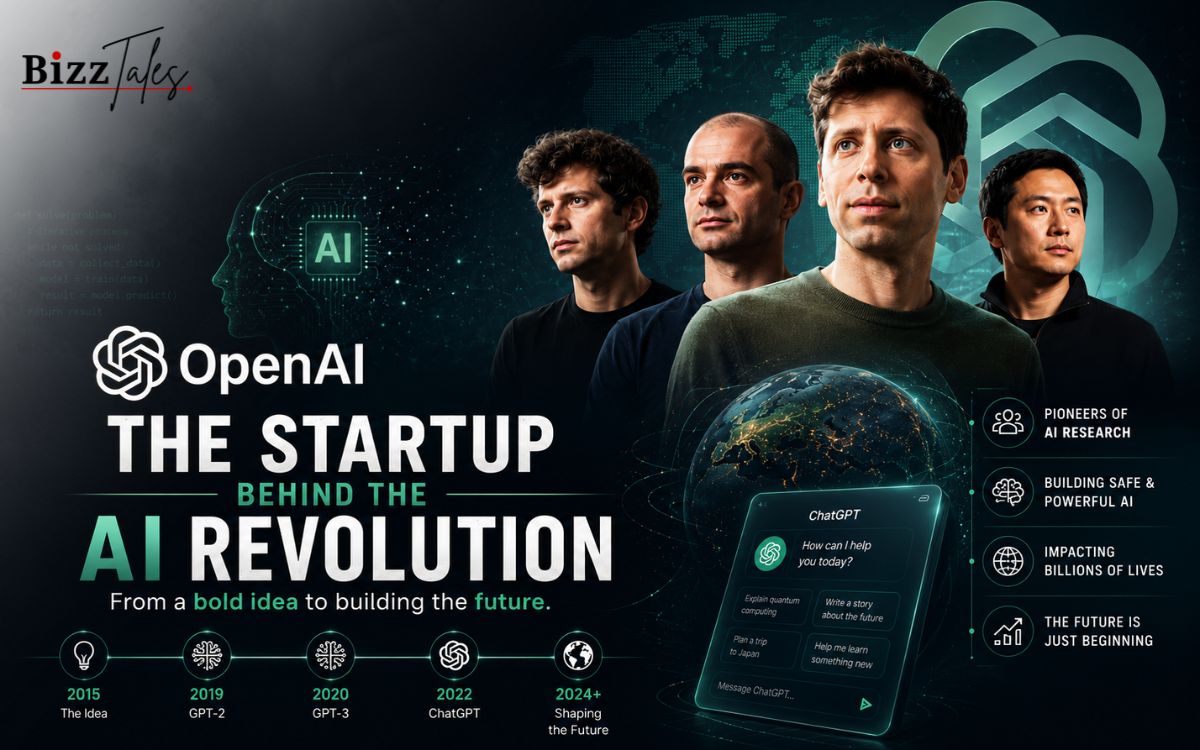
OpenAI is among the most influential tech startups of our age. Within a few years, this company altered the way we all think of artificial intelligence.
AI used to be seen as a very technical domain used only by researchers and big technology companies. Thanks to OpenAI, AI is now a part of everyone’s life through tools like ChatGPT, making this very advanced technology accessible to students, companies, creators, developers, and anyone else.
The rapid growth of the company began a global AI revolution. Companies started adopting AI solutions, governments started to debate on AI regulation, and tech companies started to up investments in AI.
And by 2026, OpenAI is no longer the startup it once was. It is now one of the biggest impacts on the future of technology.
The Beginning of OpenAI
OpenAI was created by entrepreneurs, researchers, and some technology leaders-such as Sam Altman and Elon Musk-in 2015.
Our company’s goal was set to ambitious from the start.
OpenAI aimed at creating artificial intelligence that would be safe and useful to humanity.
Why OpenAI Was Created
Around that period, we saw the rapid development of artificial intelligence, however several experts had concerns about its potential consequences in the long run.
There were concerns regarding:
- AI safety
- misuse of technology
- job displacement
- AI monopoly (concentration of AI power in a small number of firms).
OpenAI was formed with the goal of developing cutting-edge AI systems while maintaining a commitment to responsible development.
Early Research and Development
OpenAI had its foundation as a research and experiment lab. In its initial years.
Developed machine learning models, natural language systems, robotics and high performance computing applications.
OpenAI’s work, contrary to many typical startups, was highly technical and required significant computing power.
The Growth of AI Technology
With advances in machine learning the AI system became better at interpreting and producing human language.
This opened doors to the development of tools that could communicate more naturally with people.
The Launch of ChatGPT
Another one of the greatest moments in the history of OpenAI was when ChatGPT was released.
With the chatbot, users could pose questions, generate content, troubleshoot, and converse with AI.
The users’ response to ChatGPT around the world was huge. Millions of users began using ChatGPT for education, work, business, coding, writing and learning.
Why ChatGPT Became So Popular
Simple and accessible AI is why ChatGPT took off.
In the past, sophisticated AI tools were not user-friendly.
OpenAI developed a system that seemed more natural.
This made AI move out of research labs and into real life.
Impact on Businesses and Jobs
OpenAI’s innovations immediately began impacting different fields.
Businesses began using AI for:
- content creation
- customer support
- coding
- marketing
- automation
- research
- productivity improvement
There was also debate over the future of jobs and workplace automation with the rise of AI.
Competition in the AI Industry
Following OpenAI’s breakthroughs, tech giants quickened the pace of their AI research.
The AI industry exploded, with companies pouring billions into the development of artificial intelligence systems and infrastructure.
Partnership with Microsoft
Another reason for the rapid growth of OpenAI was the alliance with Microsoft.
Microsoft invested large sums of money into OpenAI and incorporated AI into their products and cloud systems.
This alliance helped OpenAI expand more rapidly worldwide.
Challenges and Criticism
While OpenAI has been widely celebrated for the above reasons, there are also many criticisms and difficulties.
Experts raised concerns related to:
- AI safety
- misinformation
- copyright issues
- privacy
- job replacement
- ethical use of AI
The company had to find a way to innovate responsibly.
Leadership and Vision of Sam Altman
Sam Altman is now one of the best known leaders in the industry.
He discussed the potential for both benefits and dangers of A.I. While placing a strong emphasis on the future of artificial intelligence development.
His approach to management mixes technology foresight and startup mode of execution.
OpenAI’s Business Model
OpenAI has been gradually transitioning from a pure research organization into one that creates commercial AI products and services.
This allowed the company to make money, while pursuing further research.
AI Revolution Across the World
Thanks to OpenAI, it kicked off a global AI race.
Shortly after the emergence of ChatGPT, the governments, companies, startups, and universities began to explore how AI technologies could be effectively adopted.
Business Lessons from OpenAI
What can we learn from this history? There are many lessons to take from the journey of OpenAI.
Another lesson is timing. The firm has introduced easy-to-use AI tools exactly at the point when the world is waking up to the potential of AI.
Another lesson is on innovation. OpenAI pursued solving hard technical problems rather than reinventing the wheel.
Additionally, the story emphasizes that having a long term vision is critical in developing revolutionary products.
Importance of Adaptability
The world of AI evolves at an astonishing pace.
OpenAI makes ongoing improvements to its systems, models, and products to remain competitive in an extremely competitive environment.
Future of OpenAI
In 2026, OpenAI continues focusing on:
- advanced AI models
- productivity tools
- AI assistants
- enterprise AI systems
- safe AI development
The company should remain one of the top players in artificial intelligence innovation.
Impact on Society
OpenAI’s innovations have transformed education, business, communication and digital productivity worldwide.
AI is allowing people to work smarter, learn smarter and free up time by automating the boring jobs.
Conclusion
The story of how OpenAI went from a startup with lofty research goals to the parent company of the AI revolution is one of the greatest technological stories of our age.
What made it successful was innovation, long-term vision and the skill to provide cutting edge AI to a widespread user-base.
During the same period, there were also major debates about ethics, safety and the future of work caused by the development of OpenAI.
For entrepreneurs and tech enthusiasts, the story of OpenAI shows that a groundbreaking idea has the power to disrupt markets and reimagine the world.
FAQs
What is OpenAI?
OpenAI is an artificial intelligence company known for creating sophisticated AI, such as ChatGPT.
Was OpenAI created by?
OpenAI was established by entrepreneurs and researchers such as Sam Altman and Elon Musk.
What makes ChatGPT so sought after?
ChatGPT gained popularity because it was accessible and simple to use for common tasks like writing, learning, programming, and communicating.
Which industries are impacted by OpenAI?
OpenAI affects countless industries including education, business, marketing, software development, support, and more.
What is OpenAI’s biggest challenge?
The company’s greatest challenges are ensuring AI safety, avoiding ethical pitfalls and misinformation, and promoting responsible AI.