
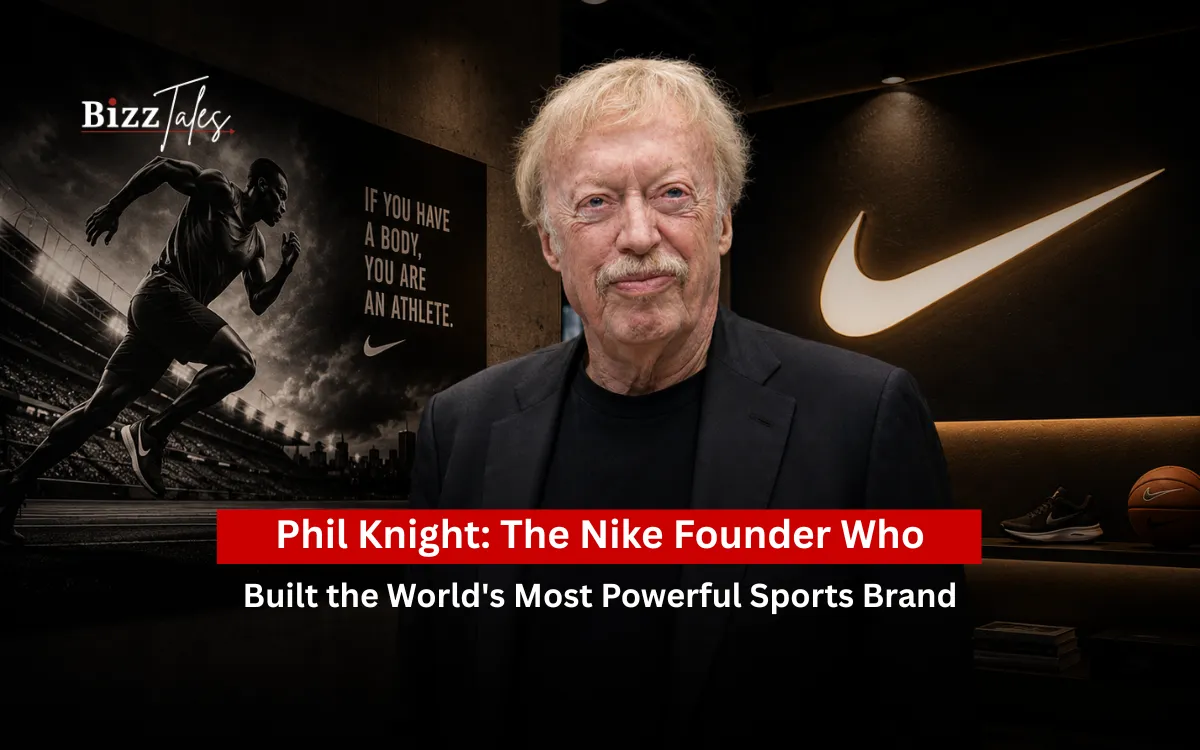
Phil Knight is one of the most influential entrepreneurs in modern business history and the co-founder of Nike, the company that transformed the global sportswear industry. From selling imported running shoes out of the trunk of his car to building the world’s largest athletic apparel brand, Knight’s journey is one of persistence, innovation, and visionary leadership. Today, Nike is recognized across the globe, and its famous Swoosh logo is one of the most valuable brand symbols in history.
Often described as one of America’s greatest entrepreneurs, Knight spent more than five decades building Nike into a company that revolutionized sports marketing, athlete endorsements, product innovation, and global branding. His story demonstrates how a simple idea, combined with relentless execution, can create a multibillion-dollar empire.
Today, Phil Knight remains one of the richest people in the world and one of the most respected figures in business and philanthropy.
Forbes Ranking & Net Worth History
| Year | Forbes Global Rank | Net Worth |
| 2026 | #49 | $35.4 Billion |
| 2025 | #49 | $35.4 Billion |
| 2024 | #30 | $40.9 Billion |
According to Forbes, Phil Knight & family had an estimated net worth of approximately $35.4 billion in 2026. His wealth primarily comes from his family’s ownership stake in Nike, which remains one of the world’s most valuable consumer brands.
Early Life and Family Background
Philip Hampson Knight was born on February 24, 1938, in Portland, Oregon, United States.
His father, William Knight, was a newspaper publisher and attorney. Growing up in a disciplined household, Phil learned the importance of hard work and self-reliance from an early age.
As a teenager, he worked various jobs, including newspaper distribution, to earn his own money. These experiences helped shape his entrepreneurial mindset.
Unlike many billionaires who inherited large business empires, Knight’s fortune was built almost entirely through entrepreneurship and innovation.
Education and Love for Running
Phil Knight attended the University of Oregon, where he studied journalism and ran middle-distance track.
One of the most important relationships of his life began during college when he met legendary track coach Bill Bowerman.
Bowerman constantly experimented with running shoes and sought ways to improve athletic performance.
This shared passion for sports and innovation would eventually lead to the creation of Nike.
After graduating from Oregon, Knight attended Stanford Graduate School of Business, where he earned an MBA.
It was at Stanford that the idea for Nike first emerged.
The Business School Idea That Changed Everything
While studying at Stanford, Knight wrote a paper proposing that high-quality Japanese running shoes could compete with expensive German brands like Adidas and Puma.
At the time, German manufacturers dominated the athletic footwear industry.
Knight believed Japanese manufacturing could produce quality products at lower prices.
This simple idea became the foundation for one of the most successful businesses in history.
Founding Blue Ribbon Sports
In 1964, Phil Knight and Bill Bowerman each invested $500 to launch Blue Ribbon Sports.
The company initially imported and sold running shoes manufactured by the Japanese company Onitsuka Tiger.
Knight famously sold shoes from the trunk of his Plymouth Valiant at track meets.
The business started small, but customer response was encouraging.
As sales increased, Knight realized there was an opportunity to build something much larger.
The Birth of Nike
During the early 1970s, Blue Ribbon Sports decided to launch its own footwear brand.
The new company was named Nike, inspired by the Greek goddess of victory.
The now-famous Swoosh logo was designed by graphic design student Carolyn Davidson for just $35.
Although simple, the logo became one of the most recognizable symbols in business history.
Nike officially launched in 1971 and quickly gained popularity among athletes and runners.
Revolutionizing Athletic Footwear
One of Nike’s earliest breakthroughs came from Bill Bowerman’s experimentation.
Using a waffle iron, he created a new sole design that improved traction and performance.
The innovation helped Nike establish a reputation for performance-driven products.
Unlike competitors that focused solely on manufacturing, Nike emphasized athlete needs and product innovation.
This approach helped differentiate the company in an increasingly competitive market.
The Power of Athlete Endorsements
Phil Knight transformed sports marketing by partnering with elite athletes.
Nike signed endorsements with some of the greatest athletes in history, including:
- Michael Jordan
- Tiger Woods
- Serena Williams
- Cristiano Ronaldo
- LeBron James
Perhaps the most important partnership was with Michael Jordan in 1984.
The Air Jordan brand became one of the most successful product lines in business history and fundamentally changed sports marketing forever.
The success of athlete endorsements became a key driver of Nike’s growth.
Building a Global Brand
Throughout the 1980s and 1990s, Nike expanded internationally.
The company entered markets across:
- Europe
- Asia
- Latin America
- Africa
- Australia
Its iconic “Just Do It” slogan became one of the most successful advertising campaigns ever created.
Nike evolved from a shoe company into a global lifestyle brand.
The company’s influence extended beyond sports into fashion, culture, music, and entertainment.
This transformation significantly increased Knight’s wealth and influence.
Taking Nike Public
Nike went public in 1980.
The IPO created substantial wealth for Phil Knight and other early investors.
As Nike’s stock price increased over the following decades, Knight became one of America’s richest businessmen.
Even after stepping away from daily management, his ownership stake continued generating enormous wealth.
Today, the Knight family still owns approximately 21% of Nike through various holdings.
Challenges and Controversies
Like many global corporations, Nike faced challenges.
The company encountered criticism regarding labor practices, overseas manufacturing, and supply chain issues.
Rather than ignoring these concerns, Nike gradually implemented reforms and increased transparency.
These efforts helped improve corporate responsibility and strengthen the company’s reputation.
Knight’s ability to navigate controversy while maintaining growth demonstrated resilience and adaptability.
Retirement from Nike Leadership
Phil Knight served as CEO and later chairman of Nike for many years.
In 2016, he officially retired as chairman after more than five decades with the company.
Although he stepped away from daily operations, he remained chairman emeritus and one of Nike’s largest shareholders.
His influence continues to shape the company’s culture and strategic direction.
Other Business Ventures
Beyond Nike, Knight owns and invests in several businesses.
One of his most notable holdings is LAIKA, the award-winning animation studio responsible for films such as:
- Coraline
- ParaNorman
- Kubo and the Two Strings
- Missing Link
The studio is led by his son, Travis Knight.
These investments demonstrate Knight’s interest in creativity, storytelling, and innovation beyond sportswear.
Philanthropy and Giving Back
Phil Knight is one of America’s most generous philanthropists.
Together with his wife Penny Knight, he has donated billions of dollars to education, healthcare, and research initiatives.
Major beneficiaries include:
- University of Oregon
- Stanford University
- Oregon Health & Science University
- Knight Cancer Institute
By 2025, Knight made a record-breaking $2 billion donation to cancer research, becoming one of the largest charitable donors in America.
His philanthropic contributions have transformed educational and medical institutions across the United States.
Shoe Dog: Sharing the Nike Story
In 2016, Phil Knight published Shoe Dog, a memoir detailing Nike’s early struggles and successes.
The book became a global bestseller and is widely considered one of the best entrepreneurship books ever written.
Rather than portraying success as easy, Knight openly discussed financial difficulties, mistakes, uncertainty, and personal sacrifices.
The memoir inspired countless entrepreneurs around the world. Shoe Dog
Leadership Style
Phil Knight is known for his unconventional leadership style.
His philosophy emphasized:
- Innovation
- Risk-taking
- Brand building
- Long-term thinking
- Competitive excellence
He encouraged experimentation and often supported bold ideas that others considered risky.
This mindset helped Nike remain ahead of competitors for decades.
Many entrepreneurs study Knight’s leadership approach as a model for building global brands.
Personal Life
Phil Knight is married to Penny Knight and has children, including Travis Knight.
Despite immense wealth, he generally maintains a relatively private lifestyle.
Most of his public appearances focus on philanthropy, education, sports, and Nike-related activities.
His influence extends far beyond business into healthcare, higher education, and community development.
Lessons Entrepreneurs Can Learn from Phil Knight
One of the most important lessons from Phil Knight’s journey is the power of persistence.
Nike faced financial struggles, manufacturing issues, and intense competition during its early years.
His story also demonstrates the importance of branding.
Rather than simply selling shoes, Knight built an emotional connection between athletes and consumers.
Entrepreneurs can learn from his willingness to take risks, embrace innovation, and think globally.
Most importantly, his career proves that a simple idea can become a global empire when combined with relentless execution.
Conclusion
Phil Knight’s transformation from a track runner selling shoes out of a car trunk to the founder of Nike is one of the greatest entrepreneurial stories ever told. Through innovation, branding, athlete partnerships, and visionary leadership, he built the world’s most powerful sportswear company.
Today, Nike remains a global icon, and Phil Knight stands among the most influential entrepreneurs in business history.
His impact extends across sports, education, healthcare, philanthropy, and entrepreneurship.
For aspiring founders and business leaders, his journey offers powerful lessons about vision, resilience, risk-taking, and the importance of never giving up on an idea.
FAQs
Who is Phil Knight?
Phil Knight is the co-founder and chairman emeritus of Nike and one of the world’s richest entrepreneurs.
What is Phil Knight’s net worth in 2026?
According to Forbes, his estimated net worth is approximately $35.4 billion.
When was Nike founded?
Nike was founded in 1971 after evolving from Blue Ribbon Sports.
Who co-founded Nike with Phil Knight?
Nike was co-founded by Phil Knight and Bill Bowerman.
What book did Phil Knight write?
He wrote Shoe Dog, a bestselling memoir about building Nike.
Does Phil Knight still own Nike?
Yes. Knight and his family still own approximately 21% of Nike.
What is LAIKA?
LAIKA Studios is an animation company owned by the Knight family.
Is Phil Knight involved in philanthropy?
Yes. He has donated billions of dollars to education, healthcare, and research initiatives.
What is Nike’s famous slogan?
Nike’s famous slogan is “Just Do It.”
What can entrepreneurs learn from Phil Knight?
Entrepreneurs can learn persistence, branding, innovation, calculated risk-taking, and long-term strategic thinking.