
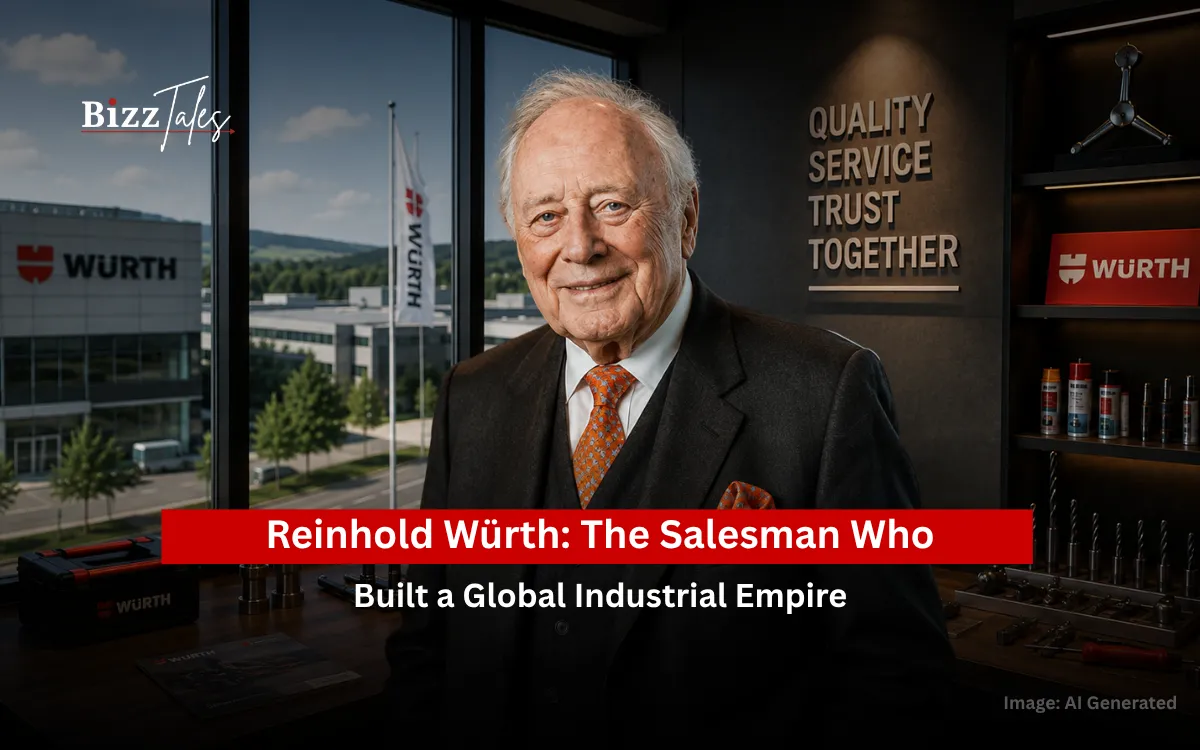
Few business leaders have transformed a small family enterprise into a global powerhouse as successfully as Reinhold Würth. Known as the driving force behind the Würth Group, he turned a modest German wholesaling business into one of the world’s largest suppliers of fastening and assembly materials. Through relentless focus on customer relationships, sales excellence, and long-term strategic planning, Würth built an industrial empire that spans dozens of countries and serves millions of customers worldwide.
Unlike many billionaires who found success through technology or finance, Reinhold Würth built his fortune through traditional business principles. He believed that exceptional customer service, strong leadership, and continuous expansion could create sustainable growth. Over several decades, he proved that philosophy right, transforming a company with only a handful of employees into a multinational organization generating billions in annual revenue.
Today, Reinhold Würth is recognized as one of Germany’s most successful entrepreneurs and one of Europe’s wealthiest business leaders. His journey from a young salesman inheriting a small company to becoming the head of a global industrial giant provides valuable lessons in entrepreneurship, resilience, and business leadership. This article explores his net worth, early life, education, career journey, business ventures, achievements, challenges, investments, leadership philosophy, and lasting legacy.
FORBES RANKINGS AND NET WORTH
| Year | Forbes Ranking | Net Worth |
| 2026 | #126 | $18.9 Billion |
| 2025 | #132 | $17.8 Billion |
| 2024 | #138 | $16.5 Billion |
EARLY LIFE AND EDUCATION
Reinhold Würth was born on April 20, 1935, in Öhringen, Germany. His childhood took place during a turbulent period in European history, as Germany faced the challenges of World War II and its aftermath. Growing up in such conditions taught him the importance of hard work, discipline, and perseverance.
His father, Adolf Würth, founded a small wholesale business specializing in screws and fastening materials. From an early age, Reinhold became familiar with the daily operations of the family company. He observed how customer relationships were built, how products were sold, and how a small business survived in a competitive environment.
Formal education played a role in his development, but much of his business knowledge came through practical experience. As a teenager, he worked within the family company and learned the fundamentals of sales, inventory management, and customer service. These hands-on experiences proved more influential than classroom lessons in shaping his future entrepreneurial mindset.
The early exposure to business operations gave him valuable insights into customer behavior and market opportunities. More importantly, it instilled a belief that long-term success comes from consistently delivering value to customers. These principles would later become central to the growth of the Würth Group.
CAREER JOURNEY
Reinhold Würth’s career took an unexpected turn when his father passed away in 1954. At just nineteen years old, he inherited responsibility for the family business. The company was small, employing only a few people and generating modest revenue. Many young entrepreneurs might have been overwhelmed by such a challenge, but Würth viewed it as an opportunity.
Determined to expand the business, he focused heavily on sales. He personally visited customers, built relationships, and developed a deep understanding of their needs. This customer-centric approach helped differentiate the company from competitors and laid the foundation for future growth.
Throughout the 1960s and 1970s, Würth pursued aggressive expansion. He expanded product offerings, entered new markets, and hired talented sales professionals who shared his commitment to customer service. His emphasis on direct sales became one of the company’s greatest competitive advantages.
A major turning point came when the company began expanding internationally. Rather than limiting operations to Germany, Würth established subsidiaries across Europe and eventually around the world. This global strategy dramatically increased revenue and strengthened the company’s market position.
Over the decades, the Würth Group evolved from a small wholesaler into an international industrial giant. Reinhold Würth’s leadership transformed the business into one of the largest suppliers of fastening and assembly technology in the world, making him one of Germany’s most successful self-made billionaires.
BUSINESS VENTURES
The Würth Group remains the centerpiece of Reinhold Würth’s business empire. What began as a small screw wholesaling operation evolved into a multinational corporation serving industries ranging from construction and manufacturing to automotive and maintenance services.
The company specializes in fastening and assembly materials, including screws, bolts, anchors, tools, safety equipment, adhesives, and industrial supplies. Over time, it expanded its product portfolio significantly, enabling it to serve a broader customer base across multiple industries.
One of Würth’s most successful strategies involved establishing local subsidiaries in international markets. Rather than managing global operations from a single headquarters, the company empowered regional teams to respond to local customer needs. This decentralized approach supported rapid growth while maintaining strong customer relationships.
The company also expanded through acquisitions. By purchasing complementary businesses and integrating them into its operations, the Würth Group strengthened its market position and expanded its capabilities. These acquisitions helped accelerate growth and diversify revenue streams.
Beyond industrial supplies, the company developed interests in logistics, financial services, electronics, and specialized industrial solutions. This diversification reduced dependence on any single market segment and enhanced long-term stability.
Today, the Würth Group operates in more than eighty countries and employs tens of thousands of people. Its success stands as a testament to Reinhold Würth’s strategic vision and commitment to sustainable growth.
SUCCESS STORY AND MAJOR ACHIEVEMENTS
Reinhold Würth’s success story is one of extraordinary business transformation. Taking over a small family company at the age of nineteen, he built one of the world’s most successful industrial enterprises through persistence, innovation, and customer focus.
One of his greatest achievements was turning the Würth Group into a global leader in fastening and assembly technology. The company serves millions of customers and generates billions in annual sales, making it one of the largest organizations in its industry.
Würth has also earned widespread recognition for his contributions to business and entrepreneurship. His leadership style and growth strategies have been studied by executives and business schools around the world. He is often cited as an example of how long-term thinking and customer-centric leadership can create extraordinary results.
Beyond financial success, he has played an important role in supporting arts and culture. His extensive art collection and investments in museums have contributed significantly to cultural preservation and public access to artistic works.
The combination of business success, cultural contributions, and philanthropic initiatives has solidified his reputation as one of Germany’s most respected entrepreneurs.
CHALLENGES, FAILURES, AND SETBACKS
Despite his remarkable success, Reinhold Würth faced numerous challenges throughout his career. Taking control of a business at a young age required navigating responsibilities that many people encounter much later in life.
Economic recessions represented some of the most significant obstacles. Industrial demand often fluctuates with broader economic conditions, affecting sales and profitability. The Würth Group had to adapt to changing market environments while maintaining operational efficiency.
International expansion also introduced challenges. Entering new countries required understanding local regulations, cultural differences, and competitive landscapes. Mistakes and unexpected difficulties were inevitable, but Würth’s willingness to learn and adapt helped the company overcome these obstacles.
Managing a rapidly growing workforce created another challenge. As the company expanded globally, maintaining a consistent corporate culture became increasingly complex. Würth addressed this issue by emphasizing leadership development and strong organizational values.
Competition from other industrial suppliers remained a constant pressure. To stay ahead, the company invested in innovation, customer service, and operational excellence. These efforts allowed it to maintain a strong competitive position even during difficult periods.
His ability to navigate setbacks while remaining focused on long-term objectives became one of the defining characteristics of his leadership.
INVESTMENTS AND ASSETS
The majority of Reinhold Würth’s wealth is derived from his ownership interests in the Würth Group. The company’s global operations and extensive customer base provide a strong foundation for his fortune.
In addition to industrial business assets, Würth has invested heavily in art and cultural institutions. His private art collection is considered one of the most significant corporate collections in Europe and includes works from internationally renowned artists.
Real estate also plays an important role in his asset portfolio. The company owns office buildings, logistics centers, warehouses, and commercial properties located across multiple countries.
Würth has supported investments in technology, innovation, and industrial development initiatives. These investments align with the company’s long-term growth strategy and help maintain competitiveness in evolving markets.
His wealth-building strategy reflects a focus on tangible assets, sustainable businesses, and long-term value creation. This disciplined approach has enabled him to remain among Europe’s wealthiest entrepreneurs for decades.
LEADERSHIP STYLE AND BUSINESS PHILOSOPHY
Reinhold Würth is known for a leadership philosophy centered on customer relationships, employee empowerment, and continuous improvement. He believes that successful businesses are built on trust and long-term partnerships rather than short-term transactions.
One of his most important principles is putting customers first. Throughout his career, he emphasized understanding customer needs and providing solutions that create real value. This approach helped establish strong loyalty and repeat business.
Würth also believes in decentralization. By empowering local managers and teams, he encouraged entrepreneurship within the organization. This structure allowed the company to remain flexible and responsive despite its large size.
Another defining aspect of his philosophy is investment in people. He views employees as critical assets and has consistently supported training, development, and leadership opportunities throughout the organization.
His management style demonstrates that sustainable growth comes from combining strong values with strategic execution and customer-focused innovation.
PERSONAL LIFE
Despite his immense wealth and business success, Reinhold Würth has maintained a strong commitment to cultural and philanthropic activities. He is particularly well known for his passion for art and has spent decades building an impressive collection of paintings, sculptures, and historical works.
His contributions to museums and cultural institutions have helped make art accessible to broader audiences. Several museums associated with the Würth organization display portions of his collection and attract visitors from around the world.
Family has also played an important role in his life. Over the years, he carefully planned leadership succession to ensure the continued success of the family business. His efforts helped create stability and continuity within the organization.
Würth is also known for supporting educational initiatives, social programs, and community development projects. These philanthropic activities reflect his belief that successful businesses have a responsibility to contribute positively to society.
His public image combines entrepreneurial excellence with cultural leadership, making him one of Germany’s most respected business figures.
LEGACY AND FUTURE OUTLOOK
Reinhold Würth’s legacy extends far beyond the wealth he accumulated. Through the Würth Group, he created a global organization that continues to support businesses, industries, and economies around the world.
His influence on sales management, customer service, and international expansion strategies remains significant. Future entrepreneurs and business leaders can learn valuable lessons from his emphasis on long-term thinking and relationship building.
The Würth Group continues to expand and innovate, ensuring that the foundation he established remains relevant in a changing global economy. Investments in digital technologies, logistics, and industrial solutions position the company for continued growth.
His contributions to culture, education, and philanthropy further strengthen his legacy. By supporting both business and society, Würth demonstrated how entrepreneurial success can create a broader positive impact.
As future generations continue leading the company, Reinhold Würth’s vision and values are likely to remain central to its success.
CONCLUSION
Reinhold Würth’s journey from a young man inheriting a small family business to the leader of a global industrial empire is one of the most inspiring entrepreneurial stories in Europe. Through determination, customer focus, and strategic thinking, he transformed the Würth Group into a multinational powerhouse serving millions of customers worldwide.
His success was built on simple but powerful principles: understand customers, invest in people, think long-term, and continuously improve. These values enabled him to overcome challenges, expand internationally, and create extraordinary wealth.
Today, Reinhold Würth is recognized not only as a billionaire entrepreneur but also as a cultural patron, philanthropist, and visionary leader. His legacy continues to influence business, industry, and society, making him one of the most respected figures in modern entrepreneurship.
FAQS
1. What is Reinhold Würth’s net worth in 2026?
Reinhold Würth’s estimated net worth in 2026 is approximately $18.9 billion.
2. How did Reinhold Würth become a billionaire?
He became a billionaire by transforming the Würth Group from a small family business into a global leader in fastening and assembly technology.
3. What companies does Reinhold Würth own?
He is best known for controlling the Würth Group, one of the world’s largest suppliers of industrial fastening and assembly products.
4. What is Reinhold Würth’s leadership style?
His leadership style focuses on customer relationships, employee empowerment, decentralization, and long-term business growth.
5. What is Reinhold Würth’s biggest business achievement?
His biggest achievement is expanding the Würth Group into a multinational industrial empire operating in more than eighty countries worldwide.