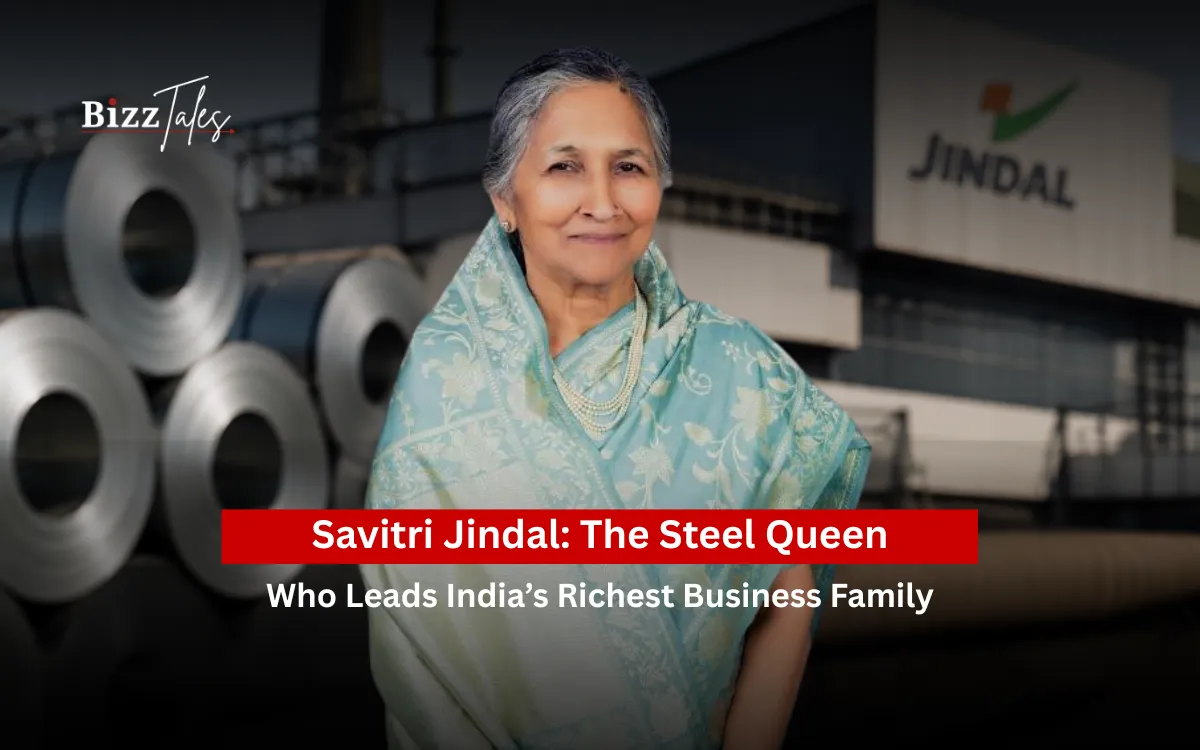
Savitri Jindal is one of India’s most powerful business leaders and the richest woman in India. As the chairperson emeritus of the O.P. Jindal Group, she oversees one of the country’s largest industrial empires, with interests spanning steel, power, cement, mining, infrastructure, and energy. What makes her story remarkable is that she did not begin her career as a corporate executive. Instead, she stepped into leadership following a family tragedy and successfully preserved and expanded a business empire that today ranks among India’s most influential conglomerates.
Her journey represents resilience, leadership, and determination. From being a homemaker and supporting her husband, the late O.P. Jindal, to becoming one of the world’s richest women, Savitri Jindal has built a legacy that extends across business, politics, education, healthcare, and philanthropy.
Today, she is not only a business icon but also a symbol of women’s leadership in India’s corporate landscape.
Forbes Ranking & Net Worth History
| Year | Forbes Global Rank | Net Worth |
| 2026 | #51 | $39.1 Billion |
| 2025 | Top 3 Richest Indians | $35.5 Billion |
| 2024 | India’s Richest Woman | $35.5 Billion |
According to Forbes’ 2026 Billionaires List, Savitri Jindal & family rank #51 globally with an estimated net worth of $39.1 billion, making her India’s richest woman and the third-richest person in India.
Early Life and Family Background
Savitri Jindal was born on March 20, 1950, in Tinsukia, Assam, India.
She came from a traditional family background and spent much of her early life focused on family responsibilities.
Unlike many modern business leaders who attend elite business schools and corporate training programs, Savitri Jindal’s path to success was unconventional.
Her life changed significantly after her marriage to Om Prakash Jindal, one of India’s most respected industrialists and the founder of the Jindal Group.
During the early years of the business, she largely remained away from the corporate spotlight, supporting her family while O.P. Jindal expanded the group’s operations.
Few people could have predicted that she would later become one of the world’s most powerful businesswomen.
The Rise of O.P. Jindal Group
To understand Savitri Jindal’s success, it is important to understand the business foundation created by O.P. Jindal.
Founded in 1952, the Jindal Group started as a small steel pipe manufacturing company.
Over the decades, it expanded into:
- Steel
- Power
- Mining
- Infrastructure
- Cement
- Energy
- Industrial manufacturing
The company became one of India’s most important industrial groups and contributed significantly to the country’s infrastructure and economic development.
The growth of the group established the Jindal family among India’s leading business dynasties.
A Life-Changing Tragedy
In 2005, tragedy struck when O.P. Jindal died in a helicopter crash.
His sudden death created uncertainty regarding the future of the business empire.
Many observers questioned whether the group could maintain its momentum without its founder.
At this crucial moment, Savitri Jindal stepped forward to lead the organization.
Despite having limited public corporate experience, she accepted the responsibility of protecting her husband’s legacy and ensuring stability across the group’s businesses.
This period became the defining chapter of her life.
Taking Charge of the Jindal Empire
Following her husband’s death, Savitri Jindal became chairperson of the Jindal Group.
The transition required strong leadership and careful management.
The group employed thousands of people and operated across multiple industries.
Rather than attempting to control every division personally, she implemented a decentralized leadership model.
Her four sons assumed leadership roles across different businesses:
- Prithviraj Jindal
- Sajjan Jindal
- Ratan Jindal
- Naveen Jindal
Each son focused on specific sectors while Savitri Jindal provided overall guidance and family leadership.
This structure helped preserve stability and accelerate growth.
Expanding the Business Empire
Under Savitri Jindal’s leadership, the Jindal Group continued expanding.
Today, the family controls major businesses including:
- Jindal Steel & Power
- JSW Steel
- JSW Energy
- JSW Infrastructure
- Jindal Stainless
- Cement and mining operations
The group’s influence extends across India and international markets.
Its companies play critical roles in sectors essential for economic development, including infrastructure, transportation, manufacturing, and energy production.
The continued success of these businesses significantly increased the family’s wealth and global influence.
The Success of Sajjan Jindal and JSW Group
One of the most visible parts of the family’s success story is the growth of the JSW Group under her son, Sajjan Jindal.
JSW Steel became one of India’s largest steel producers and expanded into energy, cement, paints, infrastructure, and electric vehicles.
The company’s rapid growth strengthened the overall Jindal business ecosystem and contributed significantly to the family’s fortune.
The success of JSW demonstrates how the family’s collaborative leadership approach has worked effectively over time.
Political Career
Beyond business, Savitri Jindal has also been active in politics.
After the death of O.P. Jindal, she entered public service and represented Hisar in Haryana politics.
She served as a member of the Haryana Legislative Assembly and held ministerial responsibilities in the state government.
Her political career focused on development, public welfare, and community initiatives.
This dual role in business and politics made her one of the most influential women in India.
India’s Richest Woman
Over the years, Savitri Jindal consistently ranked as India’s richest woman.
Her wealth grew alongside the expansion of the Jindal businesses.
By 2026, Forbes ranked her among the world’s wealthiest individuals and one of the richest women globally.
Her achievement is particularly notable because she succeeded in industries traditionally dominated by male leadership, including steel, mining, power, and infrastructure.
Her success has inspired countless women entrepreneurs across India.
Philanthropy and Social Impact
Savitri Jindal has played an important role in philanthropic initiatives across education, healthcare, community development, and social welfare.
The Jindal family supports numerous institutions and charitable programs throughout India.
These initiatives focus on:
- Education
- Healthcare
- Rural development
- Skill development
- Community welfare
- Sports promotion
The family also supports educational institutions and medical facilities that serve thousands of people every year.
Her commitment to social development reflects the values established by O.P. Jindal.
Leadership Style
Savitri Jindal is known for a calm, family-oriented, and consensus-driven leadership style.
Rather than seeking personal publicity, she focuses on preserving family unity and ensuring long-term business stability.
Her leadership emphasizes:
- Responsibility
- Trust
- Family governance
- Long-term thinking
- Sustainable growth
These principles helped the Jindal Group navigate major economic cycles and industry changes.
Many observers view her as an example of effective stewardship and resilient leadership.
Personal Life
Despite immense wealth and influence, Savitri Jindal remains closely connected to her family and community.
She continues to be involved in business, philanthropy, and public affairs.
Her family remains one of India’s most influential industrial dynasties.
The success of her children and grandchildren ensures that the Jindal legacy continues into future generations.
Lessons Entrepreneurs Can Learn from Savitri Jindal
One of the most important lessons from Savitri Jindal’s journey is resilience.
She stepped into leadership during one of the most challenging periods in her family’s history and successfully preserved a major industrial empire.
Her story also demonstrates the importance of delegation and trust.
Rather than attempting to control every aspect of the business, she empowered capable leaders within the family.
Entrepreneurs can learn from her commitment to long-term thinking, family governance, and responsible leadership.
Most importantly, her career proves that effective leadership often comes from determination and values rather than formal corporate training.
Conclusion
Savitri Jindal’s transformation from a homemaker to India’s richest woman and one of the world’s most influential business leaders is a remarkable story of resilience, responsibility, and leadership. Following the tragic loss of her husband, she successfully guided the Jindal Group through a critical transition while helping it continue its growth across steel, power, infrastructure, mining, and energy.
Today, the Jindal family remains one of India’s most powerful business dynasties, and Savitri Jindal stands as a symbol of perseverance and success.
Her influence extends beyond business into politics, philanthropy, education, and community development.
For entrepreneurs, business leaders, and aspiring professionals, her journey offers powerful lessons about leadership, adaptability, family governance, and the importance of protecting and expanding a legacy.
FAQs
1. Who is Savitri Jindal?
Savitri Jindal is the chairperson emeritus of the O.P. Jindal Group and the richest woman in India.
2. What is Savitri Jindal’s net worth in 2026?
According to Forbes, her family’s estimated net worth is approximately $39.1 billion.
3. How did Savitri Jindal become wealthy?
She inherited leadership of the Jindal Group after the death of her husband, O.P. Jindal, and oversaw the continued growth of the family business empire.
4. What industries does the Jindal Group operate in?
The group operates in steel, power, cement, mining, infrastructure, energy, and manufacturing.
5. Is Savitri Jindal involved in politics?
Yes. She has served as a member of the Haryana Legislative Assembly and held ministerial positions in Haryana.
6. Who founded the Jindal Group?
The group was founded by O.P. Jindal in 1952.
7. Is Savitri Jindal India’s richest woman?
Yes. She remains India’s richest woman according to Forbes rankings.
8. What role do her children play in the business?
Her sons lead various divisions of the Jindal business empire, including steel, energy, infrastructure, and manufacturing.
9. Is Savitri Jindal involved in philanthropy?
Yes. The Jindal family supports education, healthcare, sports, and community development initiatives across India.
10. What can entrepreneurs learn from Savitri Jindal?
Entrepreneurs can learn resilience, leadership during adversity, family governance, delegation, and long-term strategic thinking.