Most entrepreneurs assume that a great new idea can lead to steady growth and eventually to a billion-dollar enterprise. The truth, however, is quite contrary. Many successful businesses lacked success with the originally conceived idea and had to alter their approach entirely.
This shift in direction is called a startup pivot.
A pivot occurs when entrepreneurs identify where their current project was headed not working and adjust the sail. The change can be minor or sometimes the entire business model, customer segment, or product has shifted entirely.
Numerous international brands now commonly known by name have probably persisted on the market only because the initiators evolved rather than obstinately clung to mistakes.
Many of the biggest startup success stories we hear today involve entrepreneurs who initially lost funding, faced rejection, had a slow months, produced crappy goods, and saw little customer interest. And then, finally, they discovered the idea that would make their startup successful.
Their experiences can teach entrepreneurs, investors, and anyone interested in business a lot.
What Is a Startup Pivot?
A startup pivot is a change a startup makes in its business model, product, target market, or engine of growth.
Startups tend to have hypotheses about customer needs, but actual market indications might show a different set of possibilities.
Rather than following that road all the way to nowhere, intelligent entrepreneurs study the customer, look for new opportunities, and adapt their approach.
A successful pivot, doesn’t imply the initial idea was wrongall together.
The point is it was not set in stone, but flexible enough to learn and adapt from the market.
This makes you adaptable in the most important aspects of being a successful Entrepreneur.
Why Many Startups Need to Pivot
The startup world is unpredictable.
Founders launch products assuming what customers might want, then launch a product to discover that the real world is different.
Other startups find that consumers don’t want what they’ve built. Still other startups realize that their consumers are using their products in novel ways.
It’s sometimes easier to sell a small feature than a large combined one.
During these kinds of experience, the successful founders observe the customer behavior and make the changes accordingly.
Too many startups fail because they won’t adapt. Successful startups survive because they will.
Instagram Started as Something Completely Different
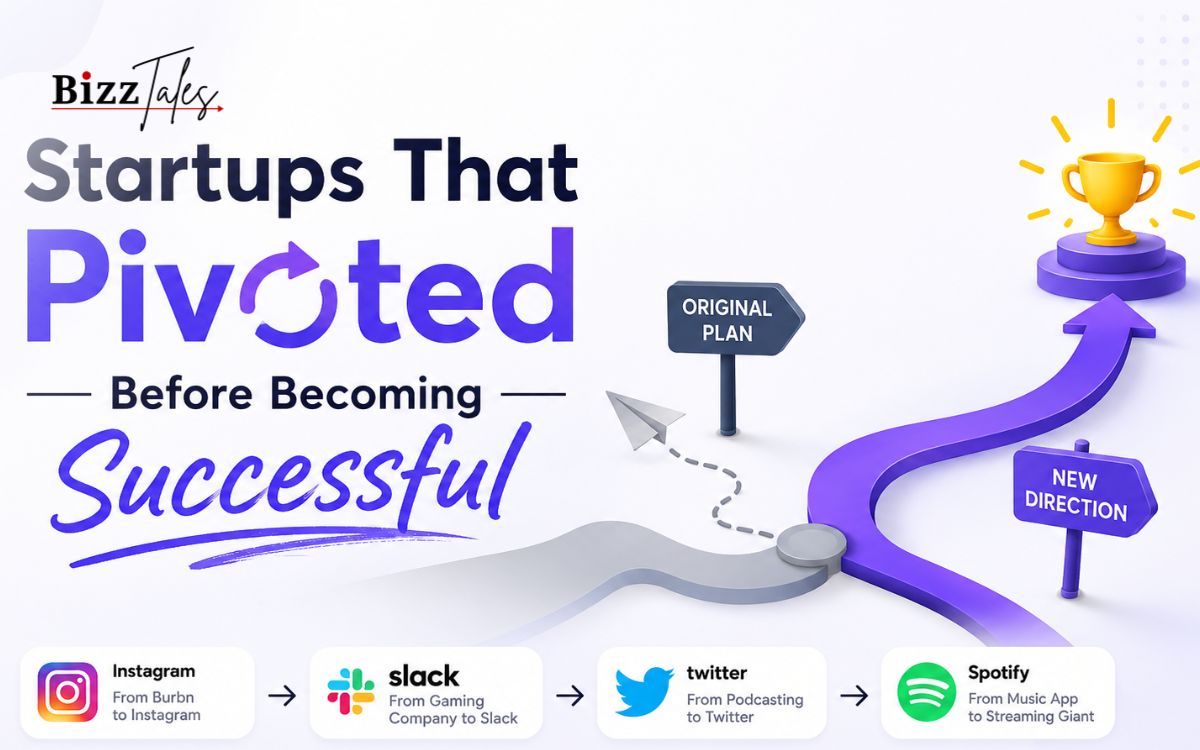
Another well-known example of a startup pivot is Instagram.
Prior to their conversion into a multinational Social Media… In the beginning…. Who was a location based application called Burn, was…
What the founders discovered was.
The app contained gaming aspects, location check in, uploading photos and social features. But the product grew to be too complex and lacked of loyal users’ interest.
Main concern of the users was that they wanted to share photographs.
Rather than pushing forward with the complicated original concept, they de-cluttered it by dumping the unnecessary features and entirely concentrated on uploading pictures.
That resulted in getting left behind and to Instagram.
This simple pivot grew the company into one of the world largest social media sites and eventually brought a multibillion dollar exit.
Twitter Emerged From a Failing Business
Another example of resilience and adaptation is Twitter.
The firm started off as a podcasting platform named Odeo.
Back then podcasting seemed to be potentially a thriving industry. However, once other companies began offering podcast feeds through their services, Odeo’s once bright future was a lot less clear.
The founders saw their need to change campus.
While brainstorming internally, they came up with the idea of short status updates posted publicly via a social service.
This was the beginning of Twitter.
The company moved away from its initial podcasting focus and built a platform of global magnitude for communication, politics, entertainment and news.
Without that pivot, Twitter might never have come about.
YouTube Was Originally a Dating Website
It might surprise you to discover that YouTube was originally conceived as an online dating site.
The original idea was that users would upload videos that introduced them to a possible partner.
Regrettably, this notion did not catch on.
Very few people wanted to upload their dating videos.
Then the founders observed a very interesting:]
The users wanted a simple platform to upload and share videos of any kind.
Was developed into a general video-sharing website.
That decision was an absolute game-changer for the internet.
In today’s world YouTube stands among the largest websites in the world and one of the major sources of entertainment, education, marketing and business.
Slack Began as a Gaming Company
It is now one of the world’s most effective business communication system.
Originally, the company was established as a gaming enterprise before developing itself into the wallowing giant, often trading angry words with its competitors.
They were in the process of developing an online multiplayer game. Despite an enormous investment it turned out to be a flop!
Internally, the team had developed an internal communications tool for better collaboration.
They came to see that the communication software was even more compelling than the game.
The company made a turn.
Not just selling games they started working on Slack launched as a business communication platform.
The pivot worked, and Slack has become a popular workplace tool used by companies worldwide.
Shopify Was Born From Frustration
These examples from Shopify’s founding show how business opportunities can often be found solution to personal problems.
The founders initially ran an e-store that sold snowboards.
The sorts of e-commerce software available at the time were not user friendly, and lacked the adaptability that was desired.
So, having tried all the options they frustrated with, they set up their own website for online business.
Inside however, they came to see that the software had more value than the snowboard business.
They no longer sell products, but now dedicate themselves to assisting other companies establish their online stores.
Today Shopify powers millions of businesses across the globe and has established itself as one of the most influential names in e-commerce.
Why Pivoting Is Not Failure
Numerous entrepreneurs incorrectly interpret pivots as indicators of failure.
In truth, some of history’s top companies only became successful after a change of path.
Pivot equals learning.
Indicates founders listen to customers, look at market environment and decide after proof, not assumption.
The startup ecosystem is also about adaptation.
Organizations that refuse to adapt will most likely suffer when circumstances change.
Flexible businesses will identify opportunities other competitors will have missed.
If anything, like it or not, this ability to pivot successfully is a leadership strength.
Customer Feedback Drives Successful Pivots
Customer feedback is a common contributor to successful pivots.
Founders who are very close to users may find many gems.
While delving deeper into the data, we have discovered a lot of insights that customers didn’t initially mention such as new use cases, unmet needs and upcoming opportunities.
Good startups respond to behavior of customers as an input.
Not holding the bar too high, Mmhmm attempts to use their products to bestservetheir customers real needs, rather than bending everything to the original vision.
This approach leads to resilient and stronger business with a longer term prospect of growth.
The Risks of Pivoting
While pivots are definitely a tool that can offer an opportunity, there can also be risk.
Cal change in direction. There are the resources of time and confidence as well as physical space.
A significant strategic shift may cause doubts among employees, investors, and customers.
A few of the pivots go awry because founders jump into uncharted waters before gathering all the evidence or weigh too heavily on their instincts.
Successful pivots are often analyzed and understood in the conditions of market.
Not to keep changing.
The key is to make sensitive changes if the evidence points to a more favorable position.
Balance.
What Entrepreneurs Can Learn
Stories of startup pivots teach us a few things.
Secondly, the first concept is seldom great.
A lot of founders enter the market with assumptions that have to be refined.
Secondly, customer patterns are often more reliable than personal opinion.
Third, the most crucial entrepreneurial characteristics is the flexibility.
Companies are working in changing situations.
Founders who are flexible work better than founders who are inflexible.
And finally, if you do give up… It isn’t necessarily due to lack of perseverance.
That can mean taking an entirely new path to success.
One of the most crucial decisions entrepreneurs make is knowing where to push forward and where to change course.
The Future of Startup Innovation
With technology advancing and markets becoming more saturated, startups will probably keep positioning for the best market setups.
The development of AI, online platforms, shifting customer insights and new economies are generating an ever-growing list of opportunities.
The successful stories of future start-ups will look quite different from those of today.
One things will never change though.
Those who adapt their plans and that are capable of learning along the way will be the ones that will be able to survive market realities, providing that they innovate and work hard.
Conclusion
Experience in the history of entrepreneurship proves that virtually none of the successful start ups has been built on the original idea.
Instagram, Twitter, YouTube, Slack and Shopify- all successful because their founders saw when change was needed.
Instead of thinking of pivots like failures, entrepreneurs should think of them as opportunities for learning and growth.
Starting out in the business world is far from a straight line.
Achieving this takes excellent listening, a willingness to grow, and the bravery to change when the context requires you to.
One of the most valuable competitive advantages a startup can have may be flexibility in an ever-changing world.
What does a startup pivot mean?
A startup pivot is a change in the product, strategic focus, target customer or growth strategy of a startup.
What are the reasons why startups pivot?
Startups pivot whenever they find a better opportunity, listening to customer feedback, or may find their initial idea is not working properly.
What are some well-known companies that changed direction prior to achieving success?
Some of the most well-known startup pivots are Instagram, Twitter, YouTube, Slack and Shopify.
Is it a failure if you have to do a pivot?
No. Many successful companies grew because they changed course when they needed to.
What is the point when a startup should pivot?
Startups should be ready to pivot when they are not generating enough customer interest or failing to grow, or if a new potential direction seems better than the current one.
What is the most important lesson we can learn from pivots?
The primary lesson is that flexibility and knowledge of the customer are frequently more valuable than following an initial plan to perfection.