
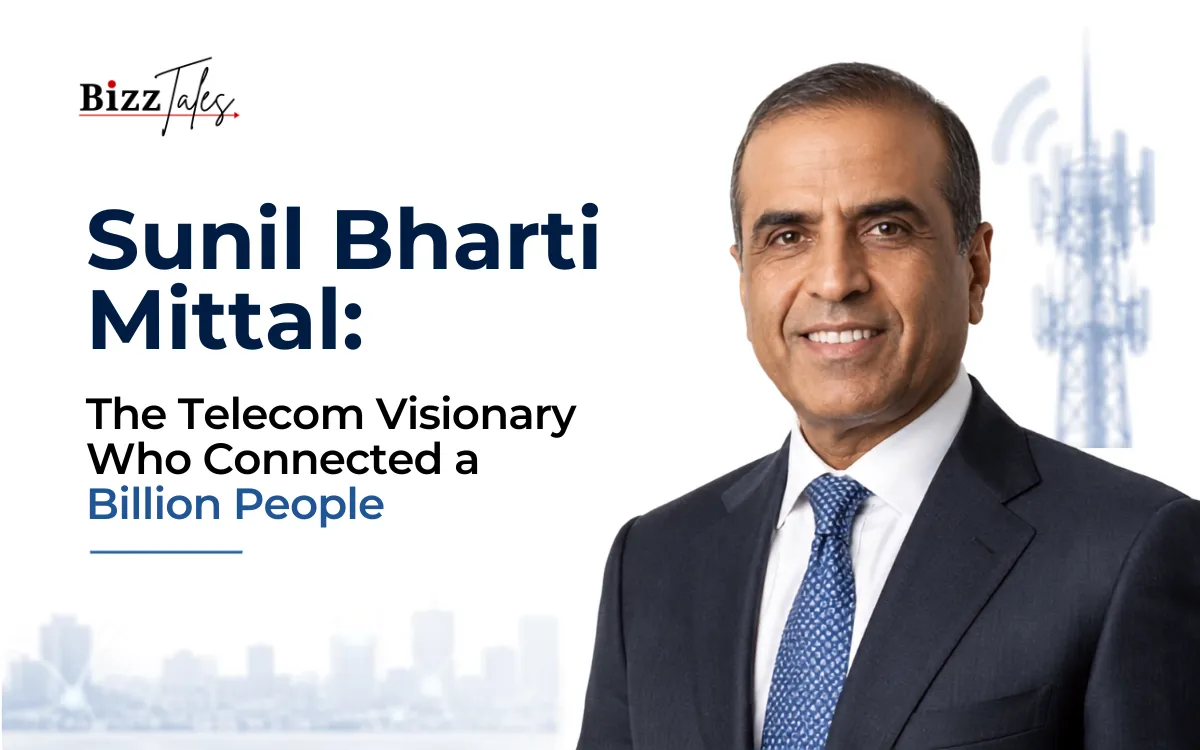
Few entrepreneurs have transformed an industry as profoundly as Sunil Bharti Mittal. Widely regarded as the architect of India’s telecom revolution, Mittal built Bharti Airtel from a small business venture into one of the world’s largest telecommunications companies. His journey from manufacturing bicycle parts in Punjab to becoming one of India’s richest billionaires is a remarkable story of vision, innovation, and relentless execution.
At a time when owning a telephone in India was considered a luxury, Mittal saw an opportunity to democratize communication. He embraced technological change, formed global partnerships, and introduced business models that reshaped the telecommunications landscape. Today, Airtel serves hundreds of millions of customers across Asia and Africa, making Mittal one of the most influential business leaders in emerging markets.
Beyond telecom, Mittal has built a diversified business empire spanning digital infrastructure, satellite communications, financial services, consumer products, and global investments. His story offers valuable lessons in entrepreneurship, strategic thinking, and long-term value creation.
FORBES RANKINGS AND NET WORTH
| Year | Forbes Ranking | Net Worth |
| 2026 | #204 | $14.5 Billion |
| 2025 | India’s Richest List #4 | $34.2 Billion (Family Wealth Estimate) |
| 2024 | Among India’s Richest Billionaires | Approximately $16 Billion |
Rankings and valuations vary depending on market conditions, ownership structures, and Forbes methodologies.
EARLY LIFE AND EDUCATION
Sunil Bharti Mittal was born on October 23, 1957, in Ludhiana, Punjab, India. He grew up in a family deeply involved in public service and leadership. His father, Sat Pal Mittal, was a respected politician and member of the Indian Parliament. Despite coming from a politically connected family, Sunil chose entrepreneurship over politics.
As a child, he displayed a strong interest in business and commerce. Rather than dreaming of government service, he was fascinated by the idea of building companies and creating wealth through enterprise. His early experiences helped shape the entrepreneurial mindset that would later define his career.
Mittal attended Wynberg Allen School and later The Scindia School before pursuing higher education at Panjab University in Chandigarh. He graduated with a bachelor’s degree in Economics and Political Science in 1976.
Unlike many future billionaires who pursued advanced degrees abroad, Mittal entered the business world immediately after graduation. His ambition, combined with a willingness to take risks at a young age, set him on a path that would eventually transform India’s communications industry.
CAREER JOURNEY
Sunil Mittal began his entrepreneurial journey at the age of eighteen when he borrowed money from family sources to start a small manufacturing business. Together with a partner, he produced bicycle crankshafts and components for local manufacturers in Punjab.
Although the venture was successful, Mittal realized that industrial manufacturing offered limited growth opportunities. Seeking larger markets, he moved to Mumbai and began exploring new business ideas. During the early 1980s, he entered the import business and started distributing portable generators in India.
A major turning point occurred when government policy changes disrupted the generator business. Rather than accepting defeat, Mittal searched for emerging opportunities and became interested in telecommunications equipment. He recognized that India’s communication infrastructure would eventually require modernization.
In the mid-1980s, he began importing push-button telephones, introducing technology that was still relatively new in India. This venture marked his first major success in telecommunications and provided the foundation for future expansion.
The defining moment of his career came in 1995 when Bharti Cellular launched mobile services under the Airtel brand. At a time when mobile phones were rare and expensive, Mittal believed that telecommunications would become essential for everyday life.
His vision proved correct. Airtel expanded rapidly across India and later entered international markets. Through innovation, partnerships, and operational excellence, Mittal transformed Airtel into one of the world’s largest telecom operators.
BUSINESS VENTURES
Bharti Enterprises serves as the foundation of Sunil Mittal’s business empire. The group operates across telecommunications, digital infrastructure, satellite communications, financial services, and consumer products.
Bharti Airtel remains the flagship company. The telecom giant serves hundreds of millions of customers across India, Africa, and South Asia. Airtel offers mobile services, broadband internet, enterprise solutions, and digital platforms, making it one of the largest telecommunications providers globally.
Mittal also played a major role in the development of OneWeb, a satellite communications company focused on providing global broadband connectivity. The investment positioned Bharti as a key player in the future of satellite internet services.
Another important venture is Airtel Payments Bank, which provides digital banking and financial services to millions of users. This business supports financial inclusion while expanding Airtel’s ecosystem beyond traditional telecom operations.
Bharti Enterprises has also invested in data centers, digital infrastructure, and international telecommunications projects. Recent investments in large-scale data center developments demonstrate the group’s commitment to supporting the digital economy.
Additionally, Bharti Global has expanded internationally through investments in companies such as BT Group and other strategic telecommunications assets. These ventures have diversified the group’s revenue sources and strengthened its global presence.
SUCCESS STORY AND MAJOR ACHIEVEMENTS
Sunil Mittal’s greatest achievement is undoubtedly the creation of Bharti Airtel. Under his leadership, the company became one of the world’s largest telecom operators and played a critical role in connecting hundreds of millions of people.
He pioneered innovative outsourcing models within the telecom industry. By partnering with global technology companies for network management and infrastructure, Airtel improved efficiency while reducing costs. This model was later studied and adopted by businesses worldwide.
Mittal’s contributions to telecommunications have earned him numerous honors. He received the Padma Bhushan, one of India’s highest civilian awards, in recognition of his contributions to trade and industry.
His international recognition continued to grow. In 2024, he received an honorary knighthood from the United Kingdom, reflecting his role in strengthening business relations between India and Britain.
In 2026, he received the GSMA Lifetime Achievement Award, one of the telecommunications industry’s most prestigious honors, recognizing decades of contributions to global connectivity.
CHALLENGES, FAILURES, AND SETBACKS
Like all successful entrepreneurs, Sunil Mittal encountered significant challenges. His generator import business collapsed after regulatory changes, forcing him to reinvent his career.
The telecom industry itself is highly competitive and capital intensive. Airtel faced fierce competition from domestic and international rivals, including pricing wars that dramatically reduced industry profitability.
The entry of new competitors disrupted market dynamics and required substantial investment in network upgrades, customer acquisition, and digital services. Maintaining market leadership during these periods required difficult strategic decisions.
International expansion also brought challenges. Operating across multiple countries exposed Airtel to regulatory complexities, currency fluctuations, and political risks.
Technological disruption presented another obstacle. As communication shifted from voice services to data and digital platforms, Airtel had to continuously invest in infrastructure and innovation.
Despite these challenges, Mittal consistently demonstrated adaptability and resilience, allowing Airtel to remain one of the industry’s strongest players.
INVESTMENTS AND ASSETS
The majority of Sunil Mittal’s wealth comes from his ownership interests in Bharti Airtel and Bharti Enterprises. Airtel’s extensive telecommunications infrastructure and customer base represent some of the most valuable assets in the group.
His investment portfolio also includes stakes in satellite communications ventures, digital infrastructure projects, financial services companies, and international telecommunications businesses.
One of the most notable recent investments is Bharti Global’s stake in BT Group, one of the United Kingdom’s largest telecommunications companies. This investment significantly expanded Mittal’s influence in international telecom markets.
He has also invested in data centers, cloud infrastructure, and emerging digital technologies. These assets position Bharti to benefit from increasing demand for digital services and connectivity.
His investment philosophy focuses on sectors driven by long-term technological trends and growing consumer demand.
LEADERSHIP STYLE AND BUSINESS PHILOSOPHY
Sunil Mittal is known for a leadership style built on innovation, partnership, and long-term thinking. He believes that successful businesses must continuously adapt to technological change while remaining focused on customer needs.
One of his core principles is collaboration. Rather than attempting to control every aspect of operations internally, he frequently forms strategic partnerships with global organizations to accelerate growth and improve efficiency.
Mittal also emphasizes scalability. Many of his most successful decisions involved creating business models capable of serving millions of customers while maintaining operational discipline.
Another defining characteristic is optimism. Throughout his career, he consistently pursued opportunities in industries undergoing transformation, believing that technological change creates more opportunities than risks.
His philosophy demonstrates that sustainable success comes from combining vision, execution, and adaptability.
PERSONAL LIFE
Sunil Mittal is married to Nyna Mittal, and together they have three children, including entrepreneur Kavin Bharti Mittal. Family plays a significant role in both his personal and professional life.
He is deeply involved in philanthropy through the Bharti Foundation, which focuses on education, rural development, and social empowerment. The foundation has supported numerous initiatives aimed at improving educational opportunities across India.
Mittal is also active in international business organizations and advisory councils. Throughout his career, he has contributed to discussions on trade, technology, economic development, and global connectivity.
Despite his immense wealth, he is often described as approachable, disciplined, and focused on long-term impact rather than personal publicity.
LEGACY AND FUTURE OUTLOOK
Sunil Mittal’s legacy is closely tied to India’s digital transformation. Through Airtel, he helped make mobile communication accessible to hundreds of millions of people and contributed significantly to economic development.
His investments in satellite communications, data centers, and digital infrastructure suggest that he remains focused on the future of connectivity. Recent expansion into data centers and global telecommunications investments highlights his continued commitment to innovation.
The next phase of his legacy may be shaped by developments in artificial intelligence, cloud computing, and satellite broadband. Bharti’s positioning in these sectors provides substantial opportunities for future growth.
Future entrepreneurs will likely study Mittal’s career as an example of how vision, persistence, and adaptability can create industry-defining success.
CONCLUSION
Sunil Bharti Mittal’s journey from a young businessman manufacturing bicycle parts in Punjab to one of the world’s most influential telecom entrepreneurs is a remarkable example of entrepreneurial excellence. Through Bharti Airtel and Bharti Enterprises, he built a global business empire that transformed how people communicate, work, and connect.
His achievements extend beyond financial success. By expanding access to communication and digital services, he contributed to economic development and social progress across multiple continents.
Despite facing regulatory changes, intense competition, and technological disruption, Mittal consistently demonstrated the resilience and strategic thinking necessary for long-term success.
Today, Sunil Bharti Mittal stands among the most respected business leaders in the world, with a legacy that continues to shape the future of global connectivity.
FAQS
What is Sunil Bharti Mittal’s net worth in 2026?
Sunil Bharti Mittal’s estimated net worth in 2026 is approximately $14.5 billion according to Forbes Billionaires rankings.
How did Sunil Bharti Mittal become a billionaire?
He became a billionaire by founding Bharti Airtel and building one of the world’s largest telecommunications companies.
What companies does Sunil Bharti Mittal own?
He controls Bharti Enterprises, which includes Bharti Airtel, Airtel Payments Bank, OneWeb investments, data center businesses, and various international telecom holdings.
What is Sunil Bharti Mittal’s leadership style?
His leadership style emphasizes innovation, strategic partnerships, scalability, operational efficiency, and long-term value creation.
What is Sunil Bharti Mittal’s biggest business achievement?
His biggest achievement is building Bharti Airtel into one of the world’s largest telecommunications companies and helping drive India’s telecom revolution.