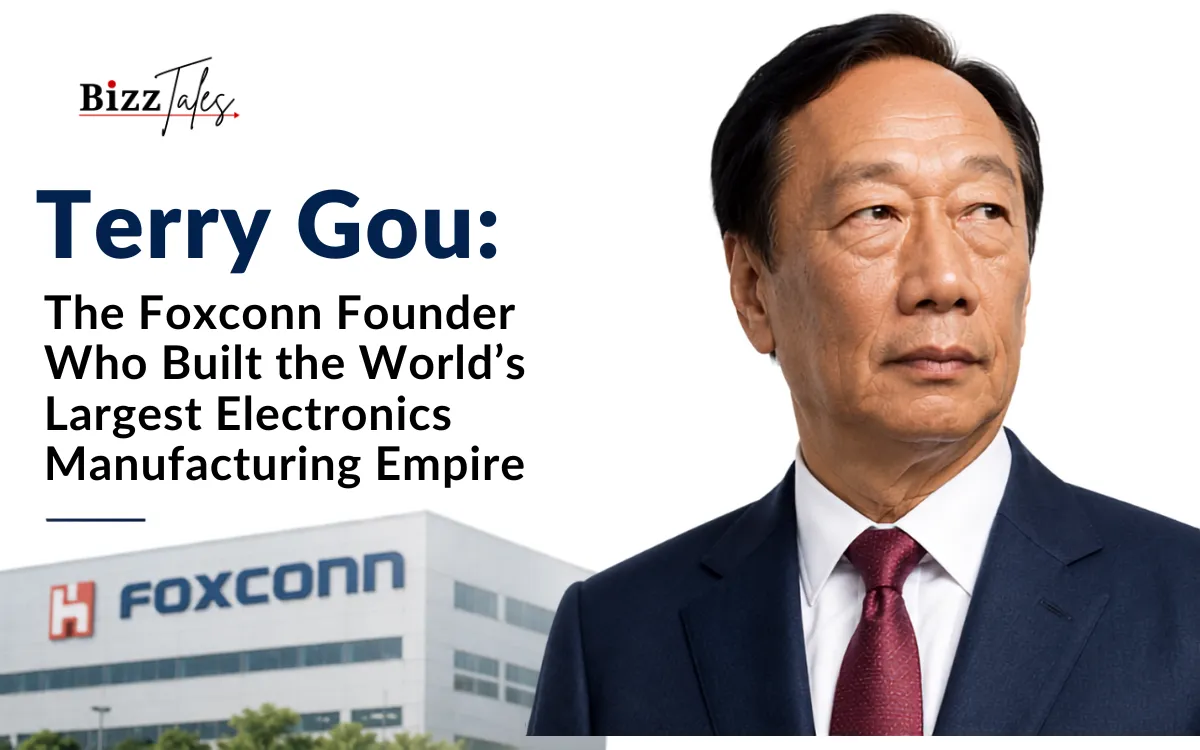
Few entrepreneurs have influenced the global technology industry as profoundly as Terry Gou. While consumers worldwide recognize brands such as Apple, Sony, Microsoft, Dell, and Nintendo, many are unaware that a significant portion of their products have been manufactured by a company founded by Gou. As the founder of Foxconn, officially known as Hon Hai Precision Industry, Terry Gou built the world’s largest electronics manufacturing company and became one of Asia’s most influential business leaders.
Unlike many technology billionaires who created software platforms or consumer brands, Gou built his fortune through manufacturing excellence. He transformed a small workshop into a global industrial empire that employs hundreds of thousands of people and produces electronics for many of the world’s largest corporations.
His story is one of determination, discipline, and relentless ambition. Starting with limited resources and a modest loan from his mother, Gou created a company that became an essential part of the global technology supply chain. Over the decades, he established himself as one of Taiwan’s most successful entrepreneurs and one of the most important figures in modern manufacturing.
Today, Terry Gou’s legacy extends beyond business. His influence can be seen in global electronics production, international trade, technological innovation, and philanthropy. His journey remains one of the most remarkable entrepreneurial success stories in Asia.
Forbes Rankings and Net Worth
| Year | Forbes Ranking | Net Worth |
| 2026 | Among Taiwan’s Richest Billionaires | Approximately $12.8 Billion |
| 2025 | Forbes Global Billionaire | Approximately $11.5 Billion |
| 2024 | Among Asia’s Leading Manufacturing Entrepreneurs | Approximately $10.9 Billion |
A significant portion of Terry Gou’s wealth comes from his ownership stake in Foxconn and investments across technology, manufacturing, healthcare, and infrastructure sectors.
Early Life and Education
Terry Gou was born on October 8, 1950, in Banqiao, Taiwan. His family had moved to Taiwan from mainland China during a period of political change. Unlike many billionaires who grew up in affluent households, Gou’s childhood was relatively modest.
His father worked as a police officer, and the family often faced financial constraints. These early experiences taught Gou the value of hard work, discipline, and persistence. He frequently spoke about how difficult circumstances motivated him to pursue success and create opportunities for himself.
As a student, Gou displayed determination but was not known as an academic prodigy. He attended vocational and technical schools where he developed practical skills and an appreciation for engineering and manufacturing.
Although he briefly attended college, financial limitations prevented him from completing his degree. Instead of viewing this setback as a defeat, Gou entered the workforce and began learning through real-world experience.
His early exposure to business operations and industrial processes helped shape the entrepreneurial mindset that would later define his career.
Career Journey
Terry Gou’s entrepreneurial journey began in 1974 when he founded Hon Hai Precision Industry, later known internationally as Foxconn.
The company started with a small investment reportedly borrowed from his mother. Operating from a modest workshop with only a handful of employees, Foxconn initially manufactured plastic components for television sets.
The early years were challenging. Competition was intense, resources were limited, and attracting customers required constant effort. However, Gou’s commitment to quality and efficiency gradually earned the trust of clients.
As the electronics industry expanded during the 1980s and 1990s, Foxconn diversified into computer connectors and electronic components. Gou recognized that global technology companies increasingly needed reliable manufacturing partners capable of producing large volumes while maintaining consistent quality.
This insight proved transformative.
Rather than focusing on developing consumer products, Gou concentrated on becoming the best manufacturing partner in the world. This strategy enabled Foxconn to secure contracts with some of the largest technology companies on the planet.
The company’s growth accelerated dramatically as personal computers, smartphones, and consumer electronics became mainstream. By continuously investing in factories, automation, and supply chain capabilities, Foxconn established itself as the dominant force in electronics manufacturing.
Under Gou’s leadership, the company expanded across China, Asia, Europe, and the Americas, creating one of the most sophisticated manufacturing networks in history.
Business Ventures
Foxconn remains Terry Gou’s most significant business achievement and the foundation of his wealth.
The company became the primary manufacturing partner for numerous global technology giants. Over the years, Foxconn produced devices for Apple, Microsoft, Sony, Dell, HP, Cisco, Nintendo, Amazon, and many other leading brands.
One of Foxconn’s most important partnerships was with Apple. The company became responsible for assembling millions of iPhones, iPads, and other Apple products, helping establish itself as a critical player in the global technology ecosystem.
Beyond consumer electronics, Foxconn expanded into cloud computing infrastructure, semiconductors, telecommunications equipment, electric vehicles, robotics, and healthcare technology.
Gou understood that manufacturing would continue evolving and invested heavily in automation and advanced production technologies. These investments enabled Foxconn to maintain competitiveness despite rising labor costs and changing market conditions.
The company also entered the electric vehicle industry, aiming to replicate its manufacturing success within the automotive sector. This initiative reflects Gou’s belief that future transportation will increasingly resemble the consumer electronics industry.
Through diversification and continuous innovation, Foxconn evolved from a component manufacturer into a global technology powerhouse.
Success Story and Major Achievements
Terry Gou’s career is filled with extraordinary achievements.
His greatest accomplishment is undoubtedly the creation of Foxconn, which grew from a small startup into the world’s largest electronics manufacturing company.
The scale of this achievement is difficult to overstate. Foxconn became one of the largest private employers globally and played a central role in producing devices used by billions of people.
Another significant milestone was establishing long-term partnerships with major technology companies. These relationships generated enormous revenue and helped position Foxconn as an indispensable part of the global supply chain.
Gou also demonstrated remarkable foresight by expanding manufacturing operations throughout China during the country’s period of rapid industrialization. This strategic decision allowed Foxconn to achieve economies of scale unmatched by competitors.
His contributions to manufacturing innovation earned numerous awards and recognitions from business organizations, governments, and industry groups.
Over the years, Gou became one of Taiwan’s wealthiest and most influential business leaders.
Challenges, Failures, and Setbacks
Despite his extraordinary success, Terry Gou faced numerous challenges throughout his career.
Managing a global manufacturing empire involves significant operational complexity. Supply chain disruptions, labor shortages, changing regulations, and economic fluctuations constantly tested Foxconn’s resilience.
One of the most widely publicized challenges involved labor conditions at certain manufacturing facilities. Media scrutiny and public criticism forced the company to implement reforms and improve workplace standards.
Competition within the manufacturing sector also intensified over time. Rival firms sought to capture contracts from major technology companies, increasing pressure on margins and operational efficiency.
Geopolitical tensions created additional complications. Trade disputes, changing international policies, and shifting supply chain strategies required continuous adaptation.
The COVID-19 pandemic further highlighted the vulnerabilities of global manufacturing networks. Foxconn faced temporary disruptions but ultimately demonstrated resilience through rapid operational adjustments.
These challenges underscored the complexity of managing one of the world’s largest industrial organizations.
Investments and Assets
Most of Terry Gou’s wealth originates from his ownership stake in Foxconn and related technology ventures.
However, his investment portfolio extends well beyond electronics manufacturing. Over the years, Gou diversified into healthcare, biotechnology, real estate, infrastructure, telecommunications, and emerging technologies.
He has also invested heavily in research and development initiatives designed to strengthen Foxconn’s long-term competitiveness.
Real estate holdings represent another significant component of his asset portfolio. As Foxconn expanded globally, the company acquired manufacturing facilities, research centers, and strategic properties across multiple countries.
More recently, investments in electric vehicles and advanced manufacturing technologies have become increasingly important. These sectors align with Gou’s vision for the future of industrial production.
His investment philosophy emphasizes long-term growth, operational excellence, and technological innovation.
Leadership Style and Business Philosophy
Terry Gou is known for a leadership style characterized by discipline, intensity, and relentless focus on execution.
One of his core beliefs is that success comes from operational excellence rather than short-term financial engineering. Throughout his career, he emphasized efficiency, quality, and continuous improvement.
Gou is often described as a demanding leader who sets ambitious goals and expects high performance from his teams. While this approach sometimes attracted criticism, it also helped drive Foxconn’s remarkable growth.
Innovation plays a central role in his philosophy. Although Foxconn operates primarily as a manufacturer, Gou consistently invested in advanced technologies and automation.
Another defining characteristic is long-term thinking. Rather than chasing temporary trends, he focuses on industries and opportunities capable of generating value over decades.
His leadership demonstrates the importance of persistence, adaptability, and strategic vision in building large-scale enterprises.
Personal Life
Despite his public profile, Terry Gou maintains a relatively private personal life.
He is known for his strong work ethic and commitment to business. Throughout much of his career, he devoted significant time and energy to expanding Foxconn’s operations.
Family remains an important part of his life. Following the passing of his first wife, Gou later remarried and continued balancing personal responsibilities with business leadership.
Outside work, he has shown interest in philanthropy, healthcare, education, and social development initiatives. He has contributed substantial resources to charitable causes and medical research projects.
His philanthropic activities reflect a belief that business success should create positive social impact beyond financial returns.
Legacy and Future Outlook
Terry Gou’s legacy is deeply connected to the globalization of technology manufacturing.
Through Foxconn, he helped create the infrastructure that enabled the modern consumer electronics industry to flourish. Millions of devices used every day were manufactured through systems and facilities developed under his leadership.
His influence extends beyond manufacturing. By demonstrating how operational excellence can create enormous value, Gou inspired a generation of entrepreneurs and industrial leaders.
Looking ahead, Foxconn’s investments in electric vehicles, artificial intelligence, robotics, and advanced manufacturing suggest that the company will continue evolving alongside emerging technologies.
Even after stepping back from day-to-day management responsibilities, Gou’s vision continues shaping the company’s strategic direction.
His long-term impact on technology, manufacturing, and global commerce is likely to endure for decades.
Conclusion
Terry Gou’s journey from a small workshop owner to the founder of the world’s largest electronics manufacturing company is one of the most remarkable entrepreneurial stories of the modern era.
Through discipline, strategic thinking, and relentless execution, he transformed Foxconn into a cornerstone of the global technology industry. His ability to anticipate industry trends and build world-class manufacturing capabilities created extraordinary value and lasting influence.
For entrepreneurs, business leaders, and aspiring innovators, Terry Gou’s story offers powerful lessons about persistence, operational excellence, and long-term vision.
Today, he remains one of Asia’s most influential business figures, and his contributions continue shaping the devices, technologies, and industries that define modern life.
FAQs
1. What is Terry Gou’s net worth in 2026?
Terry Gou’s estimated net worth in 2026 is approximately $12.8 billion.
2. How did Terry Gou become a billionaire?
He became a billionaire by founding Foxconn and building it into the world’s largest electronics manufacturing company.
3. What company does Terry Gou own?
Terry Gou is the founder of Foxconn, also known as Hon Hai Precision Industry, one of the world’s largest technology manufacturers.
4. What is Terry Gou’s leadership style?
His leadership style emphasizes discipline, operational excellence, innovation, efficiency, and long-term strategic planning.
5. What is Terry Gou’s biggest business achievement?
His biggest achievement is transforming Foxconn from a small electronics workshop into the world’s largest electronics manufacturing empire.