India’s payment system has changed dramatically over the last few years. Earlier, cash was the most common payment method for shopping, travel, and daily expenses. Today, digital payments have become part of everyday life for millions of Indians.
From roadside tea stalls to large shopping malls, digital payment options are available almost everywhere. Among all payment systems, UPI and credit cards have become two of the most important methods for online and offline transactions.
UPI transformed digital payments by making transactions simple, fast, and free for users. At the same time, credit cards continue offering rewards, credit facilities, and financial flexibility.
As India’s digital economy grows rapidly, many people are now asking an important question — will UPI completely replace credit cards in the future, or will both systems continue growing together?
Understanding UPI
UPI, also known as Unified Payments Interface, is a real-time digital payment system developed in India.
It allows users to transfer money instantly between bank accounts using smartphones.
UPI became extremely popular because of its simplicity and convenience. People can make payments using mobile numbers, QR codes, or UPI IDs without entering long bank details.
Growth of UPI in India
UPI’s growth has been extraordinary.
Within a few years, it became one of the world’s largest digital payment systems.
People use UPI daily for:
- shopping
- bill payments
- online purchases
- food delivery
- ticket booking
- small business transactions
Its speed and ease of use made it highly popular across cities and villages.
Why UPI Became So Successful
Several factors contributed to UPI’s rapid success in India.
One major reason was smartphone and internet growth.
Affordable mobile data and increasing digital awareness helped millions of people adopt online payments quickly.
QR Code Revolution
QR codes played a major role in UPI adoption.
Even small vendors and local shopkeepers started accepting digital payments because QR systems were simple and low-cost.
This increased digital payment usage across India rapidly.
Understanding Credit Cards
Credit cards work differently from UPI.
A credit card allows users to spend money on credit and repay later.
Banks provide credit limits based on customer profiles and financial history.
Credit cards became popular because they offer convenience, rewards, cashback, and emergency spending flexibility.
Advantages of Credit Cards
Credit cards provide several benefits such as:
- reward points
- cashback offers
- EMI options
- airport lounge access
- purchase protection
- short-term credit availability
These features make them attractive for many users.
Difference Between UPI and Credit Cards
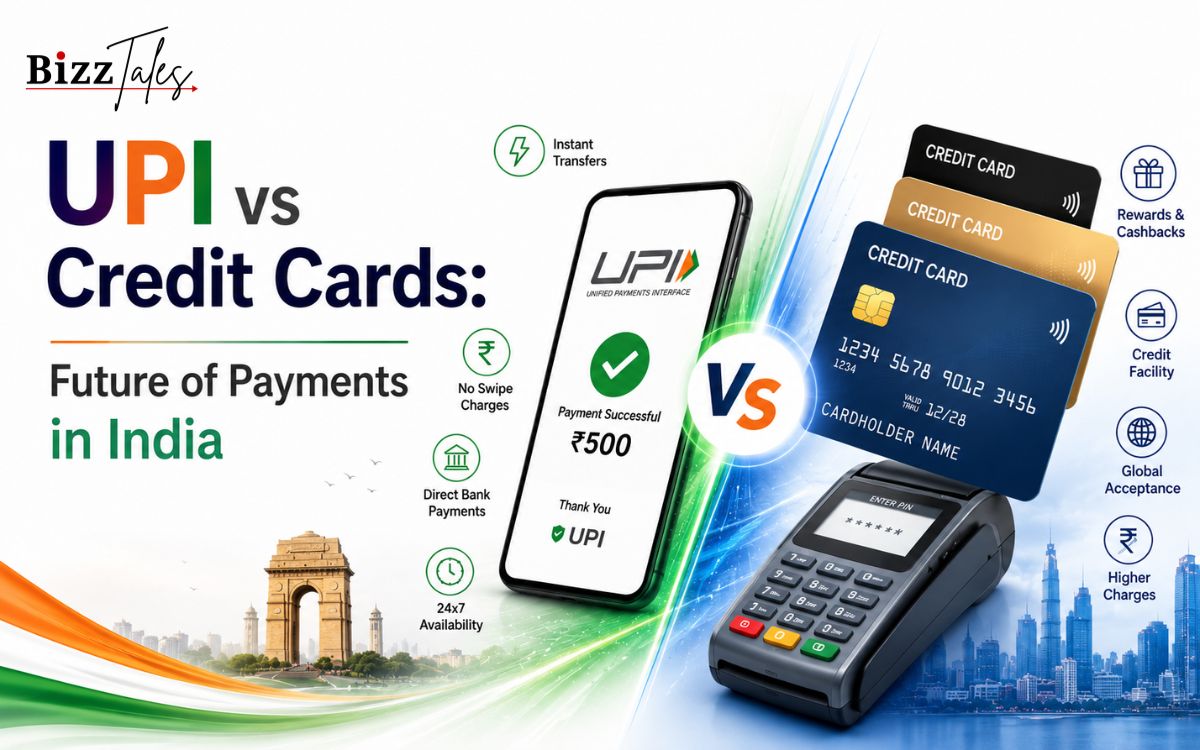
The biggest difference is that UPI usually transfers money directly from bank accounts, while credit cards allow spending borrowed money.
UPI is mainly focused on instant payments, while credit cards also function as financial tools for credit access.
Why Young Indians Prefer UPI
UPI is especially popular among younger users because it is fast, simple, and free in most cases.
People do not need to carry wallets or cards. Payments can happen instantly through smartphones.
Why Credit Cards Still Matter
Despite UPI growth, credit cards continue holding strong importance.
People who travel frequently, shop online heavily, or want credit benefits still prefer cards for larger expenses.
Impact on Small Businesses
UPI transformed small business payments across India.
Local vendors who earlier accepted only cash now receive digital payments instantly.
This increased financial inclusion and digital business participation.
Rise of Digital Economy
India’s digital economy expanded rapidly because of systems like UPI.
The ease of online transactions encouraged more people to shop digitally and use banking services.
Security Concerns in Digital Payments
As digital payments grow, security concerns also increase.
Fraud, scams, phishing, and cybercrime became major challenges for both UPI and credit card users.
Banks and fintech companies continuously improve security systems to protect users.
Government Support for Digital Payments
The Indian government strongly promoted digital payment adoption through policy support and awareness campaigns.
UPI became one of the biggest success stories of India’s digital transformation.
Credit Card Industry Is Also Growing
Although UPI dominates small daily transactions, credit card usage is also increasing in India.
As incomes rise and online shopping expands, more people are using credit-based financial products.
Can UPI Replace Credit Cards Completely?
Many experts believe UPI may not completely replace credit cards.
Both systems solve different financial needs.
UPI focuses on fast bank-to-bank payments, while credit cards provide borrowing power and financial flexibility.
Future of Digital Payments in India
India’s payment ecosystem is expected to become even more advanced in the future.
Artificial intelligence, biometric security, wearable payments, and integrated financial systems may further transform how people make transactions.
Business Opportunities in Fintech
The rapid growth of digital payments created massive opportunities for fintech startups and businesses.
Companies working in payment technology, cybersecurity, lending, and financial services are growing rapidly.
Business Lessons from UPI’s Success
UPI’s success teaches several important lessons.
One lesson is the importance of simplicity. Technology adoption increases when systems become easy for common people to use.
Another lesson is scalability. UPI successfully handled millions of transactions daily at massive scale.
Impact on Banking Industry
Digital payment systems forced banks to modernize services and improve mobile banking infrastructure.
The banking and fintech industries became more connected than ever before.
Conclusion
UPI and credit cards both play important roles in India’s rapidly growing digital payment ecosystem.
UPI changed daily payments by making transactions simple, fast, and accessible for everyone. Credit cards continue offering financial flexibility and premium benefits.
Instead of one replacing the other completely, both systems are likely to grow together while serving different user needs.
India’s payment future will probably become more digital, faster, and technology-driven in the coming years.
For businesses, entrepreneurs, and consumers, understanding this transformation is important because digital payments are becoming one of the strongest foundations of India’s modern economy.
FAQs
What is UPI?
UPI is a real-time digital payment system that allows instant bank-to-bank transfers through smartphones.
Why is UPI so popular in India?
UPI became popular because it is fast, simple, and widely accepted across businesses and shops.
What are the advantages of credit cards?
Credit cards offer rewards, cashback, EMI options, and short-term credit flexibility.
Can UPI replace credit cards completely?
UPI may not fully replace credit cards because both systems serve different financial purposes.
Why is India’s digital payment industry growing rapidly?
Smartphone growth, internet access, fintech innovation, and government support are driving digital payment growth in India.