
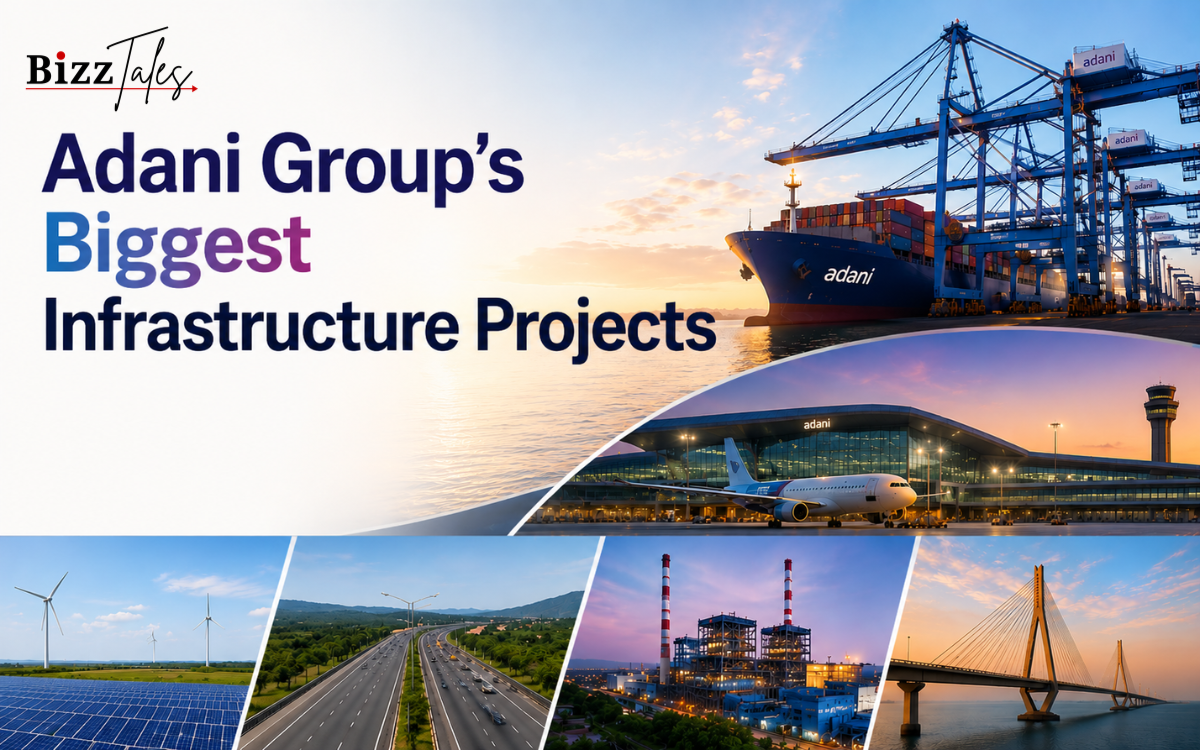
Adani Group has developed into one of the largest business groups in India having its presence in the infrastructure sector. The group grew exponentially in the past few years with its operations covering ports, airports, renewable energy, logistics, road construction, mining and power generation.
The group became deeply involved in projects related to India’s economic growth and development of the country’s infrastructure. Large size transportation projects, energy projects and logistic networks became one of its core business areas.
Meanwhile, Adani Group has continued to be among the most controversial companies in the country, on account of aggressive growth approach, huge investments and debt and corporate governance issues.
Nevertheless, over the objections of critics and despite the market forces, the group is continuing its major infrastructure projects, which are surely going to define the economy of India in coming days.
- The Rise of Adani Group
- Importance of Infrastructure in India
- Mundra Port – The Biggest Turning Point
- Expansion into Ports Business
- Airport Infrastructure Projects
- Solar Manufacturing and Green Energy
- Power Generation and Distribution
- Road and Highway Projects
- Aggressive Expansion Strategy
- Economic Impact of Adani Projects
- Future of Adani Infrastructure Projects
- India's Infrastructure Growth and Adani Group
- FAQs
The Rise of Adani Group
Gautam Adani- The man behind Adani Group. Gautam Adani established the company as a trading concern in commodities and later expanded into infrastructure space.
The company’s approach was based on being involved in those segments that contribute to the future growth of India. Moreover, rather than venturing into businesses that were purely consumer-driven, Adani Group made investments in segments that cater to trade, transportation and energy among others.
Importance of Infrastructure in India
The infrastructure is among the major factors for the development of an economy.
Transport infrastructure (roads, ports, airports, logistics systems) and energy infrastructure (generation, and transmission and distribution of energy) are directly impacting on industrial development and trade efficiency.
The rapidly increasing population and booming economy of India led to a huge demand for modern infrastructure, which Adani Group boldly and aggressively took over.
Mundra Port – The Biggest Turning Point
- Mundra Port in Gujarat is one of the Adani Group’s major projects.
- Mundra went on to become one of the largest commercial ports in the country and was to dramatically change the future for the company.
- The port manages significant flow of cargo and is an important participant in the trade and logistics sector.
- Its strategic location and scale helped the Adani Group to build its dominance in the infrastructure sector of India.
Expansion into Ports Business
Post the implementation of Mundra, Adani diversified its port portfolio by acquiring several other ports within India.
Developed integrated logistics systems related to transportation and industrial supply chains.
Ports proved to be one of the strongest pillars on which the growth of Adani Group was based.
Airport Infrastructure Projects
Enterprises gained management of numerous airports in India and began concentrating on upgrading and improving operations.
This move established a stronghold in the transportation infrastructure of the group.
Renewable Energy Investments
The biggest areas to look into for the future for Adani Group is in the renewable energy sector.
The company put in a lot of money into solar power and clean energy when the world needed more of this.
The other area where the opportunities arising out of India’s focus on renewable energy has been huge is large scale solar infrastructure.
Solar Manufacturing and Green Energy
The Adani Group wants to grow as a competitive player in the green energy and solar manufacturing market.
The company is developing massive renewable energy projects to help further India’s clean energy transition.
Power Generation and Distribution
Besides renewable energy, the Adani Group ventured into thermal power generation and electricity distribution.
Energy evolved into one of the company’s most profitable divisions.
Logistics and Transportation Networks
Adani Group targeted logistics because efficiency in transportation is the key to industry growth.
The company also produced integrated systems linking ports, railway stations, warehouses and cargo terminals.
This strengthened the supply chain infrastructure in various sectors.
Road and Highway Projects
They went into the development of roads and highway infrastructure.
Transport facilities need to be enhanced to bring down logistics costs and enhance economic connectivity.
Data Centers and Digital Infrastructure
With the growth of digital economy in India, Adani Group also entered into digital infrastructure and data center segments.
Indicates the company’s focus on targeting emerging markets.
Aggressive Expansion Strategy
It has aggressive and rapid expansion plans across the sectors.
More than having a small stage in one industry, the company gets involved in several infrastructure industries at the same time.
This created a varied business empire but also added to the financial pressure and market attention.
Challenges and Controversies
In addition to development, controversies and criticisms also emerged.
It was also said about the company that its debt, corporate governance and financial management practices were questionable.
The investors’ confidence during these times was also affected by the market fluctuations and the global reports.
Economic Impact of Adani Projects
Adani Group’s project and business activities have created numerous job opportunities and boosted infrastructure development.
The ports, airports, energy projects and logistics systems commissioned by the company facilitate trade and industry in India.
Here are some business lessons we learn from Adani Group:
Another lesson is the need for a long-term perspective. Infrastructure businesses are built with time and scale in mind.
Another lesson that it is essential to take from the case is the importance of diversification. The company diversified in interconnected industry rather than focusing on a sole one.
Simultaneously, the story also demonstrates the dangers of aggressive expansion and high leverage.
Future of Adani Infrastructure Projects
In 2026, Adani Group continues focusing on:
- renewable energy
- logistics expansion
- airport modernization
- digital infrastructure
- transportation systems
- green energy projects
Becomes more prominent in India’s infrastructure development.
India’s Infrastructure Growth and Adani Group
The economy of India is likely to grow at an unprecedent pace in the future.
Significant capital investments will continue to be necessary to support transportation, manufacturing, trade, and energy development.
Adani Group is likely to continue being one of the key players in this change.
Conclusion
The journey of This Group’s infrastructure is considered as one of the largest business expansion stories in the recent history of India.
The company established an infrastructure network throughout India that was involved with economic growth for the entire nation-from ports and airports to renewable energy and logistics.
At the same time, as it grew so quickly, there was also much discussion about debt, growth strategy and corporate governance.
For entrepreneurs and business readers, the story of Adani Group teaches you about vision, scale, aspiration and the difficulties of creating large infrastructure enterprises.
FAQs
What is Adani Group famous for?
Adani Group is known for ports, airports, energy, logistics, and infrastructure businesses.
Who founded Adani Group?
Adani Group was founded by Gautam Adani.
What is the biggest infrastructure project?
Mundra Port is considered one of the company’s biggest and most important infrastructure projects.
Is Adani investing in renewable energy?
Yes, Adani Group is heavily investing in solar energy and green infrastructure projects.
Why is Adani Group important for India?
The company plays a major role in infrastructure development, logistics, transportation, and energy sectors in India.