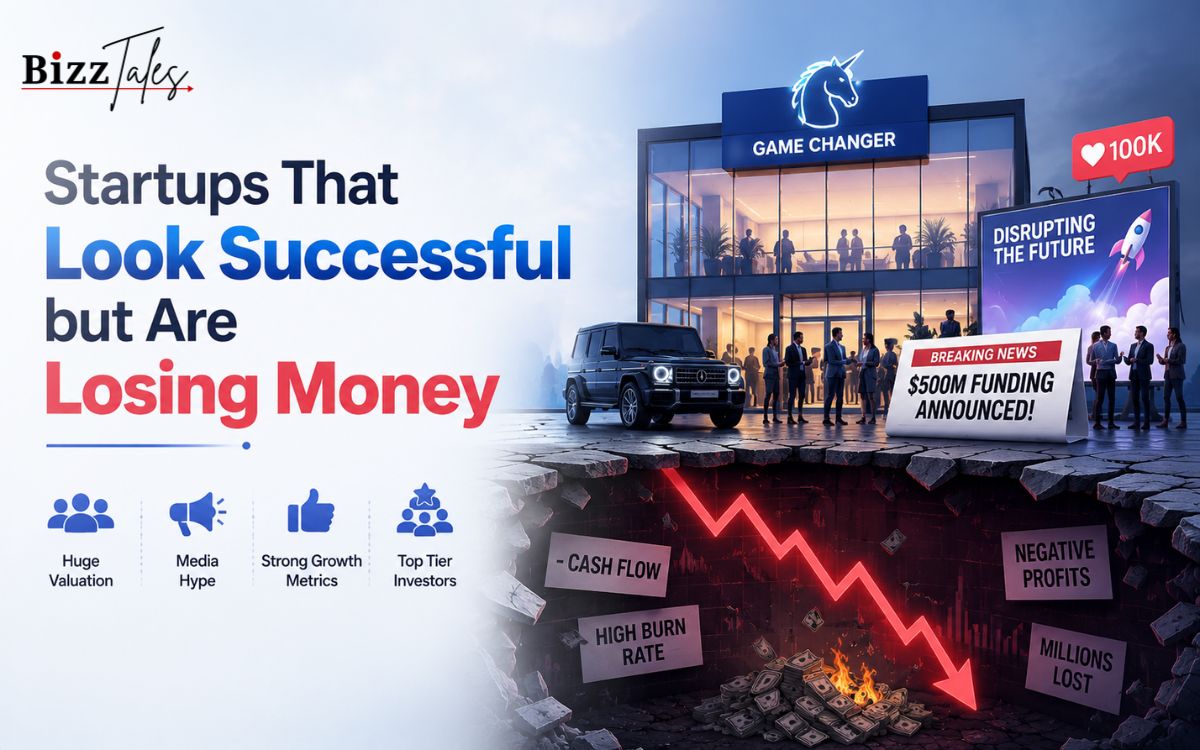
In today’s startup world, we seem to evaluate success by popularity, money, hype, and valuation. Every day we are bombarded with stories of startup founders getting lots of media attention, raising millions of dollars, launching luxury offices, hiring armies of new employees, and expanding aggressively. From the outside, these companies appear tremendously successful and unstoppable.
However, the actual story behind many startups is just the opposite.
There are a lot of startups that look like they are doing great when in fact they’re hemorrhaging cash. They can have great brands, big teams, their name in the papers and millions of customers but behind the scenes, the company is dying a very slow and painful death.
This was prevalent in today’s startup culture where the emphasis is on growth rather than on making a profit. Investors even back companies that are losing money for years, expecting future profits.
While that may work for a few startups, the fact remains that most startups keep losing money without establishing a viable business. When investment winds down, or the market, startups face real difficulties.
It is essential to understand why all these startups that seem to look successful are not making money because we need to grasp how the current startup environment actually operates.
The Startup Success Illusion
A lot of people mix up visibility and profit.
A startup will seem to be everywhere on the web, be advertising heavily, collaborating with celebrities, sponsoring shows, receiving widespread media coverage. Customers are going to think that the business is crushing it.
However, the truth is, popularity does not always lead to profit.
Some startups throw massive investor money at the wall just to get a fleeting glimpse of visibility and market pre-eminence.
Growth Became More Important Than Profits
In traditional business, profitability has always been regarded as one of the most important indicators of success.
However, contemporary startup culture has altered this mentality. Today, numerous investors are more interested in fast growth, acquisition and market expansion.
The logic is simple:
The startup needs to capture a large market share rapidly; this can lead to profitability down the line.
Investor Funding Changed Startup Culture
How venture capital, once readily available, transformed startups.
Many startups raise tens of millions of dollars from investors before they are profitable, and can therefore afford to spend big on marketing, discounts, hiring, and expansion.
Initially this leads to fast expansion and hype in the press. However in some cases firms become overly reliant on investor funding rather than on good revenue structures.
Discounts Create Artificial Growth
One of the top causes of startup failure is agressive discounting:
Offering 50% discounts, cashback offers and low prices to lure customers many companies. Customers love low prices and the number of users increases rapidly.
But, in this stage, businesses do not make profit on each transaction.
So far, the group believes that customers will become loyal as they will stay loyal after discounts end. However, this is not always the case.
Marketing Costs Became Extremely High
The competition among the digital marketing has massively grown in the past few years.
Startups are now splashing out on Instagram ads, Google advertising, influencer marketing, YouTube marketing, sponsorship and branding campaigns.
Once the marketing expenses increase significantly even if sales remain at very high levels it becomes difficult to achieve the same level of profitability.
Valuation Does Not Equal Profit
This is one of the biggest myths of the startup world.
Even a billion dollar startup can be a money-losing concern.
A valuation is really about what investors expect in the future growth, not where the business is now.
Social Media Creates a Fake Image
Social media is also a massive factor for the perception of startup.
Entrepreneurs have a tendency to broadcast their funding news, development strategy, office culture movies, recruitment updates, and so on online.
This produces a buzz, while making start ups look enormously successful to the outside world.
However, the audience is less aware of the financial losses, operational pressures and internal struggles happening behind the camera.
Customer Acquisition Is Expensive
It was getting harder and more costly to acquire customers.
Competitive environment is very intense in such sectors as food delivery, Fintech, e-commerce or online services.
Corporations expend large sums of money in trying to lure and keep consumers.
Fast Expansion Creates Problems
There are startups that grow too fast and don’t create stable systems first.
On the surface, opening up many branches, recruiting aggressively, and expanding into new markets seem to be growth oriented and should be helpful for the business. They, however, result in very high operating costs.
The Pressure to Show Growth
Startup founders are also under pressure from investors and media to keep demonstrating growth all the time.
That is why some companies value short-term growth and expansion over long-term financial health.
Some Business Models Are Naturally Loss-Making Initially
It’s not true that every loss startup is weak or fake.
There are a few businesses which really require a heavy investment in the initial stages.
Something can take several years to become profitable, such as technological infrastructure, logistics systems, large scale platforms, etc.
The first problem starts when startups keep making losses without seeing the light at the end of the tunnel.
Employee Burnout and Internal Stress
Beneath a shiny exterior, there are numerous struggling start-ups under heavy internal stress.
Entrepreneurs may put in 24 hour days, employees may be working long hours but entrepreneurs are forever worrying about funding, targets and cash flow.
Some companies can look successful externally when actually internally strained financially.
Investors Eventually Expect Results
There’s a limit to investor funding, and investors always have expectations.
Finally, investors expect startups to demonstrate sound business metrics, the ability to generate profit or stable growth of revenues.
Why Some Famous Startups Collapsed
In the end, the majority of those startups that burned brightly-institutions that seemed so promising-failed, because growth didn’t fix the money issues.
Irredeemable heavy losses, fragile business models, over expansion and mismanagement of cash flow became increasingly difficult to conceal.
Profitability Is Becoming Important Again
In the last few years, several investors began to pay more attention to sustainable companies rather than only fast growing companies.
Entrepreneurship, startups… Are always under pressure to get rid of the losses and increase profits.
Customer Loyalty Matters More Than Hype
Companies created only with discounts and advertising find difficult to maintain customer loyalty.
Real long-term business usually expand because customers really appreciate the product or the service.
The Difference Between Healthy and Unhealthy Growth
Healthy growth occurs when companies grow by enhancing revenue quality, customer trust and financial health.
Unhealthy growth is primarily driven by numbers and visibility with no solid financial base.
Entrepreneurs Must Learn Financial Discipline
A key lesson that we take from struggling startups is financial discipline.
The focus of the business should not only be on growth, but on a sustainable business and cash flow.
The Startup Ecosystem Is Maturing
The startup scene is getting more pragmatic.
Previously, investors primarily funded startups on the basis of their ability to grow quickly. Now investors are starting to admire sustainable growth and cash flow generation.
Conclusion
Many startups that appear successful publicly are actually struggling financially behind the scenes.
Social media hype, investor funding, aggressive marketing, and large valuations can create powerful success illusions even when businesses are losing money heavily.
This does not mean all loss-making startups are weak. Some businesses genuinely require long-term investment before becoming profitable. However, companies that focus only on hype and expansion without strong financial foundations often face major problems later.
For entrepreneurs, the biggest lesson is clear — real business success is not only about visibility or valuation. Sustainable growth, customer trust, profitability, and financial discipline matter far more in the long run.
FAQs
Why do some startups lose money despite popularity?
Some startups spend heavily on marketing, discounts, and expansion to grow quickly before becoming profitable.
Does high valuation mean a startup is profitable?
No, valuation reflects investor expectations, not necessarily actual profits.
Why do investors support loss-making startups?
Investors believe some startups can become highly profitable in the future after capturing large market share.
Are all loss-making startups unsuccessful?
No, some startups intentionally invest heavily during early growth stages before focusing on profits later.
What creates sustainable startup growth?
Strong customer loyalty, healthy revenue, profitability, and financial discipline create sustainable business growth.