Trade among nations has largely been one of the most basic planks of the international economy ever since time immemorial. Histories of developments as early as the Babylonians’ routes of trades linking various nations (civilizations) to people of any other previous nations to the contemporary roads of shipping of goods across continents proved the significance of international trades. Today, apart from a few, more than every goods we buy is grown to have some direct or indirect relationship with an international deal. For example, you make take an iPhone that could have been designed in one nation and produced in a different, brought together in the United States of America, and then finally shipped any of the scores of international markets.
Globalization has been a major factor in China’s participation in international commerce since the 1970s. Since then, businesses have extended their reach across the globe, companies have established worldwide supply chains, and consumers around the globe have enjoyed access to all kinds of foreign goods.
The world, however, is evolving rapidly. Technology is progressing swiftly, geopolitical strains are affecting key trade links, supply chains are being restructured and governments are reconsidering economic policies. Meanwhile businesses are encountering new obstacles concerning sustainability, technology upgrades and increasingly sophisticated consumers.
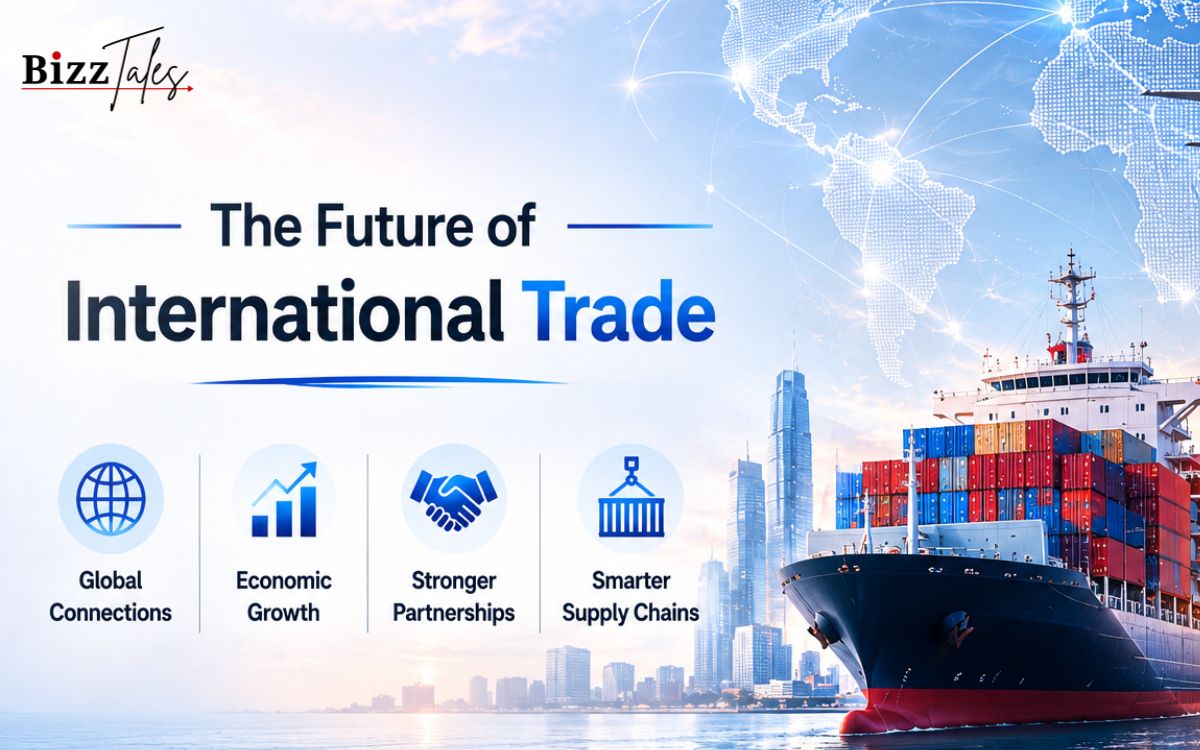
As we continue through the latter part of this decade, international trade finds itself on the cusp of a new beginning. If the last 50 years has been characterized by the transfer of goods across borders, the next 50 will be about resilient supply chains, exploiting technology, forging stronger trade links and understanding a diverse and complicated world.
For enterprises it is important to address these changes as the continued existence of global trade will affect investment, production, export and long-term expansion.
A Shift Away from Traditional Globalization
Globialization was the serious focus of business for many years. Companies looked for the minimum cost of production and redistrubute manufacturing among specific areas. Companies found this lucratic on the whole making more money.
However, the recent world-wide disruptions disclosed some vulnerabilities of other forms of concentration in manufacturing. The COVID-19 crisis, wars, ship delays and other supply chain bottlenecks, among others, revealed how fragile international trade systems may be if production is centered in a very exclusive and restricted geographical area.
Consequently, companies are changing the way in which they operate. Rather than concentrating on one country or region, numerous businesses are spreading out their supply chains, manufacturing in various countries to limit their exposure and strengthen their operations. This trend looks set to be one of the defining features of international trading over the coming years.
Countries like India,Vietnam, Indonesia and Mexico are aavailing themselvesof this trend. Multinationals are scouting new markets for more than manufacturing. They are also looking for sources of raw materials, new markets and expanding markets.
Technology Is Reshaping Global Commerce
Technology is now emerging as one of the largest players affecting international trade. IT is reducing the barriers between firms and their consumers and other trading parties, by providing a means of electronic communication. Trade that previously involved mountains of paper work and slow processing is now able to be conducted digitally in a matter of seconds.
With the applications of artificial intelligence, the future is more promising. The application of AI are utilized by businesses for predict of the demand, efficiency of inventory, planning of logistics and analysing the worldwide market trends. And the determined utilization of these functions makes business decisions quickly and prudently.
Cloud computing, blockchain technology, and sophisticated analytics are also assisting businesses in providing transparency throughout their supply chains. By using such technological solutions, organizations are able to precisely trace products, minimize wastage and adapt proactively to evolving market trends.
Technology is not only affecting giant companies. Small and medium size entrepreneurs also benefit by having a digital platform that enable them to join global trades without the need for investing in huge infrastructure.
India’s Growing Importance in Global Trade
India is shaping up to be one of the leading forces in the future of world trade. It combines a rich resource of a huge workforce, a rapidly increasing manufacturing sector, developing infrastructure, increasing domestic demand, and favorable policies that all seem to indicate that India is on its way up.
A large number of MNCs are aggressively increasing their investment in India. As a measure of diversification businesses relying completely on a single manufacturing country are looking at for India for establishing their manufacturing line.
India’s role is not only confined to manufacturing. India emerged as one of the world’s largest technology services, software development and business process outsourcing hub. The Indian technology industry is also leading the digital revolution. In the era of global trade driven by technology, Indian influence will be only broadened.
Sustainability Will Influence Trade Decisions
Environmental issues are playing a growing role in international business. Businesses are being pressured by consumers, investors and governments to adopt’ greener’ practices.
Businesses will be under increasing pressure, both from their customers and from regulations, to demonstrate their commitment to reducing carbon emissions, being energy efficient and to practicing responsible sourcing througout their supply chains.
With sustainability at the top of the agenda, future international trade policies may actually favor sustainable companies and companies with good impacts and requirements the others to adopt ways to keep up with the sustainable companies.
Conclusion
What the future holds for international trade is going to be the impact of technology, supply chain diversification, sustainability, and the shifting of geopolitical landscapes. Globalization may not be dying but will be transforming, into a long-term, more sustainable and resilient system in which enterprises will not compromise efficiency in favor of stability
For entrepreneurs, investors and business leaders. Keeping ahead of these trends is vital. Businesses which adapt to the new trade environment and leverage technology and develop a flexible supply chain will be the ones that thrive over the next decade.
The concept of foreign trade driving the economy is timeless, and time will not change it. The change will be in business practices, where products will be manufactured and how countries are developing in an evermore connected world.
Those that get ready for these changes today will be the ones dominant in the global economy of the not too distant future.
FAQs
What is international trade?
International trade refers to the exchange of goods and services between different countries. It allows businesses and consumers to access products, resources, and markets beyond their domestic economy.
Why is international trade important for businesses?
International trade helps businesses expand into new markets, increase revenue, reduce production costs, access better resources, and improve competitiveness.
How is technology changing international trade?
Technology is improving communication, logistics, payments, supply chain management, and market analysis. Tools like AI, cloud computing, and blockchain are making global trade more efficient.
Why are companies diversifying supply chains?
Businesses are diversifying supply chains to reduce risks associated with geopolitical tensions, pandemics, natural disasters, and economic disruptions.
What role will India play in the future of international trade?
India is expected to become a major manufacturing, technology, and service hub due to its growing economy, skilled workforce, and expanding infrastructure.
How does sustainability affect international trade?
Sustainability is influencing trade policies and consumer preferences. Businesses are being encouraged to reduce emissions, use eco-friendly materials, and build responsible supply chains.
What is digital trade?
Digital trade involves the international exchange of digital products and services such as software, online education, consulting, cloud services, and digital content.
How do geopolitical tensions impact global trade?
Geopolitical tensions can affect trade through tariffs, sanctions, supply chain disruptions, and changes in diplomatic relationships between countries.
Can small businesses participate in international trade?
Yes. Digital platforms, e-commerce marketplaces, and global payment systems have made international trade more accessible for small businesses than ever before.
What industries are expected to benefit most from future trade growth?
Technology, manufacturing, renewable energy, logistics, healthcare, artificial intelligence, and digital services are expected to see significant growth through international trade.