
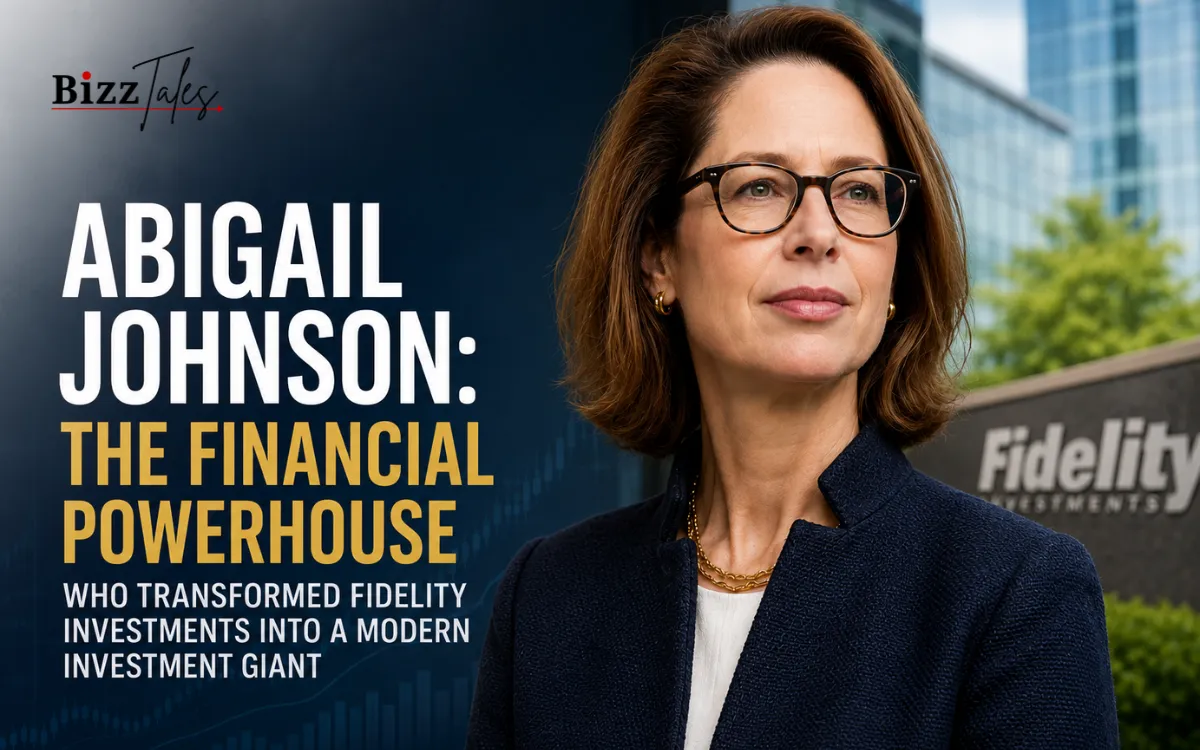
richest self-made entrepreneurs in the investment sphere. Serving as both Chairman and CEO of Fidelity Investments, she commands a financial services giant that manages trillions of dollars in assets for millions of investors across the globe. Her career narrative weaves together a powerful tapestry of legacy, acumen, technological advancements, and forward-thinking leadership.
In stark contrast to many flamboyant billionaire personalities who actively court media attention, Johnson is a figure who exemplifies measured leadership and an unwavering focus on tangible outcomes. While she inherited a substantial ownership interest in Fidelity Investments, her progression to the helm was a testament to over two decades of diligence, experience, and an intimate grasp of the financial landscape. During her tenure, Fidelity has broadened its horizons, moving beyond the realm of traditional mutual funds into new frontiers such as digital investing, digital currency services, retirement plans, and wealth management.
In the present day, Abigail Johnson is recognized as an incredibly influential woman in the business world. Her trajectory showcases how adaptability, strategic foresight, and determination can effectively transform a private family enterprise into an internationally recognized force.
Forbes Rankings (2026, 2025, 2024)
| Year | Forbes Rank | Estimated Net Worth |
| 2026 | #63 | $33.2 Billion |
| 2025 | Top 100 Global Billionaires | $32.7 Billion |
| 2024 | Top 100 Global Billionaires | Approximately $29 Billion |
Her fortune is primarily derived from her ownership stake in Fidelity Investments, one of the world’s largest privately held financial services firms.
Early Life
Abigail Pierrepont Johnson was born in Boston, Massachusetts on December 19, 1961. From a young age, she was raised in one of America’s premier financial families. Her grandfather, Edward C. Johnson II, founded Fidelity Investments in 1946 and created what would later become the third largest asset management company in the world.
Her father, Edward “Ned” Johnson III, succeeded him and continued the company’s growth until passing the torch to Abigail in 2014. Though growing up in one of the country’s wealthiest families, Johnson and her siblings were encouraged to work hard and strive for independence. She was never told she needed to enter the family business but was instead pushed to explore her own interests and carve out her own career path.
From childhood, she was keenly observant and analytical; it wasn’t long before she developed a curious interest in the world of finance and how a company as massive as Fidelity grew and functioned under her father’s watch. These childhood observations proved to be invaluable real-life education on the world of investments long before she would actually step foot in a Fidelity office.
Education
Abigail Johnson attended Buckingham Browne & Nichols, a top-rated private prep school in Massachusetts. She then went on to receive a BA in Art History from William Smith College in 1984. Though she majored in art history rather than economics or business as most future financial leaders do, she was inspired to enter the field through her observations and understanding of her father’s business and the industry at large.
After college, she started her career as a consultant for Booz Allen Hamilton where she learned the basics of corporate management and strategy, how organizations function and grow, and the inner workings of businesses. Recognizing the need for formal training in business and finance, she went on to obtain an MBA from Harvard Business School. She combined her understanding of how businesses operate as well as finance and business strategy to establish herself in the field.
Career Journey
Abigail Johnson was employed by Fidelity Investments starting in 1988 as a financial analyst. Over the next decade and a half, rather than rushing into leadership positions, she climbed her way up the corporate ladder and spent time in nearly every area of the business including client service, portfolio management, and investment research, among many others. Her aptitude and thorough understanding of the business as a whole paved the way for further responsibility within the company and she ultimately managed Fidelity’s mutual funds and led their equity teams, as well as expanded the product and service offerings at Fidelity. In 2012, Johnson became president and heir apparent of Fidelity Investments; she went on to become chief executive officer in 2014 and the chair of the board in 2016, effectively succeeding her father at the helm.
As CEO and chairwoman, Johnson has overseen Fidelity’s significant expansion of its digital capabilities and has driven the company to focus on innovation, thereby helping it thrive in a competitive environment and remain relevant in a changing financial services industry.
Business Ventures
But the dominant enterprise in Abigail Johnson’s portfolio is, unquestionably, Fidelity Investments. Incorporated in 1946, the financial giant is among the largest investment management firms in the world, managing trillions of dollars for individuals and institutions through mutual funds, retirement services, brokerage accounts, wealth management, and institutional investing.
Perhaps the most transformative aspect of Johnson’s leadership has been her aggressive push toward technology. Early to recognize the potential of digital services, Johnson streamlined Fidelity’s technological systems.
From increasing mobile investing options to the development of sophisticated trading tools, the firm embraced AI and data analysis to revolutionize its services. Further, Johnson was one of the first big finance figures to embrace cryptocurrency, rolling out digital asset services to both individual investors and institutions, thus cementing Fidelity as a premier crypto solutions provider for both.
This openness to new technology has kept the company at the forefront of the fast-moving financial landscape.
Major Successes
One of Abigail Johnson’s most significant achievements was guiding Fidelity through one of the most technologically dynamic periods in history.
Financial services has undergone massive disruption over the last decade with the emergence of FinTech companies, robo-advisors, cryptocurrency and fee-free trading platforms. Yet Fidelity was able to continue growing during Johnson’s leadership under the new digital landscape.
Another of her key successes is in establishing a digital asset division within Fidelity; despite widespread hesitancy from traditional financial institutions to enter the cryptocurrency market, Johnson was able to see the value and potential of blockchain technology long-term.
She further bolstered Fidelity’s role as a pillar of the retirement and wealth management sector and in the process, has helped millions of Americans plan their financial future. Outside of her performance at the helm of Fidelity, Johnson has consistently been among the most powerful women in the world, a testament to her impact within the financial industry.
Challenges & Struggles
Despite inheriting a business in strong financial shape, Johnson faced numerous challenges as she led Fidelity into its new era.
One of her most significant was earning her place as a respected leader independent of the Johnson family legacy. When she took over as CEO in 2014, many questioned whether she could lead Fidelity successfully on her own.
Johnson’s response was to demonstrate leadership through performance, not public perception, ultimately proving her doubters wrong. The rapidly changing financial landscape proved to be another of Johnson’s key challenges as the traditional investment firms of the world competed against FinTech companies in a race for lower fees and more digital approaches. The growing interest in passive investing was a struggle for mutual fund companies everywhere. Market volatility, economic downturns, shifts in regulation and changing investor preferences added more to the list of difficulties that Johnson had to navigate.
Her ability to embrace technological change allowed Fidelity to remain a dominant force in the market.
Leadership Style
Abigail Johnson is described as having a thoughtful, analytical, and innovation-centric leadership style.
She is not a typical fiery CEO, instead relying on a disciplined and controlled management approach. Johnson is an avid follower of data and believes in fostering experimentation within the organization. Her employees consistently regard her as brilliant, highly focused and always forward-thinking. She believes in building high-performing teams and cultivating a culture of innovation.
One of the hallmark elements of Johnson’s leadership style is her adaptability; rather than resistance, she uses technological advancements to her advantage and capitalizes on opportunities brought by new business models.
Her ventures outside the world of asset management
Although the world of Fidelity and investment management is Johnson’s primary focus, she has many interests that extend beyond traditional financial services.
Her investments include ventures related to finance, technological innovation, and blockchain infrastructure.
Johnson is also involved in initiatives to promote clean energy, scientific research, and technological innovation. She is a figure who wields influence in multiple sectors of the economy including venture capital and technology innovation initiatives. As one of the most prominent leaders in the global finance world, her business decisions garner the attention of those within the financial industry.
Philanthropy
Abigail Johnson has taken an active part in philanthropic endeavors and causes relating to education throughout her career. Her efforts as a philanthropist extend to healthcare, scientific research, and community development programs.
She has funded various universities, cultural organizations, and non-profits in an effort to achieve positive long-term social change. Johnson believes that successful individuals are obligated to give back to society and create opportunities for future generations to build upon.
Personal Life
Abigail Johnson is married to Christopher McKown, the couple first met early on in Abigail’s career when she worked as a consultant. She is an extremely wealthy and influential woman, however she has managed to lead a relatively quiet private life with her focus on her family and not gaining undue attention. Outside of business, her interests lie in education, innovation, technology and philanthropy, it is likely that her quiet nature has greatly aided in keeping her focus on business leadership as opposed to fame and fortune. She is respected among a great many people as one of the leading women in finance.
Official Social Media Accounts
Instagram: No Official Public Account
X (Twitter): No Official Public Account
Facebook: No Official Public Account
Abigail Johnson generally communicates through corporate announcements, interviews, and Fidelity Investments rather than maintaining active public social media accounts.
Implications for entrepreneurs
Several key insights can be drawn from Abigail Johnson’s experiences for business leaders and entrepreneurs alike:
First, performance and capability can earn trust. Johnson leveraged the power of family advantage to secure initial access, but dedicated years of diligence and skill acquisition before moving to the CEO chair.
Second, adaptability is key to longevity. By proactively embracing digital disruption and blockchain technology, Johnson ensured that Fidelity was not left behind and that the company was well-positioned for the future.
Third, long-term focus over short-term gains. Johnson has long placed importance on enduring value over the immediate acquisition of assets.
Fourth, it is possible to merge old and new business strategies successfully. Tradition does not have to be discarded; it can evolve when supported by strong leadership.
Above all, Johnson’s example illustrates the success that can be achieved through an unwavering commitment to learning and informed decision-making.
Conclusion
Abigail Johnson successfully led Fidelity Investments through a complex financial landscape, transforming the once traditional investment management firm into a modern financial behemoth, all the while upholding the values that underpinned the company’s success. Through a disciplined yet bold leadership approach to technological innovation and future development, she cemented Fidelity’s place among the world’s elite financial services organizations. Her climb from financial analyst to billionaire CEO is a testament to the potential of diligent leadership, strategic thinking and tenacity. As one of the most formidable figures in international finance, Abigail Johnson continues to chart the course of modern investing and remains an inspiring example for business leaders, executives, investors, and entrepreneurs everywhere.
FAQs
1. Who is Abigail Johnson?
Abigail Johnson is the Chairman and CEO of Fidelity Investments and one of the wealthiest women in the world.
2. What is Abigail Johnson’s net worth in 2026?
Her estimated net worth in 2026 is approximately $33.2 billion.
3. How did Abigail Johnson become wealthy?
Most of her wealth comes from her ownership stake in Fidelity Investments, the financial services company founded by her grandfather.
4. What company does Abigail Johnson lead?
She serves as Chairman and CEO of Fidelity Investments, one of the largest asset management companies in the world.
5. What can entrepreneurs learn from Abigail Johnson?
Entrepreneurs can learn the importance of adaptability, innovation, long-term thinking, leadership development, and continuous learning.