
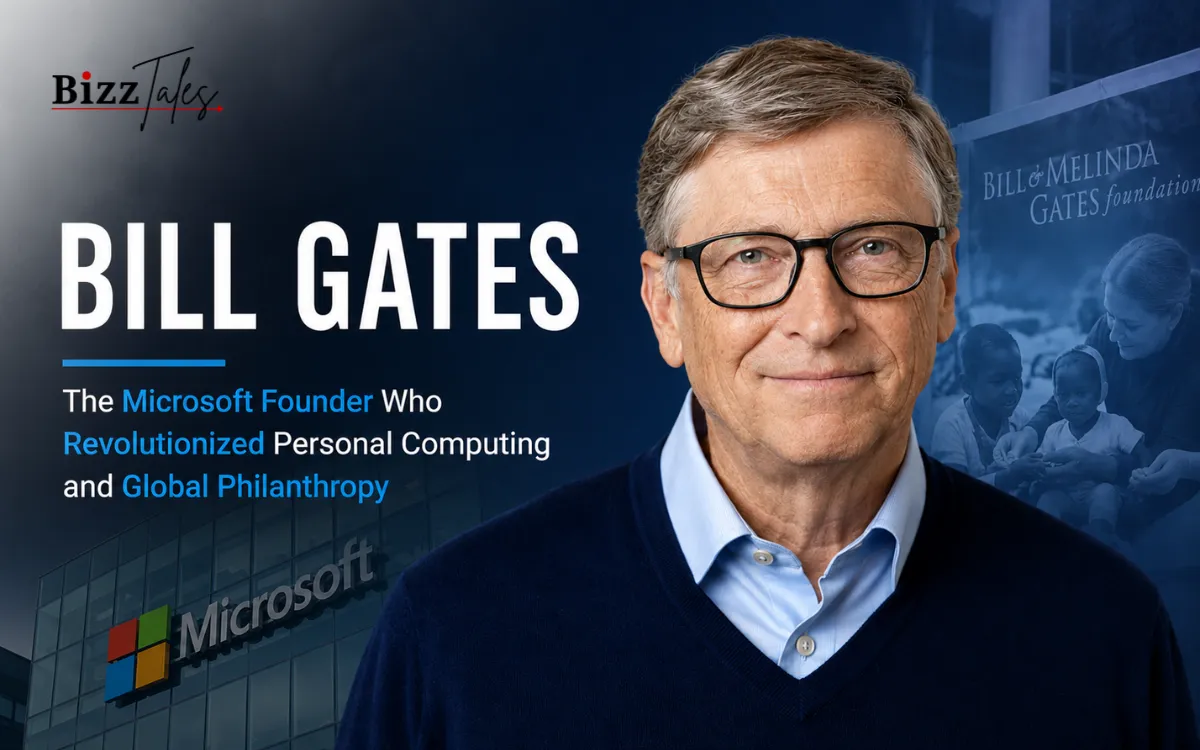
Bill Gates is one of the most influential entrepreneurs in modern history. As the co-founder of Microsoft, he played a central role in bringing personal computers into homes, schools, and businesses around the world. His vision helped transform computing from a niche industry into an essential part of everyday life.
For decades, Gates was synonymous with technological innovation and business success. Under his leadership, Microsoft became the dominant force in personal computer software, creating products that shaped the digital age. His extraordinary achievements made him one of the richest people in history and a symbol of entrepreneurial excellence.
However, Gates’ legacy extends far beyond technology. In recent years, he has become equally known for his philanthropic work, investing billions of dollars in global health, education, poverty reduction, scientific research, and climate initiatives. Through his foundation, he has influenced public policy, healthcare systems, and development efforts across the world.
His journey from a curious young programmer in Seattle to a global business icon and philanthropist remains one of the most remarkable success stories ever told.
Forbes Ranking & Net Worth History
| Year | Forbes Rank | Net Worth |
| 2026 | #18 | $108 Billion |
| 2025 | #13 | $108 Billion |
| 2024 | #9 | $128 Billion |
Although Gates was once the richest person in the world for many years, his focus on philanthropy and charitable giving has reduced his ranking while significantly increasing his global impact.
Early Life and Family Background
Born on October 28, 1955, in Seattle, Washington, in the USA, William Henry Gates III is well and truly the most recognized computer wizard in the world. He was born into a well to do and well read family that was all about books, business and books.
The father of this bright kid had been a leading legal attorney and in no way was the mother far behind; she played a very prominent part in business associations and civic matters.
From the youngest age, he was smart, so very smart that he saw himself constantly solving complex issues that people struggled to understand. While his friends spent most of their days outside in games; he was lost in books devouring one that he read with zeal and mathematics soon took a special space in the young heart and minds of William. Gates would go into computers quite early into the system whereas the majority were of a younger generation. His passion will surely not change his fate alone but would also lead to changing the face of business and technology forever.
Discovering Programming
At one critical junction in his young life, Gates got the chance to play around with an early computer terminal at school. In those days computers were scarce and exorbitantly priced, few students even knew they existed, nevermind got to lay their hands on one. As soon asGates got a chance with the computer, he became engrossed in computer programming.
Gates worked hours, nights and days to try and learn programming languages. He coded softwares and messed about with computers day in and day out. Together, he and friend Paul Allen’s programming and computational prowess advanced exponentially.
Harvard University and a Life-Changing Decision
Gates went on to a high academic career before attending Harvard. Though his studies went well he found his true passion for and time devoted to technology and software development. Personal computing was just beginning to blossom into an industry at this time, and Gate and Paul Allen identified the opportunity in this emerging sector of computing.
Instead of finishing his degree, Gates took a leap of faith by dropping out of Harvard to fully pursue building a software company that he knew could change the world.
At that time, it was widely considered impossible,or nearly impossible,that personal computers would one day be something every individual and company used but Gates was able to see beyond that.
Founding Microsoft
Founded by Bill Gates and Paul Allen in 1975, Microsoft’s objective was equally profound as simple: design software for the then in its infancy personal computer industry. But it was when Microsoft obtained a contract to license an operating system to be run on IBM’s soon-to-market personal computers that the company would change the course of technology for good. Known as MS-DOS, the operating system’s immense success guaranteed that Microsoft would remain a powerhouse in the computing field.
From there, the adoption of personal computers increased dramatically, and Microsoft’s software became deeply interwoven into how the world operates.
The success catapulted Gates to one of the most famous businessmen ever.
The Rise of Windows
The development of the Windows operating system was one of Microsoft’s most influential innovations. Windows replaced command line interfaces and made computers readily accessible to individuals. The introduction of the operating system revolutionized the computer industry.
Its usability, compatibility, and vast software selection led Microsoft to be the premier computer company in the world.
The vast array of computers that ran on windows allowed government, private companies, and schools, as well as the general public, all over the world, to have computers. Microsoft became a worldwide phenomenon, generating billions in revenue and making Gates the wealthy businessman he is today.
Building a Technology Empire
Microsoft moved into many areas beyond Windows. The corporation was able to create Microsoft Office, one of the most important pieces of productivity software for businesses as well as users word excel powerpoint outlook and later cloud based services helped Microsoft become a dominant player in the software market. They moved into enterprise software, programming tools, video games, internet services and emerging fields, to stay resilient and maintain their ability to grow.
Bill Gates’ ability to see things down the road was really the one thing that helped them build an incredible, enduring company that became a business empire of unprecedented proportions.
Challenges and Antitrust Battles
Microsoft became a powerful entity but this did not make things entirely smooth for Gates. As Microsoft’s dominance grew, authorities and regulators became concerned over competition and monopolistic control over the market. In the 1990s, the government of the United States dragged Microsoft to the antitrust court. This trial received international attention and became known as a historical corporate case of a century.
But no matter what the criticism and attention faced by the company, it continued to grow and Gates learnt important lessons from such situations.
Transition from Microsoft Leadership
In 2000, Gates stepped down as Microsoft’s CEO, handing leadership responsibilities to Steve Ballmer.
He remained involved as chairman and chief software architect before gradually reducing his day-to-day role.
This transition allowed Gates to focus more on philanthropy and global development initiatives.
Although no longer directly managing Microsoft, he remained one of its largest shareholders for many years.
The company’s continued growth contributed significantly to his wealth.
Meanwhile, Gates began building a new legacy outside the technology industry.
Philanthropy and the Gates Foundation
One of the defining chapters of Gates’ life has been his philanthropic work. Together with Melinda French Gates, he established the Bill & Melinda Gates Foundation. The foundation became one of the largest charitable organizations in history. Its initiatives focus on global health, infectious disease prevention, vaccine development, education, poverty reduction, sanitation, agriculture, and climate innovation.
Billions of dollars have been committed to improving lives around the world. Many experts consider the foundation one of the most influential philanthropic institutions ever created. This work has significantly shaped Gates’ modern reputation.
Investments and Other Business Ventures
Beyond Microsoft, Gates has invested in numerous industries. His interests include clean energy, agriculture, healthcare, biotechnology, infrastructure, artificial intelligence, and sustainable development. Through various investment vehicles, he supports companies and projects addressing global challenges.
His investment philosophy increasingly focuses on long-term societal impact alongside financial returns. These ventures demonstrate his belief that innovation can solve some of humanity’s most pressing problems.
Leadership Style
Bill Gates is known for his analytical, detail-oriented, and intellectually rigorous leadership style. Throughout his career, he emphasized technical excellence, innovation, and continuous learning. Employees often described him as demanding but highly knowledgeable. He encouraged critical thinking and expected high standards from those around him. His ability to combine technical expertise with strategic vision was a major factor in Microsoft’s success. Many entrepreneurs continue to study his leadership principles today.
Personal Life
Despite his immense wealth, Gates maintains a strong focus on learning, reading, and philanthropy. He is widely recognized for his curiosity and commitment to solving complex problems. His recommendations on books, technology, healthcare, and global development attract significant public attention. Although his personal life has evolved over the years, he remains deeply engaged in philanthropic and investment activities. His influence continues to extend far beyond business.
Official Social Media Accounts
Gates actively shares insights on technology, health, education, climate change, innovation, and global development through his social media platforms.
Lessons Entrepreneurs Can Learn from Bill Gates
One of the most important lessons from Gates’ journey is the value of vision. He recognized the potential of personal computing long before it became mainstream. His story also demonstrates the importance of technical expertise combined with business strategy. Entrepreneurs can learn from his commitment to continuous learning, innovation, and long-term thinking.
His willingness to take risks, leave Harvard, and pursue an emerging industry helped create extraordinary opportunities. Most importantly, Gates shows that success can be used to generate positive impact on a global scale.
Conclusion
Bill Gates’ transformation from a young programming enthusiast in Seattle to one of the most influential businessmen in history is a remarkable story of innovation, determination, and vision. Through Microsoft, he helped define the personal computing era and built one of the world’s most successful technology companies. His influence later expanded into philanthropy, healthcare, education, climate initiatives, and global development.
Today, Gates remains a symbol of entrepreneurship, technological innovation, and social impact. For entrepreneurs, business leaders, and aspiring innovators, his journey offers valuable lessons about ambition, adaptability, lifelong learning, and the power of using success to improve the world. His legacy continues to shape technology, business, and philanthropy across generations.
FAQs
Who is Bill Gates?
Bill Gates is the co-founder of Microsoft and one of the most influential entrepreneurs in history.
What is Bill Gates’ net worth in 2026?
His estimated net worth is approximately $108 billion.
When was Microsoft founded?
Microsoft was founded in 1975 by Bill Gates and Paul Allen.
Why is Bill Gates famous?
He helped revolutionize personal computing through Microsoft and later became a leading philanthropist.
Did Bill Gates finish college?
No. He left Harvard University to focus on Microsoft.
What is the Gates Foundation?
It is one of the world’s largest charitable organizations, focused on global health, education, and development.
Is Bill Gates active on social media?
Yes. He maintains active accounts on X, Instagram, Facebook, LinkedIn, and YouTube.
What products made Microsoft successful?
Windows and Microsoft Office were among Microsoft’s most successful products.
What industries does Bill Gates invest in?
He invests in clean energy, healthcare, agriculture, biotechnology, AI, and sustainable development.
What can entrepreneurs learn from Bill Gates?
Entrepreneurs can learn vision, innovation, continuous learning, strategic thinking, and the importance of creating long-term impact.