
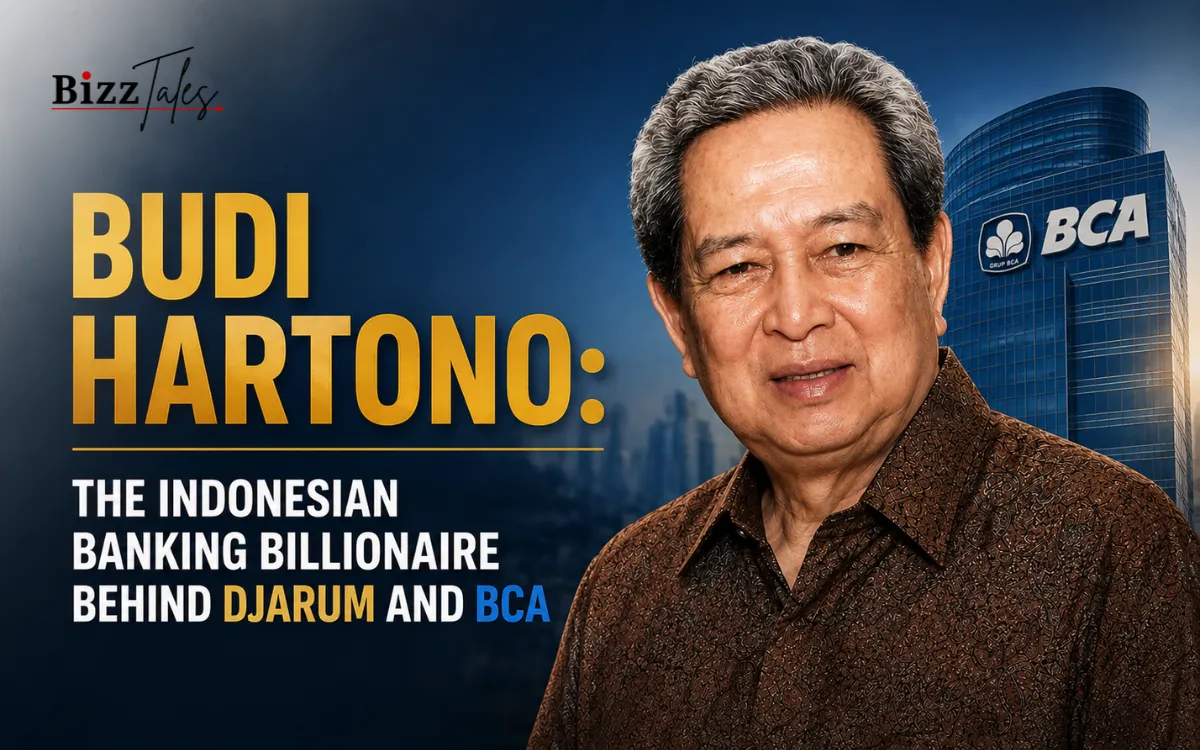
Few Southeast Asian entrepreneurs have made such a fortune as Budi Hartono. For decades he has consistently ranked among the richest men in Indonesia and has transformed a tobacco company into a sprawling conglomerate engaged in banking, telecom, technology, real estate, hospitality, agriculture, as well ase-commerce. And although most people associate the family name, and even itself Budi Hartono, with the cigarettes Djarum, the biggest share of Indonesian tycoon’s money comes now from one of the country’s largest and richest banks: Bank Central Asia (BCA).
This is a great story of long-term investment and of a man who thought in terms of decades and was rewarded accordingly. Together with his deceased brother Michael, Budi inherited their father’s cigar company. After a terrible beginning and nearly going bankrupt a couple of times, the two of them acquired several successful tobacco producers in their region before venturing out to many other business segments. Now, they run one of Asia’s largest privately owned business conglomerates.
Budi Hartono is considered one of the country’s most powerful businessmen. His investments in technology,banking, electronics industry and telecommunications have made an enormous impact on Indonesia’s growing economy. In spite of all the enormous riches that he amassed, he still leads a modest, inconspicuous lifestyle.
Forbes Rankings and Net Worth
| Year | Forbes Ranking | Net Worth |
| 2026 | Among Indonesia’s Richest Billionaires | Approximately $15.8 Billion |
| 2025 | Indonesia’s Richest Family (with Michael Hartono) | Combined Wealth of $43.8 Billion |
| 2024 | Forbes Global Billionaire | Approximately $26.5 Billion |
Budi Hartono’s wealth is primarily derived from his ownership interests in Djarum Group and Bank Central Asia, along with investments across multiple industries.
Early Life and Education
A Chinese-Indonesian by birth, Robert Budi Hartono was born on April 28, 1941 in Semarang, Central Java, Indonesia. His upbringing was marked by a transitional period in Indonesia both in political and economic sense. His father Oei Wie Gwan had already purchased a tiny cigarette maker, Djarum, in 1951 and built it into a substantial tobacco firm.
Young Budi experienced a variety of operations and challenges that go with the manufacturing of goods, including diligence, resilience, and customer care at a young age.
He enrolled in Diponegoro University, but that did not change everything; as tragedy would hit him later on. Oei Wie Gwan died just months after a large fire badly burned down Djarum’s facilities in 1963, requiring his sons to abandon their studies and immediately begin rebuilding their company and life after a disastrous setback.
Career Journey
The early days of Budi Hartono’s career were rife with obstacles and adversity. The transition from inheriting the business with his brother to the sudden loss of their father and fire that ravaged Djarum’s facilities caused many analysts to question if the young entrepreneurs would ever get on their feet. Fortunately, Budi and his brother swiftly established themselves as effective and forward-thinking managers.
The company heavily invested in factories and distribution channels during the ‘60s and ‘70s in efforts to enhance their production capabilities and brands and steadily emerged as Indonesia’s top kretek cigarette makers.
Eventually Djarum found a major tipping point once the brothers expanded their export sales and innovated with machine production technologies which led to improved profits and the development of excess capital that Budi reinvested. In an era that rewarded single industry players, Budi astutely identified the need to expand into sectors outside of cigarettes to create lasting fortunes. Today, he has built an investment empire ranging from banking and technology to infrastructure and hospitality from the ground up.
Business Ventures
At the heart of Budi Hartono’s enterprise is Djarum, the country’s largest maker of kretek (clove) cigarettes and a leading cigarette producer in the world. Over time, Hartono worked to chip away at the family’s dependence on cigarettes through diversification into other sectors. The key investment of Budi Hartono’s career was Bank Central Asia (BCA).
After the Asian Financial Crisis of 1997–98 crippled Indonesia’s banking sector, banks became a target that foreign and many domestic investors shied away from, at least for the time being.
Taking advantage of the situation, Budi and his family made a shrewd acquisition of BCA, the bank that would later become the largest private bank in Indonesia. They would soon become among the richest families in Southeast Asia, much thanks to the phenomenal success of BCA. The Hartono Group Other enterprises In addition to the banks, the Hartono group spread its wings in various other business sectors: Polytron Hartono Group, the largest consumer electronic product maker in Indonesia, has recently branched out into electric vehicles. Tower business They invested heavily in Indonesia’s tower business to serve the needs of its rapidly expanding wireless communications sector.
They invested heavily in digital businesses and have taken significant stakes in both the Blibli (an e-commerce marketplace) and tiket.com (one of the largest online travel companies in the country), helping them take advantage of a rapidly developing digital economy.
Food and beverage, palm oil plantations, hospitality, retail, real estate, and venture capital Hartono’s empire expanded its reach to other business areas including, among others: food and beverages, palm oil plantation, accommodation/hospitality, retail operations, real estate, and ventures.
Success Story and Major Achievements
Budi Hartono’s greatest achievement is transforming a family tobacco company into one of Indonesia’s largest business empires.
His acquisition of Bank Central Asia stands as one of the most successful investment decisions in Southeast Asian business history. By investing during a period of economic crisis, he acquired a valuable asset that later became Indonesia’s largest private bank by market capitalization.
Another major accomplishment was maintaining the Hartono family’s position as Indonesia’s wealthiest business dynasty for many years. Few entrepreneurs have achieved comparable success across such a wide range of industries.
Under his leadership, Djarum expanded from a domestic manufacturer into a globally recognized tobacco company while simultaneously building significant positions in technology, finance, and infrastructure.
Budi also played an important role in supporting Indonesian sports. Through PB Djarum, the family’s badminton club, numerous world-class athletes were developed and contributed to Indonesia’s international sporting success.
These achievements have established him as one of the most influential businessmen in Indonesian history.
Challenges, Failures, and Setbacks
Like all great entrepreneurs Budi Hartono had encountered several adversities in his career. The very first hurdle he faced was when a fire razed his Djarum factory in 1963. Coupled with the passing of his father this event caused a crisis and it seemed that the company’s future was bleak. It took strong conviction, endurance, and resourceful Leadership to reconstruct the factory.
TheTobaccoIndustry: The tobacco Industry has consistently faced pressure from changing Regulations, rising taxation, public health Concerns and Shifting Consumer demands.
TheFinancialMarket The Economic crises In Indonesia in late 1990s caused uncertainty for many businesses in the country. Budi’s ability to find business opportunities amidst tough financial conditions help strengthen the position of the Hartono Group. The Banking andTelecommunicationIndustriesCompetition in the Banking and telecommunications industry has also become stiff over the years which have been addressed through constant investment and innovation. A disciplined approachBudi’s disciplined approach helped his businesses to remain highly profitable to expand his empire further.
Investments and Assets
Budi Hartono’s largest asset remains his ownership stake in Bank Central Asia. The bank’s consistent growth, profitability, and market leadership have made it the primary source of family wealth.
Additional assets include Djarum, Polytron, telecommunications infrastructure businesses, commercial real estate developments, hospitality properties, agricultural operations, and digital platforms such as Blibli and tiket.com.
The Hartono Group also owns significant real estate projects, including premium shopping centers, office complexes, hotels, and mixed-use developments.
Another important component of Budi’s portfolio is venture capital investment. Through various investment vehicles, the family supports emerging technology companies and digital businesses.
His wealth-building strategy emphasizes diversification, long-term ownership, and operational excellence rather than short-term speculation.
Leadership Style and Business Philosophy
Budi Hartono is known for a leadership style built around patience, discipline, and long-term thinking.
One of his core beliefs is that wealth should be built gradually through strong businesses rather than speculative activities. This philosophy influenced the family’s decision to maintain controlling positions in major assets rather than frequently buying and selling investments.
He also places great importance on diversification. By expanding beyond tobacco into banking, technology, telecommunications, and consumer services, he reduced reliance on any single industry.
Another defining characteristic is opportunistic investing. Budi has repeatedly demonstrated the ability to acquire valuable assets during periods of economic distress. His investment in BCA remains the most notable example of this strategy.
His approach combines conservative financial management with strategic risk-taking when exceptional opportunities arise.
Personal Life
Though he ranks as one of the richest Asians, Budi Hartono surprisingly leads an understated life. While many billionaires seek out publicity, Budi seldom engages in media interviews and remains deeply involved in the nitty-gritty of running the company, a trademark trait of his. He is a married man with three children.
In the ever-expanding empire of the Hartonos, family is indeed fundamental and now the younger generation of Hartonos is taking increasing responsibility.
Outside business, Budi is an ardent supporter of sports-specifically, badminton, under the extensive family investment in athletes. Indonesia has since gained its most dominant badminton players through their investment in athlete training systems. He champions a personal approach emphasizing modesty, discipline and long-range success.
Social Media Presence
- Instagram: No Official Public Presence
- X (Twitter): No Active Official Presence
- LinkedIn: Limited Professional Presence
- Facebook: Limited Public Presence
Budi Hartono is known for maintaining an extremely private public profile and rarely uses social media platforms.
Legacy and Future Outlook
Budi Hartono’s legacy is deeply connected to Indonesia’s economic development.
Through Djarum, BCA, and numerous other ventures, he helped create thousands of jobs and contributed significantly to the country’s banking, technology, telecommunications, and consumer sectors.
His acquisition of Bank Central Asia is widely regarded as one of the most successful investments in Asian business history and will likely remain a defining achievement of his career.
The next generation of the Hartono family continues expanding the group’s presence in digital technology, e-commerce, infrastructure, and consumer services.
As Indonesia’s economy grows, the businesses built by Budi Hartono are expected to remain influential for decades to come.
Conclusion
From a rundown tobacco company into the richest men in Asia, Budi Hartono’s story is inspiring. Here is what one of Indonesia’s most accomplished business titans learned from the way he rebuilt the tobacco company inherited from his father into the country’s richest businessmen.
Along the way, the company diversified and eventually built Bank Central Asia into Indonesia’s largest private bank, thanks to Hartono’s business smarts and patient investment. Today he is one of the leading figures in the region.
FAQs
What is Budi Hartono’s net worth in 2026?
Budi Hartono’s estimated net worth in 2026 is approximately $15.8 billion.
How did Budi Hartono become a billionaire?
He became a billionaire by expanding Djarum, acquiring Bank Central Asia, and building a diversified business empire across multiple industries.
What companies does Budi Hartono own?
His major business interests include Djarum, Bank Central Asia (BCA), Polytron, Blibli, tiket.com, telecommunications infrastructure businesses, hospitality assets, and real estate projects.
What is Budi Hartono’s leadership style?
His leadership style focuses on long-term investing, diversification, disciplined management, and identifying opportunities during economic downturns.
What is Budi Hartono’s biggest business achievement?
His biggest achievement is acquiring and developing Bank Central Asia into Indonesia’s largest private bank while transforming Djarum into one of the country’s most diversified business groups.