
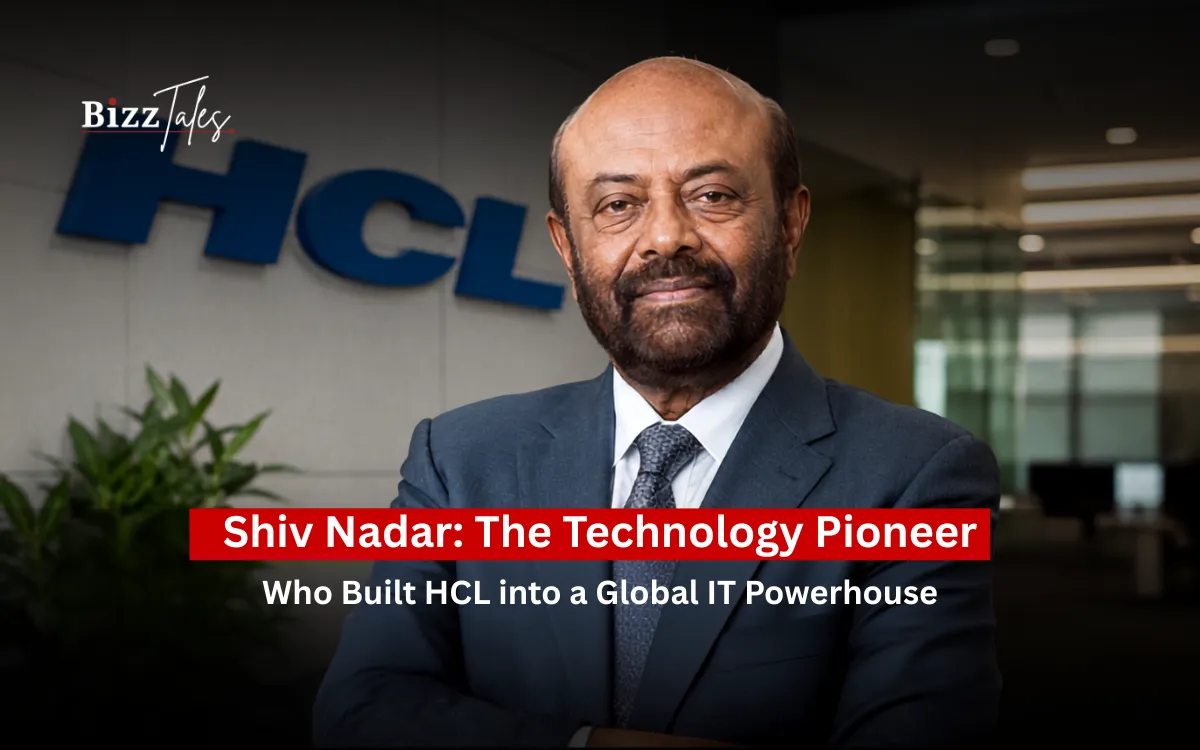
Shiv Nadar is one of India’s most respected entrepreneurs and among the pioneers who helped establish the country’s information technology industry on the global stage. As the founder of HCL Technologies, he transformed a small startup launched in the 1970s into one of the world’s leading technology services companies. His journey from a rural village in Tamil Nadu to becoming one of the richest businessmen in the world is a remarkable story of vision, innovation, and perseverance.
Beyond business, Shiv Nadar is widely recognized for his contributions to education and philanthropy. Through the Shiv Nadar Foundation, he has invested billions of dollars in schools, universities, scholarships, and educational initiatives that have impacted countless students across India. Forbes describes him as one of India’s leading philanthropists, with over $1 billion committed to education-related causes.
Today, Shiv Nadar’s legacy extends far beyond technology. He is viewed as a nation-builder whose work helped shape India’s digital economy while simultaneously investing in future generations through education and social development.
Forbes Ranking & Net Worth History
| Year | Forbes Global Rank | Net Worth |
| 2026 | #71 | $34.5 Billion |
| 2025 | #5 Richest in India | $33.2 Billion |
| 2024 | Top 100 Global Billionaires | Approximately $30 Billion |
According to Forbes’ 2026 Billionaires List, Shiv Nadar ranked #71 globally with an estimated net worth of approximately $34.5 billion, making him one of the wealthiest technology entrepreneurs in Asia.
Early Life and Family Background
Shiv Nadar was born on July 14, 1945, in Moolaipozhi village in present-day Tamil Nadu, India.
He came from a modest rural background and received most of his early education in Tamil. In fact, Nadar himself has mentioned that he did not begin speaking much English until his early twenties, a remarkable fact considering he later built a global technology company serving clients around the world.
Growing up in rural India taught him resilience, discipline, and the importance of education.
Unlike many future billionaires who inherited large business empires, Nadar built his success from scratch through determination and entrepreneurial vision.
His early experiences shaped the values that would later define both his business philosophy and philanthropic work.
Education and Academic Journey
Nadar pursued higher education at the prestigious PSG College of Technology, where he earned a degree in electrical and electronics engineering.
His technical education provided a strong foundation in engineering and problem-solving.
Unlike many entrepreneurs who enter business directly, Nadar’s engineering background helped him understand technology at a deep level.
This technical expertise later became a key factor in HCL’s success.
His years at PSG College also introduced him to talented peers and future collaborators who would play important roles in India’s emerging technology sector.
Early Career Before HCL
After graduation, Shiv Nadar began his professional career at Cooper Engineering in Pune.
Although the position offered stability, he quickly realized that entrepreneurship offered far greater opportunities.
Together with a group of colleagues and friends, he began exploring business ideas involving office equipment and technology products.
These early ventures provided valuable lessons about sales, management, customer needs, and risk-taking.
Rather than remaining satisfied with traditional employment, Nadar continually searched for opportunities to build something larger.
This entrepreneurial mindset ultimately led to the creation of HCL.
Founding HCL
In 1976, Shiv Nadar founded HCL (Hindustan Computers Limited) with a small group of partners and a modest initial investment.
At the time, India’s technology sector was still in its infancy.
Computers were expensive, rare, and largely inaccessible to most organizations.
Nadar recognized that technology would eventually become essential to business and society.
This insight was far ahead of its time.
HCL initially focused on hardware and computer systems.
The company became one of the first Indian firms to develop indigenous computing solutions.
Its success laid the foundation for India’s future role in the global technology industry.
Building India’s Technology Revolution
During the 1980s and 1990s, HCL expanded rapidly.
The company diversified into software development, IT services, consulting, and technology solutions.
As global demand for outsourcing and digital services increased, HCL positioned itself as a trusted technology partner for international clients.
The company’s growth reflected broader changes occurring within India’s economy.
Technology became one of the country’s most important industries, creating millions of jobs and attracting global investment.
Shiv Nadar played a significant role in this transformation.
His leadership helped establish India as a major technology hub.
Transforming HCL into a Global Enterprise
One of Nadar’s greatest achievements was transforming HCL from a hardware-focused company into a global IT services enterprise.
The company expanded operations across North America, Europe, Asia, and other regions.
Today, HCL serves many of the world’s largest corporations and government organizations.
Its services include:
- Cloud computing
- Artificial intelligence
- Cybersecurity
- Digital transformation
- Software engineering
- Infrastructure management
- Enterprise technology solutions
This diversification helped HCL remain competitive in a rapidly changing technology landscape.
The company’s international success significantly increased Nadar’s wealth and influence.
Succession Planning and Leadership Transition
Unlike many founders who struggle with succession planning, Shiv Nadar carefully prepared the next generation of leadership.
In 2020, he transferred leadership responsibilities at HCL Technologies to his daughter, Roshni Nadar Malhotra. Later, he transferred his controlling stake as part of a long-term succession strategy.
This transition ensured continuity while allowing the company to maintain its long-term vision.
The move was widely viewed as an example of thoughtful corporate governance and responsible leadership.
Even after stepping back from day-to-day operations, Nadar continues to influence HCL’s broader direction and legacy.
The Shiv Nadar Foundation
One of the defining aspects of Shiv Nadar’s life is philanthropy.
Through the Shiv Nadar Foundation, he has committed billions of dollars toward education and social development. Forbes notes that he has donated over $1.1 billion to education-related causes.
Key initiatives include:
- SSN College of Engineering
- Shiv Nadar University
- VidyaGyan Schools
- Educational scholarships
- Research programs
- Leadership development initiatives
These institutions have provided opportunities for students from diverse backgrounds and contributed significantly to India’s educational landscape.
India’s Leading Philanthropist
In recent years, Shiv Nadar has consistently ranked among India’s most generous philanthropists.
Reports indicate that he donated thousands of crores of rupees toward education and social causes, frequently topping philanthropy rankings.
His approach to philanthropy focuses on long-term impact rather than short-term charity.
He believes education is one of the most effective tools for social transformation.
This philosophy has guided many of his charitable initiatives.
Leadership Style
Shiv Nadar is known for visionary thinking, long-term planning, and a strong commitment to innovation.
Unlike leaders focused solely on quarterly results, he consistently emphasized sustainable growth and future opportunities.
Employees often describe him as intellectually curious, disciplined, and highly strategic.
His leadership philosophy combines technical expertise with entrepreneurial thinking.
These qualities helped HCL evolve through multiple generations of technological change.
Personal Life
Shiv Nadar is married to Kiran Nadar, one of India’s leading art collectors and philanthropists. Together they have a daughter, Roshni Nadar Malhotra.
The family remains actively involved in education, philanthropy, culture, and technology initiatives.
Despite his wealth, Nadar is known for maintaining a relatively private and low-profile lifestyle.
Lessons Entrepreneurs Can Learn from Shiv Nadar
One of the most important lessons from Nadar’s journey is the value of long-term vision.
He recognized the potential of technology decades before it became central to the global economy.
His story also highlights the importance of continuous adaptation.
HCL successfully evolved from hardware manufacturing to software and digital services because its leadership embraced change.
Entrepreneurs can learn from his commitment to innovation, education, and responsible leadership.
Most importantly, his career demonstrates that business success and social impact can go hand in hand.
Conclusion
Shiv Nadar’s rise from a small village in Tamil Nadu to becoming one of the world’s richest technology entrepreneurs is one of India’s most inspiring business success stories. Through HCL Technologies, he helped establish India’s reputation as a global technology powerhouse and created opportunities for thousands of professionals worldwide.
His influence extends far beyond business through education, philanthropy, and nation-building initiatives.
Today, his legacy continues through HCL, the Shiv Nadar Foundation, and the institutions he created to empower future generations.
For entrepreneurs, business leaders, and aspiring innovators, Shiv Nadar’s journey offers powerful lessons about vision, perseverance, innovation, and the importance of giving back to society.
FAQs
1. Who is Shiv Nadar?
Shiv Nadar is the founder of HCL Technologies and one of India’s most successful technology entrepreneurs.
2. What is Shiv Nadar’s net worth in 2026?
According to Forbes, his estimated net worth is approximately $34.5 billion.
3. When was HCL founded?
HCL was founded in 1976 by Shiv Nadar and his partners.
4. What is HCL Technologies?
HCL Technologies is a global IT services and technology consulting company serving clients worldwide.
5. Who leads HCL today?
HCL Technologies is chaired by Roshni Nadar Malhotra, Shiv Nadar’s daughter.
6. What is the Shiv Nadar Foundation?
It is a philanthropic organization focused primarily on education and social development.
7. Is Shiv Nadar involved in philanthropy?
Yes. He is widely regarded as one of India’s leading philanthropists and has donated over $1 billion toward educational initiatives.
8. Where did Shiv Nadar study?
He graduated from PSG College of Technology in Tamil Nadu.
9. What award has Shiv Nadar received from the Indian government?
He was awarded the Padma Bhushan for his contribution to the IT industry.
10. What can entrepreneurs learn from Shiv Nadar?
Entrepreneurs can learn vision, innovation, adaptability, leadership, and the importance of investing in education and long-term societal impact.