
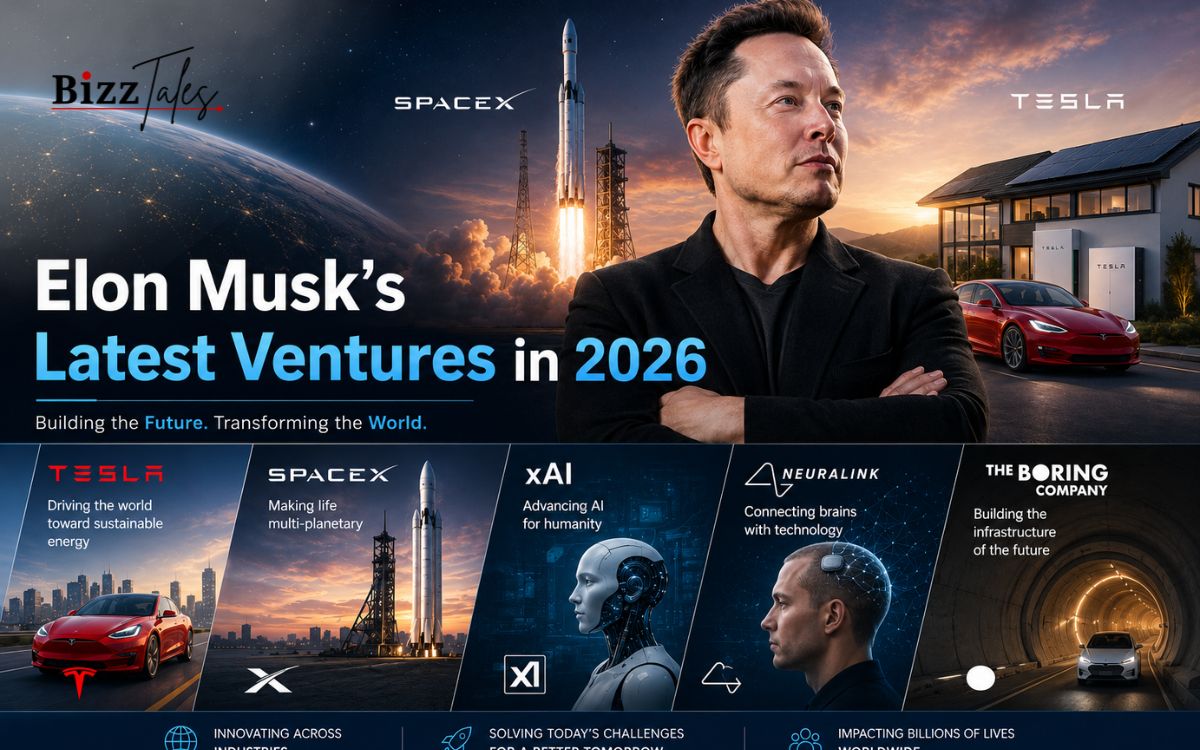
Few business leaders command global attention quite like Elon Musk. Whether it is electric vehicles, artificial intelligence, social media, space exploration, robotics, or advanced manufacturing, Musk has built a reputation for pursuing ambitious projects that many experts initially considered impossible. Over the past two decades, he has transformed from a successful entrepreneur into one of the most influential figures in global business and technology.
In 2026, Musk remains at the center of several industries that are undergoing rapid change. While many entrepreneurs focus on a single company, Musk continues to oversee a growing ecosystem of businesses that collectively influence transportation, communications, artificial intelligence, energy, and space technology. Investors, technology enthusiasts, policymakers, and competitors closely monitor his activities because his decisions often signal broader trends that may shape the future of entire industries.
The question many people are asking today is not simply what Elon Musk has already built. Instead, they want to know what he is building next. From next-generation AI systems and autonomous vehicles to humanoid robots and interplanetary missions, Musk’s current ventures reveal a vision that extends far beyond traditional business goals. His companies are increasingly interconnected, creating an ecosystem designed to accelerate technological progress across multiple sectors simultaneously.
Understanding Musk’s latest ventures provides valuable insight into where technology, business, and innovation may be heading during the coming decade.
The Evolution of Elon Musk’s Business Empire
Elon Musk’s entrepreneurial journey did not begin with electric vehicles or rockets. His early success came from internet businesses that helped establish his reputation as a technology entrepreneur. However, his ambitions quickly expanded beyond software and digital services.
Over time, Musk became known for entering industries that many considered difficult or impossible to disrupt. He pursued electric vehicles when traditional automakers were skeptical of their future. He launched a private space company when government agencies dominated space exploration. He invested heavily in renewable energy before sustainability became a mainstream corporate priority.
These decisions were often criticized initially. Yet many of Musk’s ventures eventually transformed their respective industries.
By 2026, Musk’s business portfolio spans multiple sectors that are increasingly interconnected. Rather than operating as isolated companies, many of his ventures support one another. Artificial intelligence developed for autonomous driving may contribute to robotics. Space technologies influence manufacturing innovations. Energy storage solutions complement transportation initiatives.
This interconnected approach has become one of the defining characteristics of Musk’s business strategy.
Tesla’s Transformation Beyond Electric Vehicles
For many people, Tesla remains the company most closely associated with Elon Musk. However, Tesla in 2026 is very different from the company that first popularized modern electric vehicles.
The company continues to manufacture electric cars, but its ambitions now extend far beyond transportation. Tesla increasingly positions itself as a technology and artificial intelligence company rather than simply an automaker.
Autonomous driving remains one of Tesla’s most important priorities. The company’s long-term vision involves vehicles that can operate with minimal human intervention, transforming transportation, logistics, and mobility services. While regulatory and technical challenges remain, Tesla continues investing heavily in software development, machine learning, and advanced computing systems.
At the same time, Tesla’s energy division continues expanding. Battery storage systems, solar technologies, and grid-scale energy solutions are becoming increasingly important parts of the business. As countries seek cleaner energy sources and more resilient power infrastructure, Tesla aims to play a larger role in the global energy transition.
The company’s evolution demonstrates how Musk views industries not as separate markets but as interconnected systems that can be transformed through technology.
Artificial Intelligence and the Rise of xAI
Artificial intelligence has become one of the most competitive sectors in the global technology industry.
As companies race to develop increasingly powerful AI systems, Musk has intensified his focus on this area through xAI. The company was created to compete in a market dominated by organizations such as OpenAI, Google, Anthropic, and Meta.
Musk has repeatedly argued that artificial intelligence will become one of the most important technologies in human history. Consequently, he believes that the development of advanced AI should not be controlled by a small number of organizations.
The creation of xAI reflects this philosophy.
The company’s objective extends beyond building conversational AI systems. Musk envisions AI capable of assisting scientific discovery, improving productivity, enhancing education, and solving complex global challenges. This broader ambition differentiates xAI from many consumer-focused AI products currently available in the market.
The rapid growth of AI infrastructure has also become a major focus. Building advanced AI systems requires enormous computing resources, data centers, and specialized hardware. Musk’s investments in these areas suggest that he views infrastructure as a critical component of future AI leadership.
As competition intensifies, xAI represents one of Musk’s most strategically important ventures.
SpaceX and the Mission Beyond Earth
While electric vehicles and artificial intelligence generate significant media attention, SpaceX remains one of Musk’s most ambitious projects.
The company’s original goal was to reduce the cost of space travel and eventually make humanity a multi-planetary species. Over the years, SpaceX has achieved milestones that many observers once considered unrealistic.
Reusable rocket technology dramatically lowered launch costs. Commercial satellite deployments expanded rapidly. Partnerships with government agencies strengthened the company’s position within the global aerospace industry.
In 2026, SpaceX continues pursuing increasingly ambitious objectives.
The development of next-generation spacecraft remains central to the company’s long-term strategy. Musk has consistently emphasized the importance of enabling human exploration beyond Earth, particularly missions involving Mars.
Although interplanetary travel remains a long-term objective, SpaceX’s near-term activities continue reshaping the economics of space exploration. Commercial launches, satellite services, and international partnerships provide significant business opportunities while supporting broader technological goals.
For Musk, space exploration is not merely a business venture. It represents a long-term vision for humanity’s future.
Starlink’s Growing Global Influence
One of the most commercially successful projects within the SpaceX ecosystem is Starlink.
Originally conceived as a satellite internet network, Starlink has evolved into a major global communications platform. The service provides internet connectivity to regions where traditional infrastructure is limited or unavailable.
As digital connectivity becomes increasingly important for economic development, education, and business operations, demand for satellite-based internet services continues growing.
Starlink’s significance extends beyond consumer broadband access.
Governments, enterprises, remote industries, and emergency response organizations increasingly rely on satellite communications. This diversification has strengthened Starlink’s position as a major player in the telecommunications industry.
The platform also illustrates Musk’s broader approach to innovation.
Rather than creating standalone products, he often develops ecosystems that support multiple industries simultaneously. In this case, advances in space technology directly contribute to global communications infrastructure.
Optimus and the Future of Humanoid Robots
Among Musk’s newest priorities, humanoid robotics may be one of the most intriguing.
Tesla’s Optimus project aims to create robots capable of performing repetitive, dangerous, or physically demanding tasks. While robotics has existed for decades, advances in artificial intelligence have significantly expanded what autonomous machines can accomplish.
Musk believes humanoid robots could eventually become as transformative as personal computers or smartphones.
The logic behind this vision is straightforward.
Many industries face labor shortages, rising costs, and increasing demand for automation. A versatile robot capable of performing multiple tasks could address challenges across manufacturing, logistics, healthcare, retail, and household environments.
Although widespread adoption remains years away, Optimus represents a major long-term opportunity.
If successful, humanoid robots could become one of the largest markets in the global economy.
The project also highlights how Tesla’s investments in artificial intelligence extend beyond vehicles.
The Social Media Experiment
Musk’s involvement in social media continues attracting attention.
Since acquiring the platform formerly known as Twitter, he has pursued significant changes to its business model, content strategy, and product offerings.
The platform has evolved beyond social networking and increasingly incorporates payments, creator tools, video content, business services, and artificial intelligence integration.
Musk has frequently discussed his vision of creating an “everything app” capable of combining multiple digital services within a single ecosystem.
While opinions regarding the platform’s evolution remain divided, its importance within Musk’s broader portfolio continues growing.
The platform provides access to real-time communication, user engagement, and data that may support future AI initiatives.
Why Investors Closely Follow Musk’s Ventures
Few entrepreneurs have demonstrated the ability to influence multiple industries simultaneously.
Investors pay close attention to Musk’s activities because they often provide insight into emerging technological trends.
His ventures frequently focus on sectors experiencing long-term structural growth. Electric mobility, renewable energy, artificial intelligence, robotics, and space technology are expected to remain important investment themes throughout the coming decades.
At the same time, Musk’s projects often involve significant risk.
Many initiatives require substantial capital, long development timelines, and technological breakthroughs before achieving commercial success.
This combination of high risk and high potential reward contributes to ongoing investor interest.
Whether one agrees with his strategies or not, Musk’s influence on global innovation remains difficult to ignore.
Challenges Facing Musk’s Expanding Empire
Despite remarkable achievements, Musk’s ventures face numerous challenges.
Competition continues intensifying across every major industry in which he operates. Established corporations and emerging startups alike are investing heavily in electric vehicles, artificial intelligence, robotics, renewable energy, and space technology.
Regulatory scrutiny has also increased.
Governments worldwide are paying closer attention to issues involving AI governance, autonomous systems, competition policy, data privacy, and digital communications.
Execution remains another challenge.
Managing multiple large-scale companies simultaneously requires exceptional coordination and leadership. As these businesses continue expanding, maintaining focus and operational efficiency becomes increasingly important.
The ability to navigate these challenges will play a significant role in determining the future success of Musk’s ventures.
Conclusion
Elon Musk’s latest ventures in 2026 reveal a business leader whose ambitions extend far beyond any single company or industry.
From electric vehicles and artificial intelligence to space exploration, satellite communications, robotics, and digital platforms, Musk continues pursuing projects designed to reshape how people live, work, travel, and communicate.
While opinions about his methods often differ, few would dispute his impact on modern technology.
His companies are helping define some of the most important industries of the future, and their influence is likely to extend well beyond the current decade.
As technological change accelerates, Musk’s ventures provide a glimpse into a future where artificial intelligence, automation, sustainable energy, and space exploration play increasingly central roles in society.
Whether every project succeeds remains uncertain. What is certain, however, is that Elon Musk continues building some of the most ambitious ventures in the world, and millions of people will be watching closely to see what happens next.
FAQs
What is Elon Musk’s newest company?
One of Musk’s newest major ventures is xAI, an artificial intelligence company focused on developing advanced AI systems and competing with leading AI organizations.
Is Elon Musk still involved with Tesla?
Yes. Elon Musk remains deeply involved with Tesla and continues leading initiatives related to electric vehicles, energy storage, autonomous driving, and robotics.
What is the goal of SpaceX?
SpaceX aims to reduce the cost of space travel, expand commercial space services, and eventually enable human missions beyond Earth, including Mars exploration.
What is Tesla Optimus?
Optimus is Tesla’s humanoid robot project designed to perform repetitive, dangerous, and labor-intensive tasks using artificial intelligence and advanced robotics.
Why is Elon Musk investing heavily in AI?
Musk believes artificial intelligence will become one of the most transformative technologies in history and wants to ensure its development benefits humanity while remaining competitive globally.