
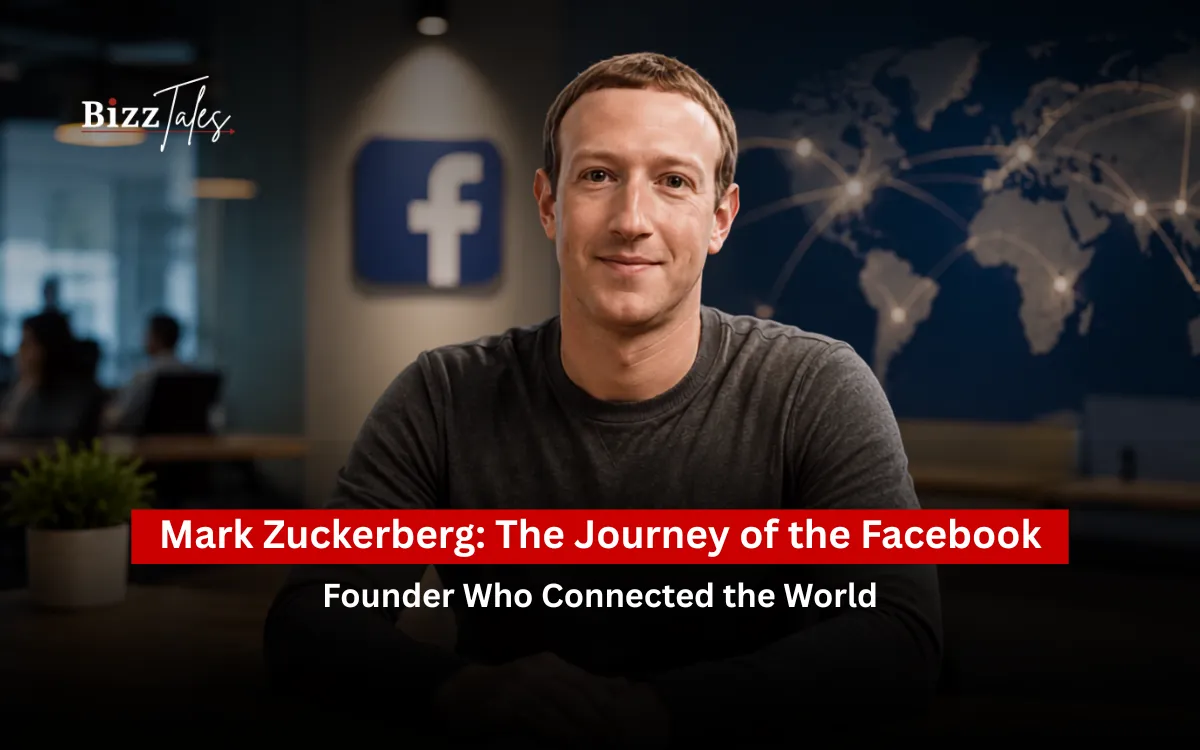
Mark Zuckerberg is one of the most influential entrepreneurs of the digital era. As the co-founder of Facebook and the driving force behind Meta Platforms, he transformed the way billions of people communicate, share information, build communities, and conduct business online. What started as a college networking website eventually became one of the largest technology companies in the world, influencing social media, virtual reality, artificial intelligence, digital advertising, and online communication.
Over the past two decades, Mark Zuckerberg has become one of the richest businessmen on the planet. His journey from a young programming enthusiast to the leader of a global technology empire is filled with innovation, controversy, competition, setbacks, and remarkable achievements. While Facebook revolutionised social networking, Zuckerberg also faced criticism, regulatory investigations, privacy concerns, and intense public scrutiny.
Despite these challenges, he continued expanding his business empire through acquisitions, technological investments, and long-term strategic planning. Today, Meta owns some of the world’s most widely used digital platforms, including Facebook, Instagram, WhatsApp, and Threads.
Mark Zuckerberg’s story is not just about wealth. It is about vision, persistence, risk-taking, and the ability to adapt in an industry that changes at an extraordinary pace.
Forbes Ranking & Net Worth History
| Year | Forbes Rank | Net Worth |
| 2026 | #7 | $217 Billion |
| 2025 | #3 | $216 Billion |
| 2024 | #4 | $177 Billion |
Zuckerberg’s fortune has been driven by Meta’s dominance in social media, digital advertising, artificial intelligence, and emerging technologies.
Early Life and Childhood
Mark Elliot Zuckerberg was born on May 14, 1984, in White Plains, New York, United States. He grew up in a supportive family environment where education, curiosity, and creativity were highly valued.
His father worked as a dentist, while his mother worked in healthcare. From a young age, Zuckerberg demonstrated exceptional intellectual abilities and a strong interest in computers.
Unlike many children who used computers primarily for entertainment, Zuckerberg became fascinated with programming. He spent countless hours learning coding languages and experimenting with software development.
His passion for technology emerged at an early age and quickly distinguished him from his peers.
Family members recognized his talent and encouraged him to pursue his interests, providing resources and opportunities to further develop his programming skills.
Education and Passion for Programming
As a teenager, Zuckerberg developed several software applications and computer programs that showcased his growing technical abilities.
One of his earliest projects was a messaging program called ZuckNet, which allowed computers in his family’s home and dental office to communicate with one another.
His programming talent attracted attention from both educators and technology professionals.
After excelling academically, Zuckerberg attended Phillips Exeter Academy, one of the most prestigious schools in the United States.
He later enrolled at Harvard University, where he studied psychology and computer science.
It was at Harvard that his entrepreneurial journey truly began.
The Birth of Facebook
During his time at Harvard, Zuckerberg observed how students wanted better ways to connect and communicate online.
Social networking websites already existed, but many were limited in functionality and user experience.
In February 2004, Zuckerberg launched Facebook from his college dormitory.
Originally designed for Harvard students, the platform quickly gained popularity and expanded to other universities.
Within a short period, Facebook became one of the fastest-growing websites in the world.
Recognizing the enormous potential of the platform, Zuckerberg made a bold decision to leave Harvard and focus entirely on growing the company.
This decision would ultimately transform him into one of the most successful entrepreneurs in history.
Building a Social Media Empire
Facebook’s growth during the mid-2000s was extraordinary.
Millions of users joined the platform, creating a global network unlike anything seen before.
Businesses, organizations, celebrities, and communities quickly recognized Facebook’s value as a communication and marketing platform.
As user numbers increased, Facebook developed one of the most powerful digital advertising businesses in the world.
The company’s ability to connect advertisers with targeted audiences generated enormous revenue and fueled rapid expansion.
Under Zuckerberg’s leadership, Facebook evolved from a college networking site into a global technology giant.
Major Acquisitions That Changed Meta
One of Zuckerberg’s greatest strengths has been his ability to identify future opportunities.
Rather than relying solely on Facebook, he aggressively expanded the company’s ecosystem through strategic acquisitions.
In 2012, Facebook acquired Instagram, which would later become one of the world’s most popular social media platforms.
In 2014, the company purchased WhatsApp, adding billions of users to its communication ecosystem.
Facebook also acquired Oculus VR, signaling Zuckerberg’s interest in virtual reality and future digital experiences.
These acquisitions significantly strengthened Meta’s market position and diversified its business model.
Many analysts consider them among the most successful technology acquisitions in history.
Challenges and Controversies
Despite Facebook’s success, Mark Zuckerberg faced numerous challenges throughout his career.
The company encountered criticism regarding user privacy, misinformation, data security, political influence, and content moderation.
One of the most significant controversies involved the Cambridge Analytica scandal, which raised concerns about how user data was handled.
Governments and regulators worldwide launched investigations into Facebook’s practices.
Zuckerberg was required to testify before lawmakers and defend the company’s operations.
These events placed enormous pressure on both him and the company.
Critics questioned Facebook’s role in society, while supporters argued that the platform remained a powerful tool for communication and connection.
Navigating these challenges required strong leadership and adaptability.
Rebranding Facebook as Meta
In 2021, Zuckerberg announced one of the most ambitious transformations in the company’s history.
Facebook Inc. was renamed Meta Platforms.
The rebranding reflected Zuckerberg’s vision for the metaverse, a digital environment where people could work, socialize, shop, and interact through immersive technologies.
Although the metaverse initiative received mixed reactions, it demonstrated Zuckerberg’s willingness to invest in long-term innovation.
The company also increased investments in artificial intelligence, virtual reality, augmented reality, and next-generation computing technologies.
Meta’s future strategy continues to focus on building new digital experiences beyond traditional social media.
Artificial Intelligence and the Future
In recent years, Zuckerberg has positioned Meta as a major player in artificial intelligence.
The company has invested billions of dollars in AI research, infrastructure, and product development.
Meta AI technologies are integrated into Facebook, Instagram, WhatsApp, Threads, and various business tools.
As artificial intelligence becomes increasingly important, Meta’s AI initiatives have contributed significantly to the company’s valuation and Zuckerberg’s growing wealth.
Many industry experts believe AI will play a major role in Meta’s future growth.
Other Businesses and Investments
Beyond Meta, Zuckerberg has invested in technology research, healthcare innovation, artificial intelligence, and educational initiatives.
Through the Chan Zuckerberg Initiative, he has supported projects aimed at improving education, scientific research, and medical advancements.
His investments often focus on solving large-scale societal challenges and advancing technological progress.
These efforts reflect a broader vision that extends beyond social media.
Leadership Style
Mark Zuckerberg is known for his analytical, product-focused leadership style.
He places strong emphasis on innovation, engineering excellence, and long-term thinking.
Throughout his career, he has demonstrated a willingness to take significant risks and pursue ambitious goals.
Many employees describe him as highly focused, data-driven, and deeply involved in product development.
His leadership has helped Meta remain competitive despite intense industry competition and regulatory scrutiny.
Philanthropy and Personal Life
Mark Zuckerberg and his wife, Priscilla Chan, have pledged significant portions of their wealth to philanthropic causes.
Their charitable initiatives support education, healthcare, scientific research, and social development projects.
The Chan Zuckerberg Initiative has become one of the most prominent philanthropic organizations established by technology entrepreneurs.
Despite his public profile, Zuckerberg generally maintains a family-focused personal life.
Official Social Media Accounts
Zuckerberg remains one of the most followed technology leaders in the world and regularly shares updates regarding Meta, artificial intelligence, and personal interests.
Lessons Entrepreneurs Can Learn from Mark Zuckerberg
One of the biggest lessons from Zuckerberg’s journey is the importance of identifying emerging trends early.
He recognized the growing importance of social networking before many competitors.
His story also demonstrates the value of continuous innovation. Rather than relying solely on Facebook, he expanded through acquisitions and new technologies.
Entrepreneurs can learn from his willingness to take risks, adapt to challenges, and maintain a long-term vision.
Perhaps most importantly, Zuckerberg’s journey highlights the power of persistence in the face of criticism and adversity.
Conclusion
Mark Zuckerberg’s transformation from a Harvard student to one of the richest businessmen in the world is among the most remarkable entrepreneurial stories of the modern era. Through Facebook and Meta, he reshaped global communication and built a technology empire that reaches billions of people every day.
While his career has included controversy, competition, and regulatory challenges, his ability to innovate and adapt has allowed Meta to remain one of the world’s most influential companies.
As artificial intelligence, virtual reality, and digital communication continue evolving, Zuckerberg’s impact on technology and society will likely continue for decades to come.
His story remains a powerful example of how vision, innovation, and determination can change the world.
FAQs
1. Who is Mark Zuckerberg?
Mark Zuckerberg is the co-founder of Facebook and CEO of Meta Platforms.
2. What is Mark Zuckerberg’s net worth in 2026?
His estimated net worth is approximately $217 billion.
3. When was Facebook founded?
Facebook was founded in 2004 while Zuckerberg was attending Harvard University.
4. Why did Facebook become Meta?
The company rebranded as Meta to reflect its focus on the metaverse and future digital technologies.
5. What companies does Meta own?
Meta owns Facebook, Instagram, WhatsApp, Threads, and Oculus-related technologies.
6. What challenges has Zuckerberg faced?
He has faced privacy controversies, regulatory investigations, data security concerns, and public criticism.
7. What is the Chan Zuckerberg Initiative?
It is a philanthropic organization focused on education, healthcare, and scientific research.
8. Is Mark Zuckerberg active on social media?
Yes, he actively uses Facebook, Instagram, and Threads.
9. What is Meta’s focus on artificial intelligence?
Meta is investing heavily in AI research, infrastructure, and products integrated across its platforms.
10. What can entrepreneurs learn from Mark Zuckerberg?
Entrepreneurs can learn the importance of innovation, adaptability, risk-taking, long-term thinking, and resilience.