
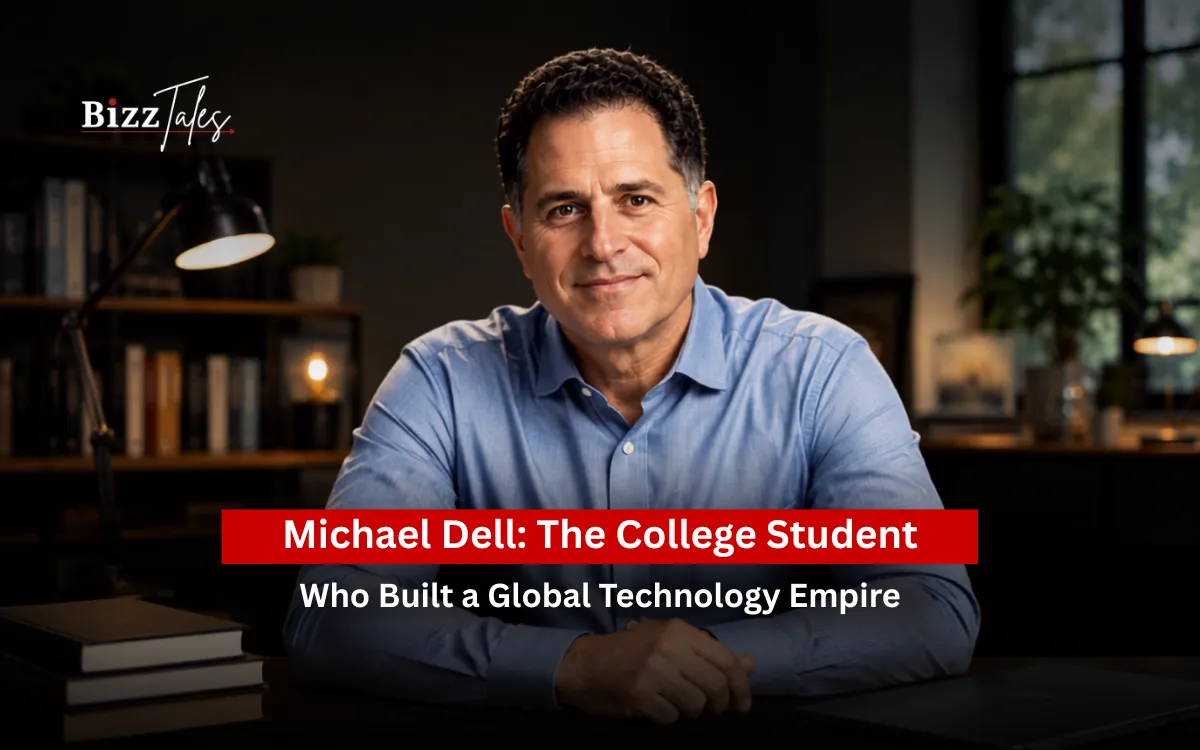
Michael Dell is one of the most successful entrepreneurs in the history of the technology industry. As the founder, chairman, and CEO of Dell Technologies, he transformed a small computer business operating from a college dorm room into one of the world’s largest technology companies. His journey is a remarkable story of innovation, determination, strategic thinking, and the ability to adapt to changing market conditions.
Unlike many business leaders who inherited family enterprises or joined existing corporations, Dell built his company from scratch. He recognized opportunities in the personal computer market long before many competitors and developed a business model that revolutionized how computers were sold to consumers and businesses.
Over the decades, Dell Technologies expanded far beyond personal computers, becoming a major force in enterprise infrastructure, cloud solutions, cyber security, data storage, networking, and artificial intelligence. This transformation helped Michael Dell become one of the richest businessmen in the world.
His story is particularly inspiring because it demonstrates how entrepreneurial vision, combined with execution and persistence, can create a global business empire from humble beginnings.
Forbes Ranking & Net Worth History
| Year | Forbes Rank | Net Worth |
| 2026 | #6 | $244 Billion |
| 2025 | #12 | $123 Billion |
| 2024 | #14 | $91 Billion |
Michael Dell’s wealth has grown dramatically in recent years due to increasing demand for enterprise technology, cloud infrastructure, data centers, and artificial intelligence computing systems.
Early Life and Family Background
Michael Saul Dell was born on February 23, 1965, in Houston, Texas, United States.
From a young age, Dell displayed an entrepreneurial mindset. While many children focused on hobbies and entertainment, he was constantly exploring ways to earn money and understand how businesses operated.
His father worked as an orthodontist, while his mother was involved in financial services. Growing up in a family that valued education and professional achievement, Dell developed strong analytical skills and a curiosity about business.
As a teenager, he experimented with various small ventures and demonstrated an unusual interest in economics, technology, and sales.
One of the defining characteristics of his childhood was his willingness to challenge conventional approaches. He often looked for more efficient ways to accomplish tasks and generate results.
This mindset would later become a major factor in his business success.
Early Entrepreneurial Ventures
Before entering the technology industry, Dell already showed signs of becoming a successful entrepreneur.
As a teenager, he earned substantial income selling newspaper subscriptions. Rather than relying on traditional sales methods, he analyzed customer data and developed targeted marketing strategies.
His innovative approach produced impressive results and generated significant earnings.
Dell also became interested in computers at a young age. He enjoyed understanding how systems worked and often disassembled machines to learn about their components.
This combination of technical curiosity and business thinking would eventually lead to one of the most successful technology companies in history.
Education and the Beginning of Dell Computers
After high school, Michael Dell enrolled at the University of Texas at Austin to study medicine.
Although his parents hoped he would pursue a medical career, Dell’s passion increasingly shifted toward technology and entrepreneurship.
While attending college, he began buying personal computers, upgrading them with additional components, and selling them directly to customers.
The concept was simple but revolutionary.
By eliminating intermediaries and selling directly to consumers, Dell could offer customized computers at competitive prices.
The business quickly gained momentum.
As demand increased, Dell realized the opportunity was far larger than a part-time college project.
In 1984, he made the bold decision to leave college and focus entirely on building his company.
At just nineteen years old, he launched Dell Computer Corporation.
Revolutionizing the Computer Industry
Dell’s direct-to-consumer model fundamentally changed the personal computer industry.
Traditional computer manufacturers relied heavily on retail stores and distributors.
Dell took a different approach.
Customers could order customized computers directly from the company, reducing costs and improving efficiency.
This strategy allowed Dell to respond quickly to changing customer needs and technological developments.
The company grew rapidly throughout the 1980s and 1990s as personal computers became increasingly important in homes, schools, and businesses.
Dell’s focus on operational efficiency, customer service, and supply chain management created a significant competitive advantage.
The company’s success transformed Michael Dell into one of the youngest successful entrepreneurs in the technology sector.
Becoming a Global Technology Leader
As Dell expanded internationally, the company became one of the world’s largest computer manufacturers.
Its products gained popularity among businesses, government organizations, educational institutions, and consumers.
Dell established a reputation for reliability, customization, and strong customer support.
The company’s rapid growth made Michael Dell one of the most recognized business leaders in America.
His leadership style emphasized efficiency, innovation, and continuous improvement.
By the late 1990s, Dell had become one of the dominant forces in the global personal computer market.
The company was generating billions of dollars in annual revenue and competing directly with major technology firms.
Challenges and Market Changes
Despite its success, Dell faced significant challenges.
The technology industry evolves rapidly, and changing consumer preferences created new competitive pressures.
The rise of smartphones, tablets, and mobile computing altered demand patterns within the personal computer market.
Competitors such as HP, Lenovo, Apple, and others intensified competition.
For a period, Dell struggled to maintain its previous growth trajectory.
Critics questioned whether the company could adapt to changing market conditions.
Michael Dell recognized the need for transformation.
Rather than relying solely on personal computers, he began repositioning the company for the future.
Taking Dell Private
One of the most significant decisions in Michael Dell’s career occurred in 2013.
He led a complex transaction to take Dell private.
At the time, many observers considered the move controversial.
However, Dell believed the company needed greater flexibility to implement long-term strategic changes without the pressure of quarterly public market expectations.
The decision allowed the company to focus on transformation and innovation.
This bold move demonstrated Dell’s willingness to make difficult decisions in pursuit of long-term success.
The strategy ultimately proved highly effective.
Building Dell Technologies
Following the privatization, Dell pursued one of the largest acquisitions in technology history.
The company acquired EMC Corporation, a major leader in data storage and enterprise technology.
This acquisition transformed Dell from a computer manufacturer into a comprehensive technology solutions provider.
Dell Technologies expanded into cloud infrastructure, cybersecurity, networking, virtualization, data centers, and enterprise software.
The transformation positioned the company at the center of modern digital infrastructure.
This strategic shift became one of the most important achievements of Michael Dell’s career.
Artificial Intelligence and Future Growth
As artificial intelligence emerged as a major technological trend, Dell Technologies invested heavily in AI infrastructure and enterprise solutions.
Organizations worldwide require powerful computing systems to support machine learning, data analysis, and AI applications.
Dell Technologies became an important provider of servers, storage systems, networking equipment, and enterprise infrastructure supporting these workloads.
The rapid growth of AI significantly increased demand for Dell’s products and services.
This trend contributed to the dramatic increase in Michael Dell’s net worth in recent years.
Other Businesses and Investments
Beyond Dell Technologies, Michael Dell has invested in numerous industries through his investment firm, MSD Capital.
His interests include real estate, finance, hospitality, healthcare, technology startups, and private equity investments.
These investments provide diversification and allow him to participate in multiple growth sectors.
His business portfolio extends well beyond the technology industry.
This diversified approach has strengthened his overall financial position.
Leadership Style
Michael Dell is known for his analytical, pragmatic, and customer-focused leadership style.
He emphasizes operational excellence, efficiency, innovation, and long-term strategic planning.
Unlike some highly public technology executives, Dell generally maintains a measured and disciplined public image.
Employees and industry observers often describe him as thoughtful, data-driven, and focused on execution.
His ability to adapt business strategies to changing market conditions has been a major factor in Dell Technologies’ longevity.
Philanthropy and Personal Life
Michael Dell and his wife, Susan Dell, are actively involved in philanthropy through the Michael & Susan Dell Foundation.
The foundation focuses on education, healthcare, family economic stability, and community development.
Over the years, the organization has committed billions of dollars to charitable initiatives around the world.
Dell’s philanthropic efforts reflect a commitment to creating opportunities and improving quality of life for underserved populations.
His charitable work has become an important part of his legacy.
Official Social Media Accounts
Dell frequently shares insights about technology, entrepreneurship, innovation, leadership, and philanthropy through professional channels.
Lessons Entrepreneurs Can Learn from Michael Dell
One of the most important lessons from Michael Dell’s journey is the value of identifying inefficiencies and creating better solutions.
His direct-sales model disrupted an entire industry because it solved real customer problems.
His story also demonstrates the importance of adaptability.
Rather than resisting change, Dell transformed his company multiple times to remain competitive.
Entrepreneurs can learn from his willingness to take calculated risks, including leaving college and later taking his company private.
Perhaps most importantly, his career highlights the power of long-term thinking and strategic transformation.
Conclusion
Michael Dell’s journey from a college student selling customized computers to one of the richest businessmen in the world is a remarkable example of entrepreneurial success. Through Dell Technologies, he revolutionized computer sales, built a global technology company, and successfully transformed the business to meet the demands of a rapidly changing industry.
His willingness to innovate, adapt, and make bold strategic decisions allowed Dell Technologies to remain relevant for decades in one of the world’s most competitive sectors.
Today, through enterprise technology, artificial intelligence infrastructure, investments, and philanthropy, Michael Dell continues to shape the future of business and technology.
For entrepreneurs and business leaders, his story serves as a powerful reminder that vision, execution, and adaptability can create extraordinary opportunities.
FAQs
1. Who is Michael Dell?
Michael Dell is the founder, chairman, and CEO of Dell Technologies.
2. What is Michael Dell’s net worth in 2026?
His estimated net worth is approximately $244 billion.
3. When did Michael Dell start Dell Computers?
He founded the company in 1984 while attending the University of Texas.
4. Did Michael Dell finish college?
No. He left college to focus on building his computer business.
5. What made Dell Computers successful?
Its direct-to-consumer sales model, customization options, and efficient supply chain management.
6. What is Dell Technologies?
Dell Technologies is a global technology company specializing in computers, enterprise infrastructure, cloud solutions, cybersecurity, and AI systems.
7. Why did Michael Dell take the company private?
He believed privatization would allow greater flexibility for long-term transformation and strategic growth.
8. What other businesses does Michael Dell own?
Through MSD Capital, he has investments in real estate, finance, healthcare, hospitality, and technology ventures.
9. Is Michael Dell active on social media?
Yes. He maintains professional accounts on X and LinkedIn.
10. What can entrepreneurs learn from Michael Dell?
Entrepreneurs can learn innovation, adaptability, strategic thinking, customer focus, and the importance of long-term business transformation.