
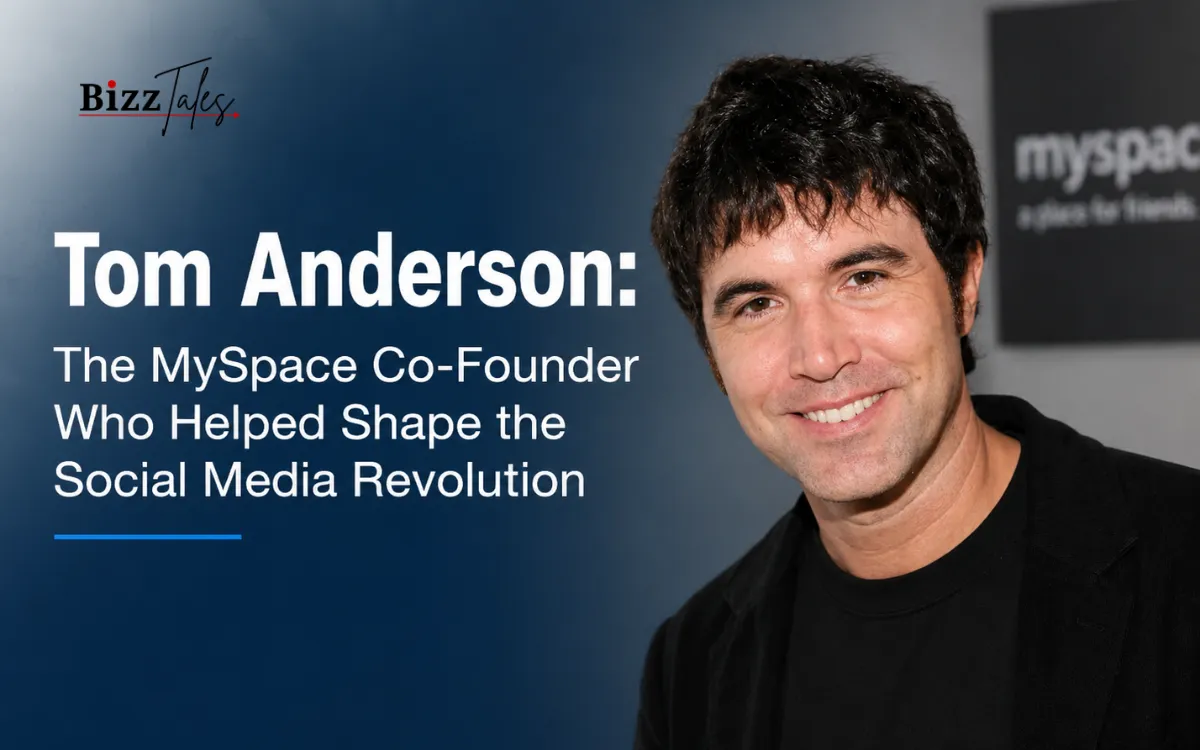
Long before Facebook, Instagram, TikTok, and modern social media platforms dominated the internet, there was MySpace. During the mid-2000s, MySpace was the most popular social networking platform in the world, attracting millions of users and fundamentally changing how people interacted online. At the center of this digital revolution was Tom Anderson, the entrepreneur and co-founder whose profile became one of the most recognized images on the internet.
For an entire generation of internet users, Tom Anderson was known as “MySpace Tom,” the first friend every new user automatically received when creating an account. While this simple feature became an internet legend, Anderson’s influence extended far beyond a profile picture. As one of the pioneers of social networking, he helped create a platform that shaped online communication, music promotion, digital communities, and personal branding years before social media became a global phenomenon.
Unlike many technology entrepreneurs who continued building large corporations, Anderson chose a different path after MySpace’s success. He stepped away from corporate leadership and focused on personal interests, travel, photography, and investing. Despite maintaining a relatively low public profile, his role in internet history remains significant.
Tom Anderson’s story is one of innovation, timing, entrepreneurial vision, and understanding how technology could connect people in entirely new ways.
Forbes Rankings and Net Worth
| Year | Forbes Ranking | Net Worth |
| 2026 | Technology Entrepreneur | Approximately $70 Million |
| 2025 | Private Investor | Approximately $68 Million |
| 2024 | Private Investor | Approximately $65 Million |
Unlike many social media founders who remained actively involved in large public companies, Tom Anderson accumulated wealth primarily through MySpace’s success, strategic investments, and personal ventures after leaving the technology industry.
Early Life and Education
Thomas Anderson was born on November 8, 1970, in San Bernardino, California, United States. Growing up in Southern California during the rise of personal computers, Anderson developed an early interest in technology, programming, and communication systems.
As a teenager, he displayed strong curiosity about computers and digital networks. During a period when home computers were still relatively new, Anderson spent significant time learning programming languages and exploring emerging internet technologies.
His fascination with technology eventually led him to pursue higher education. He attended the University of California, Berkeley, before later studying at the University of California, Los Angeles (UCLA).
During his academic years, Anderson developed interests that extended beyond technology. He studied film, writing, communication, and digital media, subjects that would later influence his understanding of online communities and user engagement.
Unlike many future tech founders who focused exclusively on engineering, Anderson possessed a broader perspective that combined technology with human interaction and communication.
This unique combination would later help him understand how social networking platforms could create meaningful connections between users.
Career Journey
Before becoming a social media pioneer, Tom Anderson worked in various technology-related roles that helped him develop practical business and technical experience.
During the late 1990s and early 2000s, the internet was expanding rapidly. New websites, online services, and digital businesses were emerging almost daily. Anderson recognized that the internet was evolving from a collection of static websites into an interactive platform where users could communicate, share content, and build communities.
His professional journey took a major turn when he joined eUniverse, an internet marketing company founded by entrepreneur Brad Greenspan.
At eUniverse, Anderson worked alongside Chris DeWolfe, who would later become his co-founder.
In 2003, inspired partly by the popularity of Friendster, Anderson and DeWolfe began developing a new social networking platform that would eventually become MySpace.
Their goal was simple yet ambitious: create a platform that gave users greater freedom to express themselves, customize their profiles, share interests, and connect with friends.
The concept quickly gained momentum.
Within months of launching, MySpace attracted millions of users and became one of the fastest-growing websites in internet history.
Business Ventures
MySpace remains Tom Anderson’s most significant business achievement.
Launched in 2003, the platform distinguished itself through user customization, music integration, social networking features, and community-building tools.
Unlike many competing services at the time, MySpace allowed users to personalize profiles with custom designs, music playlists, images, videos, and HTML modifications. This flexibility made the platform especially popular among younger audiences.
One of MySpace’s most important contributions was its impact on the music industry.
The platform gave independent musicians direct access to fans, helping countless artists build audiences without relying solely on traditional record labels.
Many successful musicians used MySpace as a launchpad for their careers, making the platform an essential part of early digital music culture.
In 2005, News Corporation acquired MySpace’s parent company for approximately $580 million, making it one of the largest internet acquisitions of its time.
The deal significantly increased Anderson’s wealth and established MySpace as a major player in the global technology industry.
After leaving MySpace, Anderson largely stepped away from operating businesses and focused on investing, photography, and personal projects.
Success Story and Major Achievements
Tom Anderson’s greatest achievement is helping create one of the first truly global social networking platforms.
At its peak, MySpace was the most visited social networking website in the world and attracted more users than Google in certain periods.
The platform fundamentally changed how people interacted online by making social networking accessible, creative, and community-driven.
Another major achievement was helping popularize user-generated content. MySpace empowered individuals to create personal profiles, share media, build audiences, and engage with online communities.
The platform also revolutionized music promotion by giving artists direct access to listeners.
Many future social media features—including profile pages, friend networks, content sharing, messaging systems, and online communities—were popularized through MySpace before becoming standard across the industry.
Anderson’s influence extends beyond a single company because MySpace helped establish many of the foundations upon which modern social media platforms were built.
Challenges, Failures, and Setbacks
Despite its enormous success, MySpace faced significant challenges.
As the platform grew rapidly, maintaining performance, user experience, and innovation became increasingly difficult.
Competition intensified with the rise of Facebook, which offered a cleaner interface, stronger user verification systems, and a different approach to social networking.
While MySpace prioritized customization and entertainment, Facebook focused on simplicity, real-world identity, and streamlined user experiences.
Over time, Facebook’s growth began eroding MySpace’s market position.
Strategic decisions following News Corporation’s acquisition also generated criticism. Some observers argued that corporate ownership slowed innovation and limited the platform’s ability to respond to changing user preferences.
As competition increased, MySpace gradually lost market share and eventually ceased being the dominant social network.
For Anderson personally, watching the platform decline after helping build it represented a significant challenge.
However, he largely avoided public controversy and transitioned successfully into a different phase of life.
Investments and Assets
Tom Anderson’s wealth comes primarily from MySpace-related earnings and investments accumulated over the years.
Following the sale of MySpace, he gained financial independence and began focusing on investment opportunities rather than building new technology companies.
His portfolio reportedly includes investments in technology ventures, financial assets, real estate holdings, and private business opportunities.
Unlike many technology entrepreneurs who remain deeply involved in corporate leadership, Anderson adopted a more passive investment approach.
He also invested significant time in travel and photography, developing a reputation for landscape photography and visual storytelling.
His financial strategy appears centered on long-term wealth preservation rather than aggressive expansion into new ventures.
Leadership Style and Business Philosophy
Tom Anderson’s leadership style was notably different from many technology founders.
Rather than positioning himself as a celebrity CEO, he maintained a relatively approachable and casual public image.
One of his defining strengths was understanding online communities and user behavior. He recognized early that people wanted digital spaces where they could express individuality and build relationships.
Another important characteristic was adaptability. During MySpace’s rapid growth, Anderson focused on responding to user interests and encouraging creativity.
He also believed that technology should empower individuals rather than restrict them.
This philosophy influenced many aspects of MySpace’s design and culture.
Although he eventually stepped away from corporate leadership, his approach demonstrated the importance of understanding users and creating products that encourage participation.
Personal Life
Tom Anderson is known for maintaining a private and relatively low-profile lifestyle.
After leaving MySpace, he devoted much of his time to travel, photography, and personal exploration.
His photography work gained attention online, particularly for its focus on landscapes, nature, and remote destinations around the world.
Unlike many wealthy entrepreneurs who remain highly visible in business circles, Anderson largely chose a quieter life focused on personal interests.
He frequently shares travel experiences and photography projects while avoiding much of the public attention associated with the technology industry.
His lifestyle reflects a desire to pursue creativity and personal fulfillment rather than corporate leadership.
Legacy and Future Outlook
Tom Anderson’s legacy is firmly established within internet history.
As the co-founder of MySpace, he helped create one of the first global social networking platforms and introduced millions of people to online communities.
The platform’s influence can still be seen across modern social media. Features that are now standard on Facebook, Instagram, TikTok, LinkedIn, and other platforms were pioneered or popularized by MySpace.
His role in supporting musicians, creators, and digital communities also left a lasting impact on internet culture.
Although Anderson is no longer actively building large technology companies, his contributions continue influencing how people communicate and interact online.
Future generations studying the evolution of social networking will inevitably encounter MySpace and the role Anderson played in shaping the digital age.
Conclusion
Tom Anderson’s journey from technology enthusiast to MySpace co-founder represents one of the most important chapters in internet history.
Through MySpace, he helped pioneer social networking and created a platform that transformed communication, entertainment, and digital culture. At its peak, MySpace connected millions of users and became a defining part of online life for an entire generation.
While the platform eventually lost its dominance, its influence remains visible throughout today’s social media landscape.
For entrepreneurs and innovators, Anderson’s story demonstrates the power of understanding human connection and using technology to bring people together.
Today, Tom Anderson remains a respected figure in internet history whose legacy continues to shape the way the world interacts online.
FAQs
1. What is Tom Anderson’s net worth in 2026?
Tom Anderson’s estimated net worth in 2026 is approximately $70 million.
2. How did Tom Anderson become wealthy?
He became wealthy by co-founding MySpace and benefiting from the company’s growth and eventual acquisition.
3. What company did Tom Anderson found?
Tom Anderson co-founded MySpace, one of the world’s first major social networking platforms.
4. What is Tom Anderson’s leadership style?
His leadership style focused on community-building, user creativity, accessibility, and understanding online social behavior.
5. What is Tom Anderson’s biggest business achievement?
His biggest achievement is co-founding MySpace and helping pioneer the social media industry that transformed global communication.