
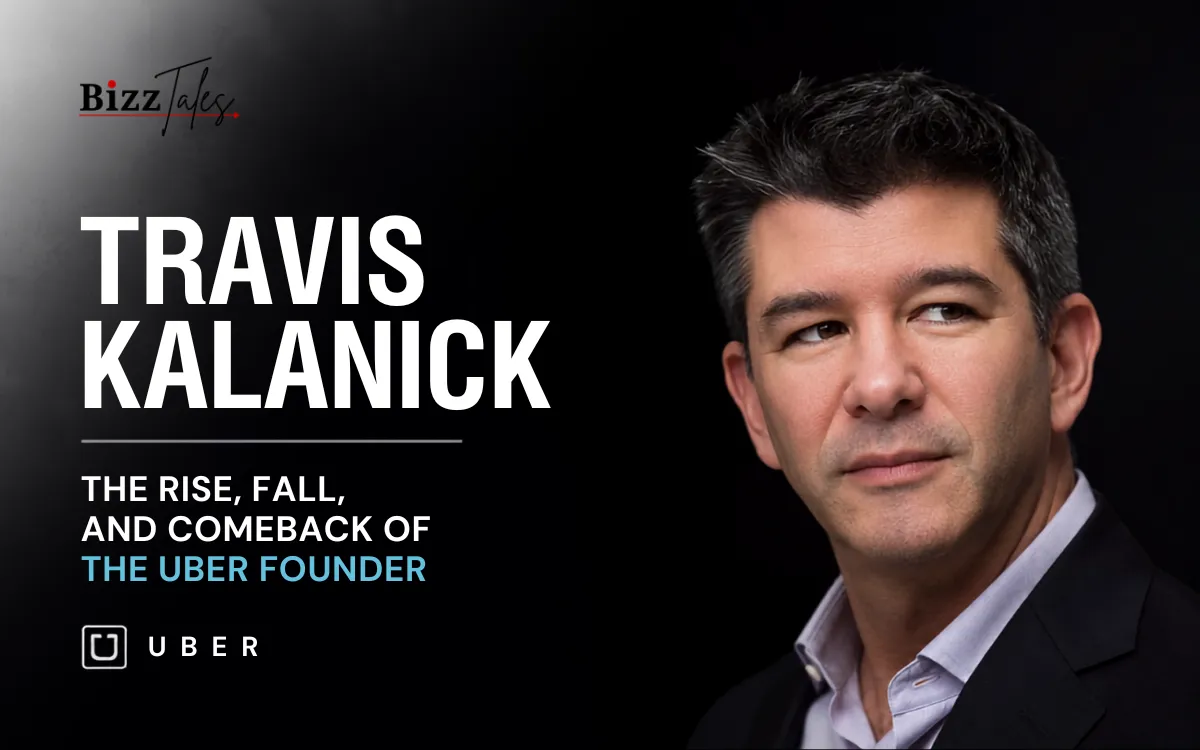
Few entrepreneurs have experienced a business journey as dramatic as Travis Kalanick. Celebrated as the visionary who transformed urban transportation through Uber and later criticized for controversies that led to his departure from the company he built, Kalanick’s story is one of extraordinary ambition, remarkable innovation, painful setbacks, and eventual reinvention.
As the co-founder and former CEO of Uber, Kalanick disrupted one of the world’s oldest industries by creating a technology platform that connected riders and drivers through a smartphone application. What began as a startup idea quickly evolved into a global transportation empire operating in hundreds of cities across multiple continents. Under his leadership, Uber became one of the fastest-growing companies in modern business history.
However, the same aggressive mindset that fueled Uber’s explosive growth also contributed to significant challenges. Corporate culture issues, legal battles, regulatory conflicts, and public controversies ultimately led to his resignation as CEO. Yet unlike many founders whose careers end after such setbacks, Kalanick returned to entrepreneurship and built new ventures, proving that resilience can be just as important as innovation.
Today, Travis Kalanick remains one of Silicon Valley’s most fascinating figures. His story offers valuable lessons about entrepreneurship, leadership, growth, failure, and redemption.
FORBES RANKINGS AND NET WORTH
| Year | Forbes Ranking | Net Worth |
| 2026 | #429 | $8.2 Billion |
| 2025 | #451 | $7.5 Billion |
| 2024 | #512 | $6.8 Billion |
EARLY LIFE AND EDUCATION
Travis Cordell Kalanick was born on August 6, 1976, in Los Angeles, California. He grew up in a middle-class family where entrepreneurship and hard work were highly valued. His father worked in civil engineering and real estate, while his mother was involved in advertising and marketing. This combination of technical and business influences helped shape his entrepreneurial mindset from a young age.
As a child, Kalanick demonstrated a strong interest in computers and technology. During his teenage years, he spent significant time learning programming and exploring the rapidly growing world of software development. Unlike many students who viewed computers simply as tools for entertainment, he saw them as opportunities to build businesses and solve problems.
After graduating from high school, he enrolled at the University of California, Los Angeles (UCLA), where he studied computer engineering. However, his entrepreneurial ambitions quickly overshadowed his academic pursuits. Before completing his degree, Kalanick left university to focus on building a startup.
Although dropping out of college carried considerable risk, it reflected a pattern that would define much of his career: a willingness to pursue bold opportunities even when success was uncertain.
CAREER JOURNEY
Travis Kalanick’s entrepreneurial journey began long before Uber. In the late 1990s, he co-founded Scour, a peer-to-peer file-sharing platform. The company attracted significant attention and rapidly expanded its user base. However, Scour became entangled in legal disputes involving copyright infringement, ultimately leading to bankruptcy.
For many entrepreneurs, such a failure would have ended their ambitions. Instead, Kalanick viewed the experience as a learning opportunity. He later co-founded Red Swoosh, a content delivery network company designed to improve internet file distribution.
Building Red Swoosh required persistence. The company faced financial difficulties during its early years, and Kalanick personally experienced periods of uncertainty and limited resources. Eventually, Red Swoosh gained traction and was acquired by Akamai Technologies in 2007 for approximately $19 million.
This successful exit provided Kalanick with both financial resources and credibility within the technology industry.
The defining moment of his career arrived in 2009 when he joined Uber. Initially conceived as a luxury ride-hailing service, Uber aimed to simplify transportation by allowing users to request rides through a mobile application.
Kalanick became CEO and quickly transformed Uber into a global phenomenon. Under his leadership, the company expanded aggressively, entered international markets, and challenged traditional taxi industries around the world.
Within a few years, Uber became one of the most valuable private companies in history, making Kalanick one of Silicon Valley’s most influential entrepreneurs.
BUSINESS VENTURES
Uber remains Travis Kalanick’s most significant business achievement. The company revolutionized transportation by introducing a convenient, technology-driven alternative to traditional taxi services.
Under Kalanick’s leadership, Uber expanded far beyond its original concept. The company introduced ride-sharing services, food delivery, logistics operations, freight transportation, and various mobility solutions. This diversification transformed Uber into a comprehensive technology platform rather than simply a transportation company.
The rapid expansion strategy helped Uber establish a presence in hundreds of cities worldwide. Millions of riders and drivers adopted the platform, creating one of the most recognized brands in the technology industry.
After leaving Uber, Kalanick founded CloudKitchens, a company focused on ghost kitchens and food delivery infrastructure. The venture provides facilities designed specifically for delivery-focused restaurant operations.
CloudKitchens represents a different type of disruption, targeting inefficiencies within the food service industry. By leveraging technology and real estate, the company seeks to support the growing demand for food delivery.
This venture demonstrates Kalanick’s continued interest in industries undergoing significant transformation.
SUCCESS STORY AND MAJOR ACHIEVEMENTS
Travis Kalanick’s success story is one of the most remarkable examples of disruptive innovation in modern business. Building Uber required challenging established transportation systems, navigating regulatory obstacles, and convincing consumers to embrace a new way of traveling.
One of his greatest achievements was creating a platform that fundamentally changed urban mobility. Uber made transportation more accessible, flexible, and convenient for millions of people worldwide.
Another significant accomplishment was scaling Uber at an unprecedented pace. The company’s growth became a case study in startup expansion, venture capital fundraising, and global market penetration.
Kalanick also helped popularize the broader sharing economy. Uber’s success inspired countless entrepreneurs to develop platforms connecting consumers with service providers through technology.
His ability to attract investors, recruit talent, and execute ambitious expansion plans contributed significantly to Uber’s rise.
These achievements established him as one of the most influential entrepreneurs of the technology era.
RISE AND FALL
The rise of Travis Kalanick and Uber is often viewed as one of Silicon Valley’s greatest success stories. From a small startup to a company valued at tens of billions of dollars, Uber achieved growth that few businesses have ever matched.
Kalanick became known for his relentless competitiveness and willingness to challenge regulations. This aggressive approach helped Uber enter markets quickly and outperform competitors. Investors admired his determination, and many viewed him as a visionary leader capable of transforming entire industries.
However, the same characteristics that fueled Uber’s growth eventually contributed to its challenges.
As the company expanded, reports emerged regarding workplace culture issues, employee complaints, management controversies, and leadership concerns. Public scrutiny intensified, and regulators around the world increased pressure on the company.
A series of scandals involving corporate practices, internal investigations, and public relations crises damaged Uber’s reputation. Investors, board members, and stakeholders increasingly questioned whether the company’s leadership style was sustainable.
In 2017, following mounting pressure, Travis Kalanick resigned as CEO of Uber. For many observers, his departure represented one of the most dramatic falls from power in Silicon Valley history.
Yet Kalanick’s story did not end there.
Rather than withdrawing from business, he focused on new ventures and investments. Through CloudKitchens and other projects, he demonstrated an ability to rebuild his entrepreneurial career.
His comeback illustrates that failure and setbacks do not necessarily define an entrepreneur’s future. The rise, fall, and recovery of Travis Kalanick remain among the most compelling narratives in modern business.
CHALLENGES, FAILURES, AND SETBACKS
Throughout his career, Kalanick faced numerous challenges. Scour’s collapse due to legal disputes represented an early and significant setback. The experience exposed him to financial losses and entrepreneurial uncertainty.
Uber itself encountered constant regulatory battles. Governments, transportation authorities, and taxi organizations frequently challenged the company’s operations.
Public controversies surrounding workplace culture created additional difficulties. These issues affected employee morale, investor confidence, and brand perception.
Leadership criticism became another challenge. Some observers praised Kalanick’s intensity and vision, while others argued that his management style contributed to organizational problems.
Despite these setbacks, he consistently demonstrated resilience and an ability to continue pursuing new opportunities.
His career highlights both the rewards and risks associated with aggressive entrepreneurship.
INVESTMENTS AND ASSETS
A significant portion of Travis Kalanick’s wealth originates from his ownership stake in Uber. Even after leaving the company, his shares generated substantial financial returns.
CloudKitchens represents another major asset within his portfolio. The company’s operations span multiple markets and continue expanding as demand for food delivery infrastructure grows.
Kalanick also maintains investments in technology startups, real estate, and private ventures. His portfolio reflects a preference for businesses capable of disrupting traditional industries.
Real estate holdings contribute additional diversification and financial stability.
His investment strategy focuses on identifying sectors undergoing structural change and leveraging technology to improve efficiency.
The combination of Uber equity, startup investments, and real estate assets supports his billionaire status.
LEADERSHIP STYLE AND BUSINESS PHILOSOPHY
Travis Kalanick is known for an intensely competitive leadership style. He believes successful entrepreneurs must be willing to challenge conventional wisdom and confront obstacles directly.
One of his core principles is aggressive execution. Throughout his career, he emphasized speed, growth, and market expansion.
He also values resilience. Having experienced both success and failure, Kalanick often stresses the importance of persistence and learning from setbacks.
Another defining characteristic is a willingness to take risks. Many of his ventures entered industries characterized by regulatory uncertainty and established competitors.
His philosophy reflects a belief that transformative businesses often require bold decisions and unconventional approaches.
While his leadership style remains controversial, it undeniably played a central role in his entrepreneurial achievements.
PERSONAL LIFE
Despite his public profile, Travis Kalanick generally keeps his personal life relatively private. Much of his public attention has focused on business rather than celebrity culture.
Family experiences, including personal losses during his time at Uber, had a significant impact on his perspective and leadership journey. These events coincided with some of the most challenging periods of his career.
Outside of business, he remains interested in technology, entrepreneurship, and innovation. He frequently engages with startup communities and emerging business trends.
His personal story reflects both the pressures and rewards associated with building high-growth companies.
While opinions about his leadership may vary, few dispute the scale of his impact on modern transportation and technology.
SOCIAL MEDIA PRESENCE
LEGACY AND FUTURE OUTLOOK
Travis Kalanick’s legacy is deeply connected to Uber’s transformation of the transportation industry. The company fundamentally changed how people travel and influenced the broader sharing economy.
His story also serves as a cautionary tale regarding leadership, corporate culture, and the challenges associated with hypergrowth. Business schools and entrepreneurs frequently study Uber’s rise and Kalanick’s leadership journey.
CloudKitchens represents the next chapter in his entrepreneurial career. If successful, it could reshape aspects of the restaurant and food delivery industries just as Uber transformed transportation.
Future entrepreneurs will likely continue examining both his achievements and mistakes as valuable sources of insight.
His impact on technology, mobility, and startup culture remains significant and enduring.
CONCLUSION
Travis Kalanick’s journey is one of the most fascinating stories in modern entrepreneurship. From early startup failures to the creation of Uber, from extraordinary success to public controversy, and from leadership challenges to entrepreneurial reinvention, his career reflects the highs and lows of building transformative companies.
His achievements changed transportation forever and inspired countless entrepreneurs to challenge established industries. At the same time, his setbacks highlighted the importance of culture, governance, and sustainable leadership.
Despite experiencing one of Silicon Valley’s most public falls from power, Kalanick demonstrated resilience by returning to entrepreneurship and pursuing new ventures.
Today, he remains a powerful example of how ambition, innovation, failure, and recovery often coexist in the entrepreneurial journey.
FAQS
1. What is Travis Kalanick’s net worth in 2026?
Travis Kalanick’s estimated net worth in 2026 is approximately $8.2 billion.
2. How did Travis Kalanick become a billionaire?
He became a billionaire through his ownership stake in Uber and later through investments and ventures such as CloudKitchens.
3. What companies does Travis Kalanick own?
He is best known for co-founding Uber and later founding CloudKitchens, along with various investments in technology and real estate.
4. What is Travis Kalanick’s leadership style?
His leadership style emphasizes aggressive growth, competitiveness, risk-taking, rapid execution, and resilience.
5. What is Travis Kalanick’s biggest business achievement?
His biggest achievement is building Uber into a global transportation platform that transformed the ride-hailing industry and reshaped urban mobility worldwide.