
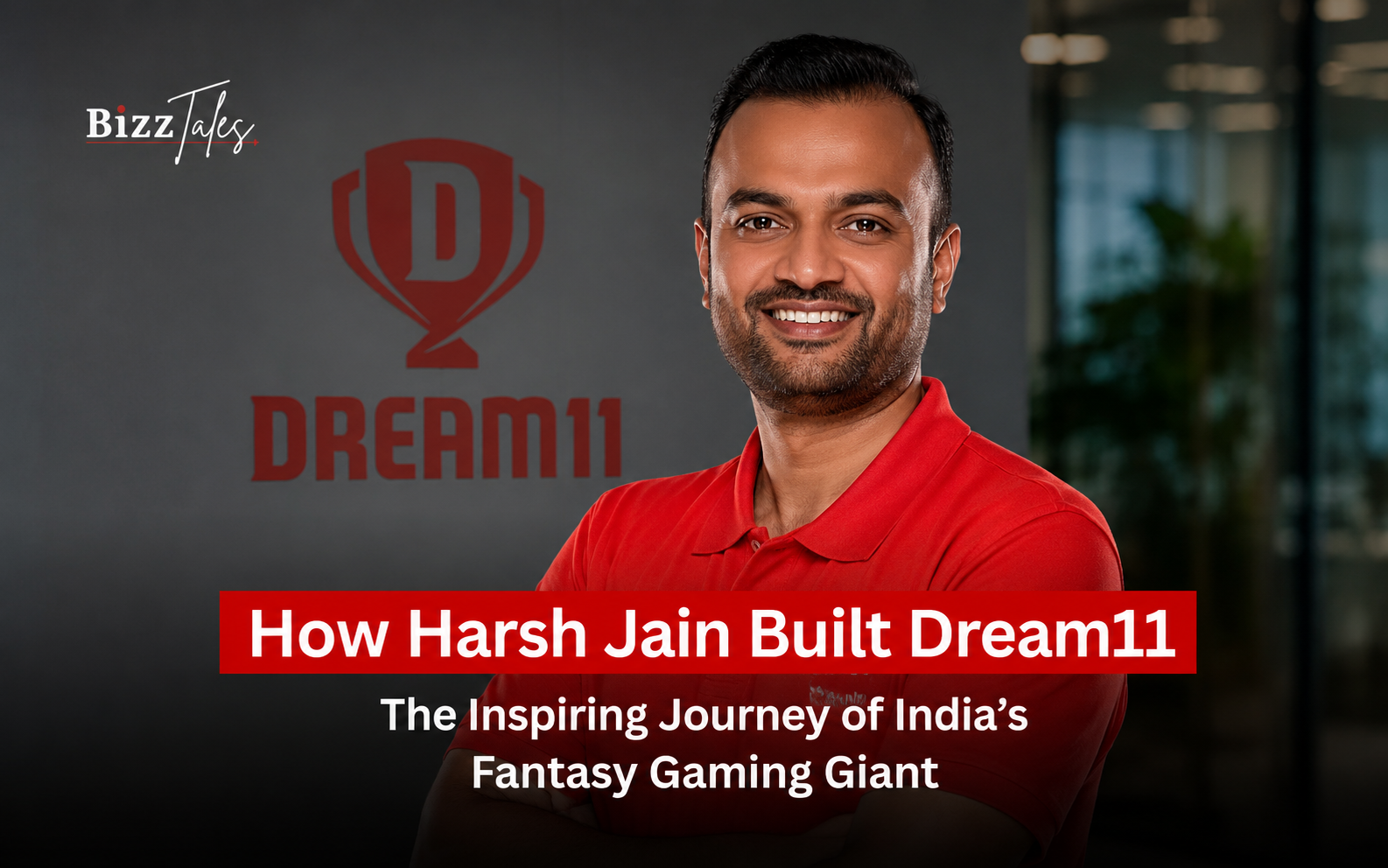
Starting a startup-hard. Starting a whole new category-harder.
When Harsh Jain and his co-founder Bhavit Sheth launched Dream11 in 2008, no one had heard of fantasy sports in India. Cricket enthusiasts watched matches closely, debated the merits of individual players and supported their favorite teams, but hardly anyone was familiar with fantasy gaming.
As of then, India’s startup ecosystem was still quite nascent. Venture capital funding was scarce, digital payments had not scaled, and smartphone user base was still insignificant. Majority of entrepreneurs would work on tried and tested business models instead of exploring unchartered categories.
These difficulties did not dissuade Jain however, who was confident Indian sports fans would one day get behind the new concept of fantasy sports. In the end his aim was quite straightforward: to develop a platform for fans of sports to immerse themselves in the games they love and to see if they had what it takes.
The journey was not smooth sailing. Years of investor doubt, funding hurdles, uncertain regulations and slow user adoption-Harsh Jain and his team overcame them all and built Dream11 into one of India’s most successful tech companies.
Over the years, Dream11 has grown to become a household brand, with millions of happy users across India and other countries. It has also contributed to India becoming one of the world’s largest fantasy sports markets. Harsh’s story is so much bigger than just being a founder; it’s all about creating a new industry.
Growing Up With a Passion for Sports
Harsh Jain was born in Mumbai to a family of businesspeople. Unlike many first-generation entrepreneurs, who come to know about business in their thirties and forties, he was brought up in a business-oriented environment where entrepreneurship, leadership and strategy conversations happened often.
But, together with business, another passion shaped his future: sports.
Since he was a child,Jainwas a die-hard sports fan. Indian cricket matches,European football tournaments and world events kept him glued to the TV. He, like others Indians would watch, talk games and predict winners.
This enthusiasm would one day help him build the foundation of his businesses.
Although sports were frequently seen as entertainment, Jain understood fans wanted more than a pass-time. He thought new innovations in technology could allow the fans to do more than just watch sports.
This would go on to inspire the name.
Education and Early Exposure to Business
Harsh Jain studied engineering and business in the US. This education gave him a taste for new technologies and digital business models.
During his time abroad, he also saw the rise of fantasy sports web sites in the Western markets.
However, fantasy sports were already catching on elsewhere, such as in the U. S., where hundreds of thousands of fans sports clubs FFA platform teams dealing on the basis of performances of real players;
Jain realized note one.
Even though India had one of the largest sports audiences (especially in cricket), no large fantasy sports ecosystem existed.
It didn’t seem like the mission was too difficult.
How about, if fantasy sports could get attention and success in Western markets, can we not have a campaign here that makes it a recognized or mega success in India?
But in order to apply this insight to a thriving enterprise, we would have to surmount much challenges.
The Birth of Dream11
In 2008, Harsh Jain and Bhavit Sheth launched Dream11.
The timing was anyhhhing.
The country’s digital ecosystem is still a work in progress. Smartphones are not yet ubiquitous, internet penetration is not as deep as it is in developed countries, and consumers are largely not used to transacting online.
Even more unfamiliar, was the concept of fantasy sports itself.
Many potential users had difficulty grasping how the site would function. Investors wondered if Indians would adopt such a system. Sports fans occasionally thought fantasy gaming was an extraneous activity.
However, he was still a firm believer that consumer attitude change would come.
Instead of chasing short-term growth, the company concentrated on user education and product optimization.
This “patience” would turn out to be indispensable for the long term success of the Dream 11 venture.
The Early Struggles
Most successful startups seem inevitable in hindsight. The truth is often very different.
Dream11 was growing at a snail’s pace for many years as they were finding it tough to get new users, create awareness and fundings were difficult to come by.
Investors often turned down the business because they had no understanding of the market opportunity.
We were pioneers in this new category of fantasy sports, and since there was nothing else to compare with Dream11, it was hard to come up with any references. And so convincing the investors required extra porcupine shotkaki.
The founders invested years developing the platform, enhancing user experience, and thinking about the needs of consumers.
We faced these initial difficulties head-on, The challenges strengthened our collective resolve.
Most entrepreneurs would give up after a number of failed attempts. Not Harsh Jain.
He stayed committed to the long-term opportunity instead of the short-term obstacles.
Understanding the Psychology of Sports Fans
Harsh Jain “was one of the sharpest understanding sports fans”.
Watching sports the way most sports fans do is a pretty passive activity. After all, fans can merely sit back and enjoy the game as their favored team wins. Fantasy sports, on the other hand, make their followers directly involved in the action.
Users need to study the player stats, consider the team combinations, take into account injuries and make decisions.
This direct involvement fosters emotional investments in sports.
Jain realized that the sports enthusiasts loved to show their knowledge, the fantasy sports gave them a venue to apply their knowledge, analysis, and decisions to affect a result.
And they’re not competing with the sports viewership. Instead, they’ve enhanced.
Much of this insight would turn into one of the company’s greatest competitive strengths.
Riding the Smartphone Revolution
The rise of smart phones changed the course of Dream11 by a huge margin.
As cheap mobile phones proliferated across India, millions of Indian consumers were being brought online for the first time.
There was a sharp rise in mobile internet use. Installing digital payments turned into something easier. Customers became more comfortable making use of the online world.
With these trends paving the way, Dream11 grew from strength to strength.
All of a sudden, it was suddenly out there for more eyes to see.
The dominant to be mobile, with the company providing users with mobile experiences so they could quickly participate in fantasy contests on their mobile devices.
This was a conscious strategic decision of the company that helped Dream11 benefit from India’s digital evolution.
A startup is hard. Starting a new industry is all the more difficult.
Back in 2008 when Harsh Jain and his co-founder Bhavit Sheth created Dream11, the concept of fantasy sports was unheard of in India. People indulged in cricket, watched the matches enthusiastically, argued over player performances and cheered their teams but not many had heard of fantasy games.
Back in 2012, the startup scene in India was still far from as matured as it is today. Venture funding was scarce; digital payments weren’t prevalent and smartphone penetration was still far from saturation. Entrepreneurs tended to copy existing businesses than to innovate entirely.
The road was not smooth. Dream11 had to endure years of doubts and funding issues, regulatory ambiguities and relatively slow consumer uptake. Yet, Jain managed to steer it through all the harsh elements, with consistency, business intelligence, patience and stickiness of the dream11 to emerge successful.
Today, Dream11 has gained thousands of users, has become a household name and has been instrumental in making India the second-largest fantasy sports market in the world. Harsh Jain’s journey represents much more than building a successful business.
The Role of Cricket in Dream11’s Success
One thing I also am very thankful for, was the fact that Dream11 was for some reason supporting multiple sports. And cricket helped me prove as well.
Cricket in India is not only a sport but it is more like a culture.
Competitions can be fiercal on their overwhelming scale and passionate audience.
Dream11 capitalized on this enthusiasm by introducing fantasy contests centered on cricket matches, tournaments, and leagues.
Fans were able to assemble their fantasy team with real players and compete according to real-life results.
The model urged users to follow more matches and be more involved with the sport.
With an increasing number of cricket fans, awareness and adoption of Dream11 increased.
Powered an impressive growth engine, as we set up the ties between ‘fantasy gaming’ and cricketing fans.
Building Trust in a New Industry
The other major challenge faced by Dream11 was earning acceptance.
Whenever new types of digital entertainment arise, consumers are likely to wonder where the fairness, transparency, credibility are.
Harsh Jain knew that in the long run, confidence will be vital.
The firm made substantial investments in platform uptime, educating players, compliance and responsible gaming.
Dream11 was confident in the user’s skill skill in fantasy sports and reliance on analysis strategy and smart decision-making.
This distinction gained significance especially when the regulatory debates on fantasy gaming started taking shape.
Building a trust was really a driver for the company to get new users, keep existing users, and bolster its position in the industry
Funding and the Path to Unicorn Status
As the customer base for Dream11 expanded it attracted a lot more interest from investors.
The fact that this company, by creating a completely new category, also showed positive stats on average engagement levels drew the interest of big investment firms.
Funding helped Dream11 to enhance its operations, upgrade its technology infrastructure, strengthen marketing strategies and introduce fresh features.
The company eventually attained unicorn level and became one of India’s most high-profile startup success stories.
It wasn’t just about the money for harsh Jain this time.
Validated our years of hard work and further strengthened my conviction that it was indeed possible to build entirely new categories of business in India.
From being rejected multiple times by investors to a billion dollar valuation, I learned the importance of conviction and perseverance.
Creating an Entire Industry
Maybe the most impressive thing about Dream11 is that it created an industry, instead of just entering one.
If you said four guys doodling out a fantasy team on a piece of paper, the days before Dream11 turned up, even that was not big in India.
It is not surprising that fantasy gaming has established itself as one of the most prominent parts of the country’s digital entertainment landscape today.
The success of the company led to new startups, investments and raising awareness of opportunities in sport technology.
This is more than just building out a company.
He created a completely new category of product.
Very few entrepreneurs will have been responsible for such a huge change in the way consumers behave.
This is undoubtedly the greatest achievement of his.
Leadership Style and Vision
Harsh Jain seems to be described by folks as a founder which shows a great level of passion and discipline.
He takes a strategic long-term view, making decisions based on data, and consistently working towards a future.
Instead of chase after growth at every turn, he sought to establish viable base
This mindset assisted Dream11 in overcoming regulatory uncertainty, competitive environment and an evolving market scenario.
Jain saw the future beyond the precinct of fantasy sports.
He considered Dream11 to be a component of a larger digital sports platform, where technology could improve fan engagement and introduce innovative ways of interaction with the sport.
In the minds of its people, this is what is happening.
Challenges Facing Dream11
While it has been very successful, Dream11 still has a few issues to overcome.
Regulation remains complicated. The competition in the digital gaming and sports technology sector is getting stiffer. The expectations of consumers are changing constantly.
Furthermore, the company should also consider technological changes, market expansion opportunities, responsible gaming issues, etc.
To stay ahead in such a fast-growing industry it has to be implemented consistently.
Even so, Dream11’s past history indicates it is in a strong position to evolve.
The experiences of its infancy have laid the groundwork for future expansion.
Lessons Entrepreneurs Can Learn From Harsh Jain
Harsh Jain’s story is inspirational for entrepreneurs:.
One lesson, then, is the ability to be aware of an opportunity before it is apparent. Dream11 was incredibly successful because its creators saw an opportunity with their product many years before others did.
The beauty of the ‘other lesson’ is that the art of persistence: a lesson that is crucial when building a new category, leading through failure, branding, whatever it maybe.
Jain’s experiences highlights the importance of the study of consumer psychology. Any good business will about solving problems but to be great one has to go deeper.
Lastly, his narrative brings out the essence of thinking long term.
Entrepreneurs want immediate results. Dream 11 took years of effort and planning to get to this level of growth.
The Future of Dream11
Dream11 thus far-. As India’s digital economy has continued to grow, Dream11 is there for the ride.
New opportunities arise from more internet access, sports having more viewers and improved mobile technologies.
The firm may go on to further develop into new sports, international markets and evolve a wider fan engagement platform.
Artificial intelligence, personalization technologies, and formats of interactive entertainment may be able to accelerate existing changes in the world of fantasy sports.
No matter what future the industry leads to, the impact of Dream11 on sports technoloy in India is sure to persist.
Conclusion
This story of Harsh Jain is a compelling testimony of vision, persistence and entrepreneurial mettle.
When he launched Dream11, there were not many who believed fantasy sports could flourish in India. The market was nonexistent, consumers had no idea of the product and the investors lacked confidence.
Jain, however, perceivedpromise in the midst of the chaos.
After toiling intensely over the years, employing a savvy mix of novel scientific techniques, and sheer determination and founding faith in his dream, he built Dream11 into India’s leading fantasy sports platform and a pioneering startup in the country.
His experiences show that the biggest business opportunities are created, not discovered.
It is a reminder to entrepreneurs that innovation doesn’t always necessarily mean invention, but maybe its more about looking at where human passions lie and finding better ways to connect people to those passions.
FAQs
Who is Harsh Jain?
Harsh Jain is the CEO and co-founder of Dream11, India’s biggest fantasy sports platform and one of the most successful startup entrepreneurs in the country.
What is the founding date of Dream11?
Dream11 was established in 2008 by Harsh Jain and Bhavit Sheth to provide fantasy sports to Indian sports fans.
What makes Dream11 hit so well?
Dream11 won because it brought together sports fanaticism, digital revolution, user engagement and strategic implementation and leveraged the massive internet and smartphone penetration in India.
Did Dream11 become the FLAG BEARER in shaping the fantasy SPORTS industry of India?
Although fantasy sports already existed worldwide, it is Dream11 that helped in the introduction, popularity and latter growth of fantasy sports in India.
Lessons for entrepreneurs from Harsh Jain:
Entrepreneurs can learn perseverance, being able to think in the long term, creating a market, identifying with a particular customer and believing in one self.